Stock Market Today: Dow, S&P 500, Nasdaq Futures Fall as Inflation and Fed Rate-Hike Fears Persist
Key Takeaways
- •Dow and S&P 500 futures fell roughly 0.5% and Nasdaq-100 futures dropped 0.8% on Tuesday amid geopolitical and rate concerns.
- •Brent crude traded near $90 per barrel after the US struck an Iranian island and Tehran retaliated against US military targets, with Trump vowing a hard response.
- •The 10-year Treasury yield rose to 4.75%, a level that raises borrowing costs and pressures equity valuations, especially growth stocks.
- •Japanese automakers Toyota and Honda face the biggest exposure to Trump's threatened 50% tariffs on Canadian-built vehicles, with Canadian production accounting for nearly a quarter of Honda's US sales and 17% of Toyota's.
- •September is historically the weakest month for stocks, with the S&P 500 averaging a 0.6% decline and a positive return only 45% of the time.
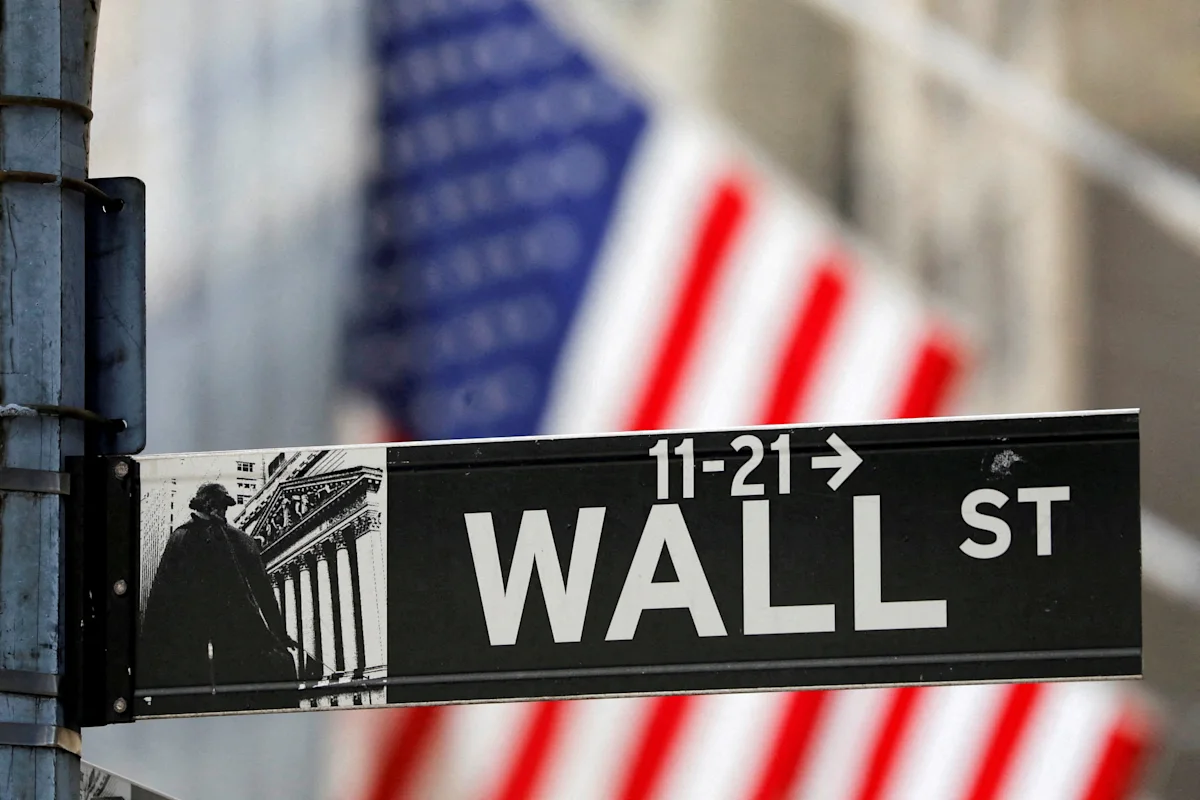
US stock futures meandered on Tuesday morning as uncertainty around the war in Iran, the bond market, and the Federal Reserve's next interest rate move largely kept buyers on the sidelines.
Futures on the Dow Jones Industrial Average (YM=F) and S&P 500 (ES=F) fell about 0.5%, while Nasdaq-100 (NQ=F) contracts dipped 0.8% after stocks closed August with solid gains.
Stocks entered September with double-digit year-to-date returns and earnings expectations that continue to rise. However, volatile oil prices and the potential return of Fed rate hikes have given investors reason to worry heading into the historically weakest month for stocks.
Crude oil prices remained elevated after the US and Iran returned to a hot war on Sunday, with Brent futures (BZ=F), the global benchmark, trading near $90 per barrel. Treasury yields have also stayed high, with the 10-year yield (^TNX) rising to 4.75% — a level that raises borrowing costs across the economy and tends to pressure equity valuations, particularly for rate-sensitive growth stocks.
On Tuesday, the Job Openings and Labor Turnover Survey (JOLTS) will kick off a string of labor market updates this week, offering a look at hiring and quits ahead of the monthly jobs report on Friday. The labor data carries added weight because Fed officials have emphasized the balance between inflation and employment in setting policy, meaning this week's numbers feed directly into expectations for the central bank's next decision. Data releases from S&P Global and the Institute for Supply Management will also give insight into manufacturing activity.
The gush of second-quarter earnings reports may have slowed to a trickle, but releases from Dell (DELL) and Palo Alto Networks (PANW) will give insight into how big corporations are spending money on tech and cloud services — a key signal for investors tracking whether the AI-driven capex boom among enterprises is holding up.
Oil Extends Gains, Stocks Drop as Trump Issues Fresh Iran Warning
The AFP reports:
Oil prices extended gains Tuesday amid fears of a fresh bout of military exchanges between the United States and Iran following a flare-up at the weekend and Donald Trump's warning that he will hit the country "hard".
The latest bout of strikes between the foes has further stoked worries about inflation that has put pressure on central banks to hike interest rates, which has in turn jolted equity markets.
After six months of war, the conflict remains at an impasse, with Tehran keeping the strategic Strait of Hormuz closed and Washington continuing a counter-blockade of Iranian ports. The strait is one of the world's most important chokepoints for seaborne oil trade, which is why its prolonged closure has kept pressure on global crude prices and, by extension, inflation readings worldwide.
The United States carried out strikes on an Iranian island in the waterway on Sunday, with Tehran quickly retaliating by attacking US military targets in the Middle East. The exchange raised fears of a return to major hostilities, with the US president vowing to respond.
"We're going to hit them hard," Trump said, according to a Fox News reporter who spoke to him briefly. "There will be a response."
Why Toyota and Honda Would Get Hit Hardest by Trump's Canadian Auto Tariffs
Yahoo Finance's Pras Subramanian reports:
In something of an unexpected consequence, Japanese automakers Toyota (TM) and Honda (HMC) have more to lose than any US automaker from President Trump's threatened tariffs on Canadian-built vehicles.
In a note to clients, JPMorgan Securities' head of global auto equity research Jose Asumendi noted that Canadian-built vehicles accounted for nearly a quarter of Honda's US sales last year, and 17% of Toyota's.
Trump has threatened to impose 50% tariffs — double the current 25% rate — on autos, trucks, and car parts imported from Canada starting Jan. 1, 2027. The timing matters for the industry: automakers typically plan production and sourcing years in advance, and Canada, the US, and Mexico have been integrated under the USMCA trade agreement since 2020, making cross-border supply chains central to North American auto manufacturing.
The conventional thinking had been that Big Three automakers GM (GM), Ford (F), and Stellantis (STLA) would suffer the biggest financial hit from tariffs on Canadian goods. But the two Japanese carmakers produce more than three-quarters of all cars made in Canada, per Reuters, and new tariffs could force them to shut some of their Canadian assembly lines because production would be economically unfeasible.
Stocks Brace for 'September Effect'
September could be a bumpier month for stocks, if history is any guide.
According to Carson Group's Ryan Detrick, September is the weakest month of the year for stocks. The S&P 500 (^GSPC) is down 0.6% on average during the pumpkin spice month and generates a positive return only 45% of the time. Along with February, September is the only other month of the year with a negative return on average.
Volatility also tends to spike, with this year's midterm elections throwing another wrench into things. Historical precedent underscores the point: past Septembers have coincided with notable market stress episodes, including the 2008 financial crisis and the 2022 rate-hike selloff, which is one reason the month's seasonal reputation persists among strategists.
But these are just trends, and seasonality isn't what's driving markets. While LPL Financial chief technical strategist Adam Turnquist expects more volatility ahead, it could also present some buying opportunities for investors.
"There's a lot of macro variables right now that I think can fuel upside in volatility," Turnquist told Yahoo Finance on Monday, citing geopolitical tensions and rising bets of a Fed rate hike.
"The earnings story is great, but we're not in that chapter right now for the market until we get to the next reporting season," Turnquist added, "so I do think the setup here, base case, [is] higher volatility and potentially a buying opportunity if we get some drawdown."
What's Happening Today
Economic data: S&P Global US manufacturing PMI, August final reading (53.3 expected, 53.2 previously); ISM manufacturing, August (55.2 expected, 55.6 previously); ISM prices paid, August (71.2 expected, 71.1 previously); ISM new orders, August (57 expected, 56.7 previously); ISM employment, August (52.5 expected, 52.8 previously); Construction spending, month-on-month, July (0% expected, -0.1% previously); JOLTS job openings, July (7.3 million expected, 7.359 million previously); JOLTS quits rate, July (+2% previously); JOLTS layoffs rate, July (+1.1% previously); Dallas Fed services activity, August (6.6 previously); Omdia total vehicle sales, August (16.3 million expected, 16.33 million previously).
Earnings calendar: Palo Alto Networks (PANW), Dell Technologies (DELL), Medtronic (MDT), MongoDB (MDB).
Top stories from overnight:
- SEC chairman moves to give US states power over shareholder resolutions
- Apple says OpenAI is destroying evidence in trade secrets case
- Trump strikes Medicaid drug price deals with nine pharma firms
- State Farm sued by Los Angeles County for allegedly mishandling wildfire claims
- AI could cause global economic downturn, Andrew Bailey warns G20

