SpaceX stock heads toward another record low as shares fall on Tuesday
Key Takeaways
- •SpaceX stock fell 4% in early trading after hitting a fresh low of $109.53 on Monday.
- •The shares are down nearly 30% from the June market debut price of $150 and about 50% from the peak of $225.64.
- •Investors are watching SpaceX’s August 4 second-quarter earnings report and an August 6 share unlock that could allow as much as 20% of shares to be sold.
- •Starship’s 13th test flight deployed 20 Starlink V3 satellites and relit an engine in space, but the Super Heavy booster did not complete its landing burn as planned.
- •SpaceX is shifting more of its focus to Starship and away from Falcon 9, making Starship’s reliability a key factor in how investors value the company.
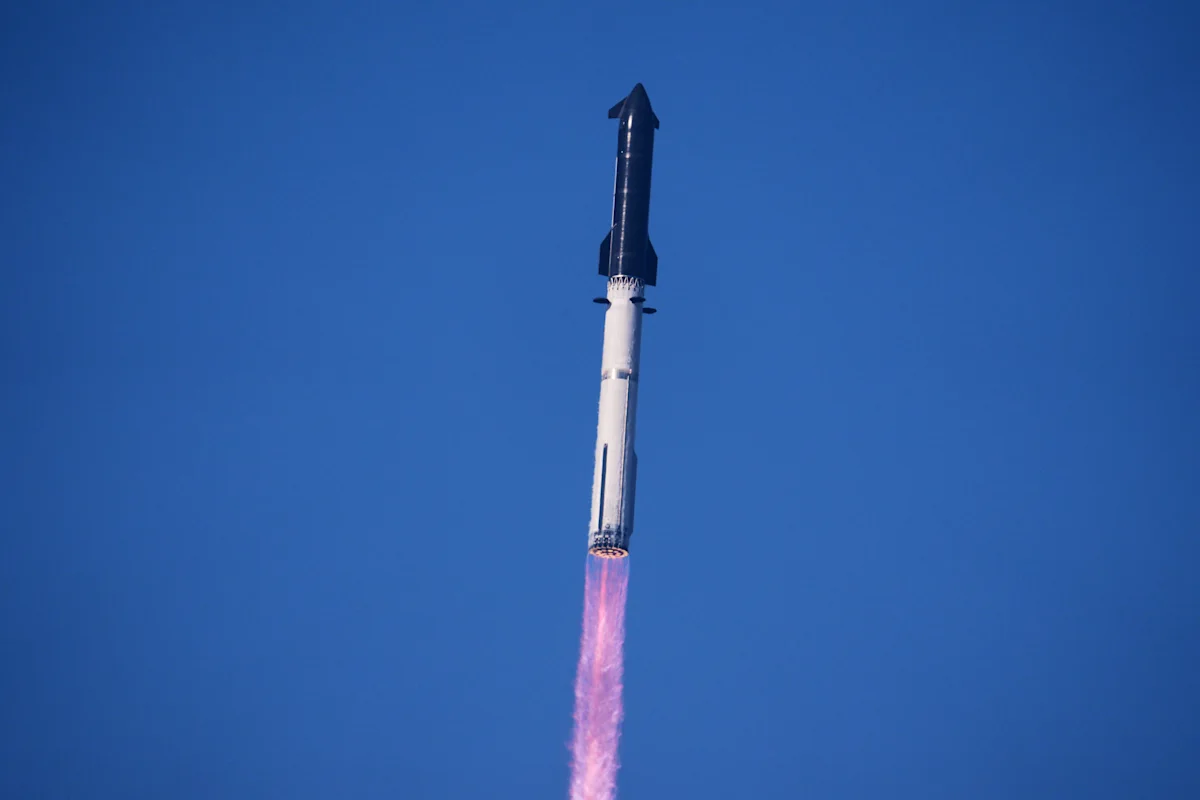
SpaceX (SPCX) was set to extend its decline on Tuesday after the stock touched a new all-time low on Monday, coming just days after a successful Starship test flight. The pullback suggests that investor caution around the newly public company remains in place despite a major launch milestone.
Shares were down 4% in early trading. On Monday, the stock fell to $109.53 before ending the session down 1.4% at $113.50. The shares have dropped nearly 30% from their $150 market debut last month and are now down about 50% from the all-time high of $225.64.
Investors appear increasingly focused on SpaceX’s second-quarter earnings report, scheduled for August 4, as well as a large share unlock on August 6. Under SpaceX’s lock-up plan, as much as 20% of shares will be eligible for sale, adding another near-term event for a stock that is still finding its trading range after going public in June.
The pressure on the stock follows Starship’s Friday evening launch from Starbase, Texas, on its 13th test flight and the first since SpaceX’s June IPO. During the flight, Starship deployed all 20 of its next-generation Starlink V3 satellites, relit an engine in space, and completed what SpaceX described as its softest ocean splashdown yet.
"I'm a little over the moon right now," SpaceX spokesperson Dan Huot said on the company’s livestream. "Lucky number 13."
The mission was not fully successful. The Super Heavy booster, or lower stage, carried out its "hot-staging separation" and flip maneuver that had gone wrong on the prior launch, but it failed to ignite all 13 engines for its landing burn and struck the Gulf of Mexico harder than planned. Neither the Starship nor the Super Heavy booster were intended to be recovered.
Friday’s launch came after an engine-ignition abort on July 16 and a weather scrub on July 23.
SpaceX is already looking ahead to a larger objective: the first tower catch of a Starship upper stage using the "Mechazilla" arms at Starbase, which have already caught the larger Super Heavy booster. "Unless we discover problems after mission data review, SpaceX will attempt to catch the ship with the tower on next flight," CEO Elon Musk wrote in response to a question about the upcoming Flight 14.
Alex Morris, CEO of F/m Investments, told Yahoo Finance, "I think you're going to see double digits in stock price, and that's probably not a terrible thing. But long term, SpaceX doesn't really have a natural competitor base. They have a good product with an intergalactic-sized moat, and more customers every day. That said, there's a lot of AI hooks shoved into that same package, and that's where we're seeing the volatility."
The decline comes as SpaceX increasingly shifts its focus to Starship at the expense of Falcon 9, its established revenue generator. According to Bloomberg, the company has started turning away satellite operators seeking dedicated Falcon 9 rides beyond 2028, stopped accepting Falcon 9 rideshare reservations, and halted production of some non-reusable Falcon 9 and Falcon Heavy components. That makes Starship’s reliability central to how investors value the company, since the program is becoming more tied to SpaceX’s longer-term launch plans.
Wall Street has urged patience, noting that SpaceX is likely to face both progress and setbacks as it works toward launching Starship dozens of times next year, hundreds of times in 2028, and thousands of times beyond that.
Analysts say the key questions are how much it will cost to refurbish the second stage after reentry and whether SpaceX can increase its flight rate quickly enough to make Starship the workhorse it expects it to become.

