Korean Banks' H1 Net Income Falls 6.4% as Interest Income Hits Record High: FSS Data
Key Takeaways
- •Twenty South Korean banks reported combined net income of 13.8 trillion won ($9.95 billion) for the January-June 2026 period, down 6.4 percent from a year earlier.
- •Interest income rose 8.3 percent year-on-year to 32.2 trillion won, the highest six-month figure on record for the sector.
- •Non-interest income plunged 43.4 percent to 2.9 trillion won, with KOSPI-related profits swinging to a deficit of 2.5 trillion won.
- •The FSS cited external uncertainties such as the Middle East war and rising delinquency rates as potential burdens on banks' fiscal soundness.
- •The regulator pledged to strengthen monitoring and encourage banks to expand loss-absorption capacities, including capital and provisions.
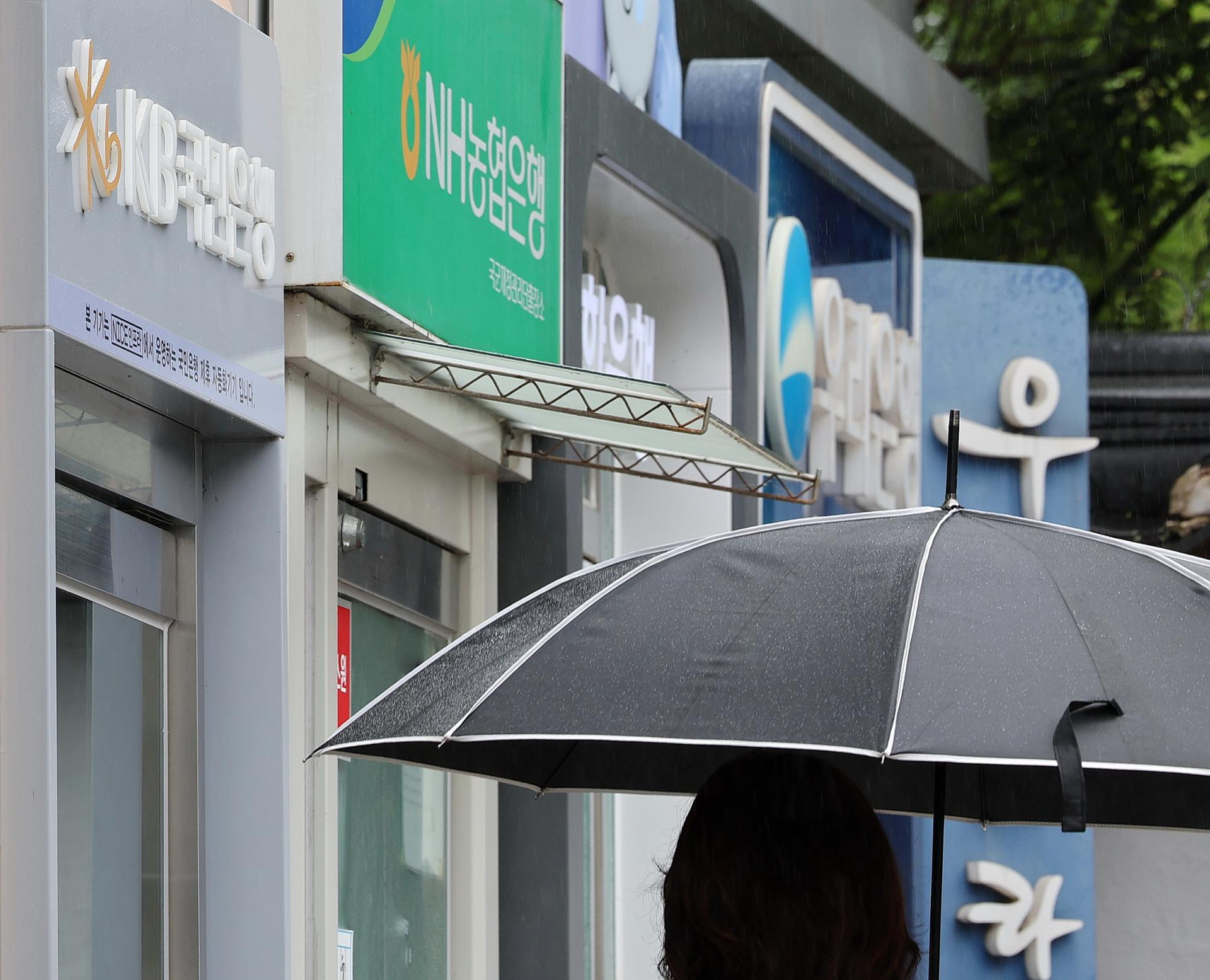
Net profits at South Korean banks declined in the first half of 2026, driven mainly by a drop in non-interest income, even as interest income marked the highest six-month figure on record, data showed Sunday.
The combined net income of 20 banks came to 13.8 trillion won ($9.95 billion) in the January-June period, down 6.4 percent from the same period a year earlier, according to data from the Financial Supervisory Service (FSS). The semiannual tally is the standard yardstick for the health of Korea's commercial banking sector, which is anchored by a handful of large financial holding companies — among them KB Financial Group, Shinhan Financial Group, Hana Financial Group and Woori Financial Group — alongside smaller lenders.
Interest income at the banks totaled 32.2 trillion won in the first half, up 8.3 percent year-on-year. Lending and other interest-bearing assets remain the core earnings engine for Korean banks, and first-half interest income was more than 11 times the size of non-interest income.
Non-interest income, by contrast, came to 2.9 trillion won, a sharp fall of 43.4 percent from the same period a year earlier, according to the FSS. The category covers fees and commissions as well as trading and securities-related gains, making it the more market-sensitive component of bank earnings.
The regulator attributed the decline in non-interest income to weaker profits tied to the benchmark KOSPI market, against a backdrop of rising interest rates. Profits related to the KOSPI swung to the red in the first half, generating a deficit of 2.5 trillion won.
The FSS said external uncertainties, such as the Middle East war, and increasing delinquency rates could pose a burden on the fiscal soundness of banks. The regulator said it vowed to strengthen monitoring and encourage banks to take measures to expand their loss-absorption capacities — the capital and provisions that banks draw on to absorb losses.
The FSS is South Korea's integrated financial regulator, which regularly publishes aggregate earnings figures for domestic banks, and the KOSPI is the benchmark stock index of the Korean market, making it a key driver of banks' securities-related non-interest income. Its next aggregate release, covering the July-December period, will show how the pressure points the regulator itself flagged — KOSPI-linked earnings and delinquency rates — develop heading into year-end.

