South Korea and U.S. Set to Launch Ulchi Freedom Shield Military Exercise Next Week
Key Takeaways
- •South Korea and the United States will hold the Ulchi Freedom Shield exercise from August 17 to 27 as part of their annual combined military training cycle.
- •The exercise supports the conditions-based transfer of wartime operational control from the United States to South Korea, a process currently in its second of three stages.
- •This year's UFS will not include a training scenario in which a South Korean officer assumes command of the Combined Forces Command, prompting renewed debate about potential differences between the allies over the OPCON transition timeline.
- •The allies plan 14 field training drills at the battalion level or higher, down from 39 drills during the 2025 UFS, as the Lee administration spreads training across the calendar year.
- •North Korea condemned the exercises and launched a short-range ballistic missile on Friday in an apparent protest ahead of the drills.
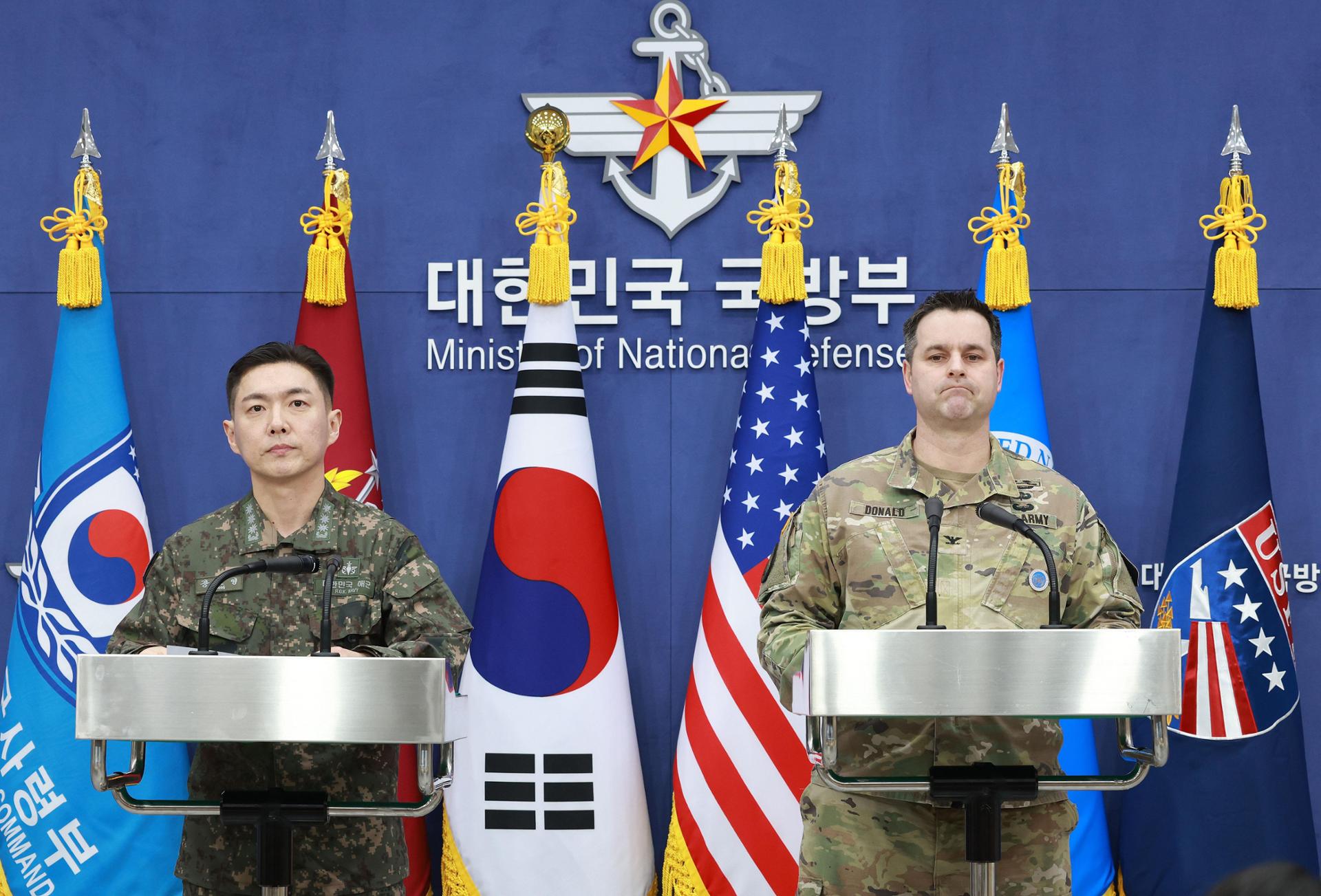
South Korea and the United States will launch their annual Ulchi Freedom Shield (UFS) combined military exercise next week, running from August 17 to 27, as both allies continue preparations for Seoul's eventual reclamation of wartime operational control (OPCON) from Washington.
According to a joint statement from the two militaries, the UFS will incorporate "realistic" threats and aim to "further strengthen the allies' readiness and capabilities through combined, joint, all-domain operations." The exercise is widely regarded as contingency training focused on North Korea.
South Korea and the U.S. conduct two major combined exercises each year: the Freedom Shield (FS) in the spring and the UFS in the summer.
South Korea's Joint Chiefs of Staff (JCS) said the upcoming UFS will "serve as an opportunity to support ongoing preparations for a conditions-based wartime operational control (OPCON) transition." The exercise functions as a testing ground for evaluating South Korea's ability to lead combined forces once wartime OPCON authority is transferred from Washington. Wartime OPCON was first transferred to the U.S. in July 1950, shortly after the Korean War broke out, when South Korean President Syngman Rhee placed his forces under the command of U.S. General Douglas MacArthur. Peacetime OPCON was returned to Seoul in 1994, but wartime command authority has remained with Washington for over seven decades. The allies are currently in the second phase of a three-stage OPCON handover plan agreed upon by both sides, with the three agreed conditions being South Korea's acquisition of critical military capabilities, its demonstrated ability to lead combined forces, and a favorable regional security environment.
A local news outlet reported last week that this year's UFS will not include a training scenario in which the South Korean deputy commander of the Combined Forces Command (CFC) assumes the role of the CFC commander—a position currently held by the U.S. Forces Korea (USFK) commander. That report reignited speculation about potential U.S. reservations regarding the OPCON transfer and whether the two allies have diverging views on the transition's timing. Previous target dates for completing the transfer—including 2012 and 2015—were postponed, and the process has spanned multiple administrations in both countries.
South Korea aims to complete the OPCON transition before President Lee Jae Myung's term concludes in 2030, or potentially sooner. The United States, however, has emphasized the importance of strictly verifying conditions before proceeding, rather than accelerating the process for political reasons.
"We are in close consultations with the U.S. side to periodically conduct combined exercises led by the future CFC, commanded by a South Korean four-star general, and will review the implementation timing following this year's FOC validation," the JCS said. FOC refers to the Full Operational Capability validation, the second stage of the OPCON transfer evaluation process.
The USFK stated that it has not received any request from South Korea regarding command responsibilities during this year's UFS.
In addition to the simulation-based component, the allies will conduct field training exercises known as Warrior Shield. These drills are linked to scenarios essential to South Korea's defense and are designed to enhance combat readiness and training realism, the JCS said.
The allies reportedly plan to hold 14 field training drills at the battalion level or higher during this year's exercise, a decrease from 39 drills conducted at the battalion or company levels during the 2025 UFS. The JCS described the field training as being conducted in a "balanced" manner through close bilateral coordination.
The Lee administration has distributed field training across the year rather than concentrating it within the combined exercise period, a departure from the approach of the previous conservative government. The shift is viewed as an effort to reduce tensions and maintain diplomatic space with Pyongyang.
North Korea has consistently condemned the allied exercises as war rehearsals and has responded with weapons tests in protest. The allies maintain that the drills are strictly defensive in nature. On Friday, Pyongyang launched what South Korea's military identified as a short-range ballistic missile, in an apparent response to the upcoming UFS.
The upcoming exercise will also incorporate "lessons learned from recent conflicts," according to the JCS, indicating that modern warfare scenarios drawn from the war in Ukraine and other regional confrontations, including the Middle East conflict, will be featured. The integration of drone warfare, electronic warfare, and other contemporary battlefield lessons reflects a broader trend among U.S. allies in the Indo-Pacific of adapting training to emerging threats.
As in previous years, the UFS will support interagency coordination across the South Korean government to strengthen national emergency readiness, protect public safety, and reinforce a whole-of-government approach to wartime defense.
The United Nations Command (UNC), which administers the Armistice Agreement that ended the 1950–53 Korean War, will contribute approximately 70 additional personnel from 12 of its 18 member states to participate in this year's UFS, according to a UNC official. UNC Deputy Commander Lt. Gen. Scott Winter told a media roundtable last week that the command is interested in supporting the drills in new domains, including cyber and information operations.
The Neutral Nations Supervisory Commission will observe the exercise to monitor compliance with the armistice agreement.
Source: The Korea Times

