PBOC Injects 18 Billion Yuan via 7-Day Reverse Repos at 1.40%, Maintaining Steady Liquidity Operations
Key Takeaways
- •The PBOC injected 18 billion yuan into the financial system through 7-day reverse repurchase agreements while keeping the rate unchanged at 1.40%.
- •The 7-day reverse repo rate has fallen 40 basis points from the approximately 1.80% average observed during comparable operations between 2022 and 2024, indicating a meaningful easing of the central bank's stance over two years.
- •This smaller operation follows a substantially larger 806.5 billion yuan liquidity injection on July 29, which was deployed to meet seasonal month-end funding demand across 7-day and overnight instruments.
- •The PBOC introduced a new overnight reverse repo tool in mid-2026 at a rate of 1.25%, enabling more granular control over very short-term funding conditions beyond the existing 7-day instrument.
- •The steady rate decision suggests the central bank views current funding conditions as broadly sufficient and is reserving larger policy adjustments for periods of heightened growth or financial stability risks.
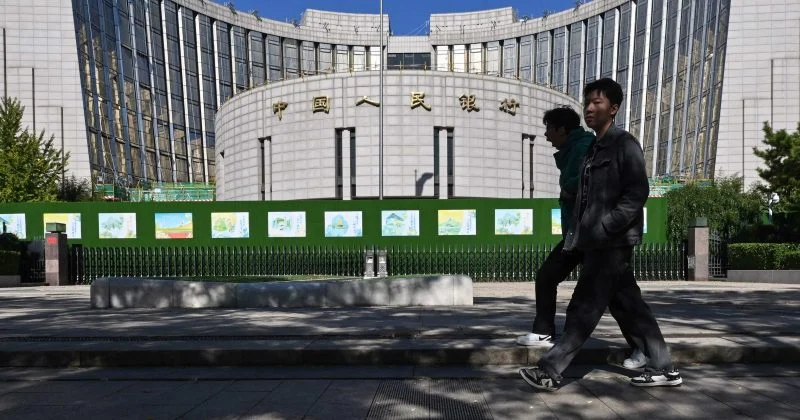
The People's Bank of China (PBOC) injected 18 billion yuan (approximately $2.5 billion) into the financial system through 7-day reverse repurchase agreements, maintaining the rate at 1.40%. While a relatively modest operation by PBOC standards, the injection aligns with a broader pattern of deliberate liquidity management that has characterized China's monetary policy throughout 2026, and signals the central bank's preference for fine-tuning rather than aggressive easing.
A reverse repo is a short-term lending mechanism in which the central bank provides cash to commercial banks against government bond collateral. By doing so, the PBOC directly influences short-term interbank borrowing costs, which in turn feed into broader credit conditions for businesses and households.
The 1.40% Policy Rate in Context
The 7-day reverse repo rate now serves as China's de facto primary policy rate and has remained at 1.40% across recent operations. This reflects a reform effort by the PBOC to anchor its monetary policy framework more explicitly on short-term rates, moving closer to the operating conventions of major central banks such as the Federal Reserve and the European Central Bank.
Between 2022 and 2024, the PBOC conducted similar 18 billion yuan injections, but at notably higher rates averaging approximately 1.80%. The 40-basis-point decline from that period to the current 1.40% reflects a meaningful shift in the central bank's stance over the past two years, aimed at keeping borrowing costs lower and sustaining credit flow through an economy that has faced persistent headwinds. The decision to hold the rate steady in this operation suggests the PBOC sees current funding conditions as broadly adequate, reserving larger moves for moments when growth or financial stability risks become more pronounced.
Month-End Liquidity Mechanics and New Instruments
This latest operation follows a significantly larger liquidity deployment. On July 29, the PBOC injected a combined 806.5 billion yuan in a single session: 206.5 billion yuan through standard 7-day repos at 1.40%, and 600 billion yuan via overnight reverse repos at 1.25%.
Such surges are typical around month-end periods, when banks face settlement deadlines and regulatory requirements that temporarily increase demand for cash. The scaling back to an 18 billion yuan operation after the larger late-July deployment is consistent with this cyclical pattern, as the central bank calibrates daily injections once seasonal pressure on interbank funding subsides.
The overnight reverse repo tool was introduced by the PBOC in mid-2026 to provide more granular control over very short-term funding conditions. Prior to its launch, the central bank relied primarily on the 7-day instrument. The overnight rate of 1.25%, sitting below the 7-day rate of 1.40%, follows standard yield-curve logic, where shorter-duration lending carries lower risk and therefore commands a lower rate. Market participants closely track the spread between these two rates as an indicator of tightness in the banking system's day-to-day funding position.

