South Korea's Defense Ministry Commits to Temporary Relocation of Gwangju Air Base by Mid-2028
Key Takeaways
- •South Korea's defense ministry plans to temporarily relocate Gwangju Air Base operations by mid-2028 to advance a government-backed semiconductor and AI cluster project.
- •The chip cluster initiative is supported by Samsung Electronics and SK hynix as part of South Korea's strategy to maintain its competitive edge in the global semiconductor industry.
- •The relocation requires formal bilateral negotiations with the United States because Gwangju Air Base serves as a collocated operating base where U.S. Air Force assets can be deployed during contingencies.
- •Three Air Force squadrons currently stationed at Gwangju may be redistributed to separate fighter wings in the central Chungcheong region.
- •The Air Force has stated it will develop a transfer plan that ensures national defense posture and operational readiness are not compromised during the relocation.
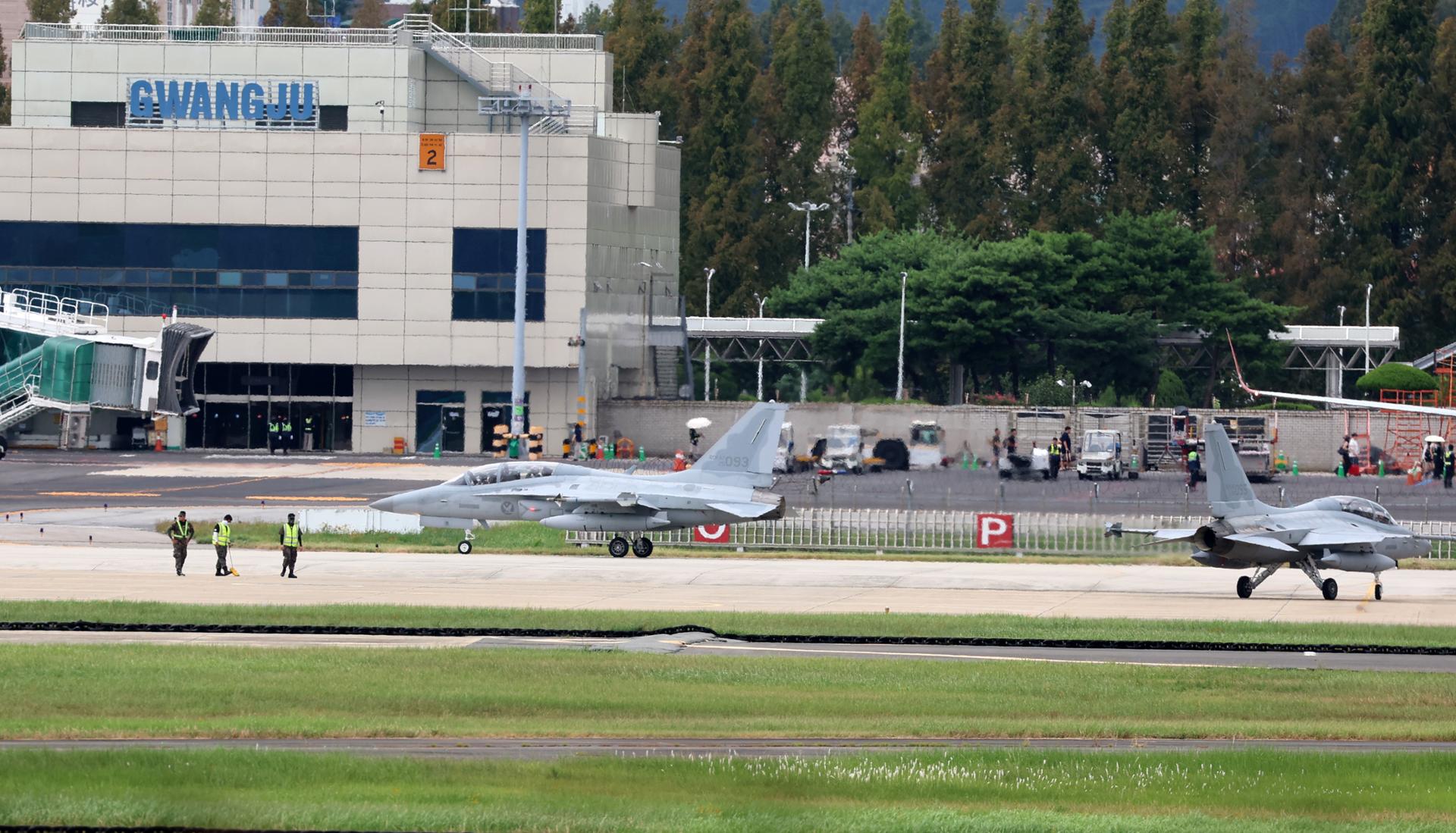
South Korea's defense ministry has pledged to actively pursue the temporary relocation of Air Force operations from Gwangju Air Base, a move aimed at accelerating a major semiconductor cluster project in the country's southwestern region.
The commitment reinforces Seoul's ambitious plan to construct a vast semiconductor and artificial intelligence (AI) cluster spanning the nation's southwestern and central regions — a multibillion-dollar initiative backed by Samsung Electronics and SK hynix, the world's two largest memory chipmakers. Semiconductors are South Korea's largest export category, and the government has framed the cluster as essential to sustaining the country's industrial edge as the United States, Japan, the European Union, and China each channel unprecedented sums into domestic chip manufacturing and supply chain self-sufficiency.
Gwangju Air Base, which houses the Air Force's 1st Fighter Wing, has been designated as the site for the envisioned chip cluster. While the government initially sought to relocate the entire base to the nearby county of Muan, that proposal has encountered resistance from the Muan municipal government and local residents.
At a public-private meeting on the mega chip cluster project held Monday, President Lee Jae Myung directed the defense ministry to temporarily shift Gwangju military airport operations to an alternative site in order to expedite the project's timeline.
"We will actively cooperate with the government's policy to strengthen the competitiveness of the semiconductor industry and minimize the impact of the temporary relocation on national security and military readiness," the ministry stated. "To do so, we will actively review and push for a plan to temporarily relocate the airport operations by mid-2028."
The relocation process will require consultations with the United States military, as Gwangju Air Base operates as a collocated operating base (COB) — a facility from which the U.S. Air Force can deploy assets during contingencies. The base also encompasses land that the Korean government has provided to U.S. Forces Korea (USFK). Past base relocations involving U.S. military land in South Korea, including the multi-year consolidation of forces into Camp Humphreys, have required formal bilateral negotiations under the two countries' mutual defense framework, a process that can extend timelines considerably.
"We will work closely with relevant agencies for consultations with the U.S. side to ensure an early return of land provided to the USFK," the ministry added.
The Korean Air Force currently carries out a range of missions from the Gwangju base, including advanced fighter pilot flight training and defense of the country's southwestern airspace. The base operates T-50 advanced jet trainers and the domestically developed TA-50 light attack aircraft.
According to reports, the military is considering relocating three air squadrons under the 1st Fighter Wing to three separate fighter wings in the central Chungcheong region.
The Air Force said it will develop a plan to ensure the timely transfer of assets from the Gwangju base without compromising defense posture or operational readiness.

