South Korea's Economic Recovery Strengthens on Robust Exports and Improving Domestic Demand, Finance Ministry Says
Key Takeaways
- •South Korea's finance ministry upgraded its economic recovery characterization from 'solidifying' to 'actively strengthening' in its latest monthly Green Book report.
- •July exports surged 62.8 percent year-on-year to $98.9 billion, representing the second-largest monthly export figure in the country's history.
- •Domestic demand improved, with retail sales rising 2.7 percent in June and consumer sentiment remaining positive for a third consecutive month in July.
- •Consumer price inflation decelerated to 2.8 percent in July from 3.2 percent in June, aided by lower oil prices following a brief Middle East ceasefire.
- •The ministry cautioned that Middle East conflict uncertainty and persistent employment challenges for vulnerable groups continue to pose risks to livelihoods and the economic outlook.
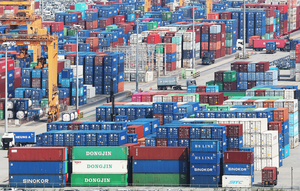
South Korea's economic recovery is gaining momentum, propelled by sharp growth in exports and signs of improvement in domestic demand, the Ministry of Economy and Finance said Friday in its monthly economic assessment report, known as the Green Book.
"Recently, the Korean economy has seen its recovery strengthen, with exports rising sharply and domestic demand, including consumption, showing signs of improvement," the ministry stated.
The assessment marks an upgrade from the previous month's report, which had described the recovery as "solidifying." The latest Green Book now characterizes the recovery as actively strengthening. South Korea, Asia's fourth-largest economy, publishes the Green Book each month as its authoritative barometer of macroeconomic conditions.
Despite the improved outlook, the ministry cautioned that significant burdens on people's livelihoods persist. Ongoing uncertainty tied to the conflict in the Middle East continues to fuel inflationary pressures through elevated oil prices, while employment conditions remain difficult for vulnerable demographic groups and economic sectors.
South Korea's monthly exports surged 62.8 percent year-on-year in July, reaching $98.9 billion — the second-largest monthly export figure on record, trailing only the all-time high of $102.2 billion posted in June. As a major producer of semiconductors, automobiles, petrochemicals, and steel, South Korea sits at critical nodes in global technology and manufacturing supply chains, and its trade figures are widely monitored as an early indicator of worldwide demand trends.
On the domestic front, retail sales climbed 2.7 percent in June from the previous month, driven by robust demand for durable goods. Consumer sentiment stayed positive for the third consecutive month in July.
Consumer price inflation moderated to 2.8 percent in July, decelerating from a 3.2 percent increase in June, as oil prices eased following a brief ceasefire in the Middle East.
The finance ministry pledged to minimize the economic fallout from the Middle East conflict and to sustain efforts aimed at tackling structural economic issues. South Korea has long grappled with structural headwinds including a rapidly aging population, productivity gaps between large conglomerates and smaller enterprises, and regional economic disparities.
"In order to minimize the impact of the Middle East war, we intend to focus our efforts on stabilizing livelihoods by monitoring the supply and demand of major items, as well as inflation," the report said.
"We also plan to promptly implement the second-half economic policy plan, focusing on boosting potential growth and addressing structural challenges, such as disparities," it added.
(Yonhap)

