National Assembly Opens 100-Day Regular Session Amid Partisan Tensions
Key Takeaways
- •The National Assembly's 100-day regular session runs through Dec. 9, with the 821 trillion-won ($595 billion) budget bill facing a Dec. 2 statutory deadline before it takes effect as submitted.
- •Confirmation hearings for six minister nominees chosen by President Lee Jae Myung are expected later this month, with the DPK aiming to finish them before the Chuseok holiday starting Sept. 24.
- •Speaker Cho Jeong-sik named people's livelihoods the top priority and urged quick passage of semiconductor and AI bills, warning that delayed legislation creates long-term gaps.
- •Contentious measures, including a plan to use part of Yongsan Park for housing and judicial reform bills, are expected to dominate debate, alongside four days of interpellation sessions.
- •This is the first regular session since Lee Jae Myung took office in June, testing whether the DPK-led legislature can advance the government's agenda against PPP opposition.
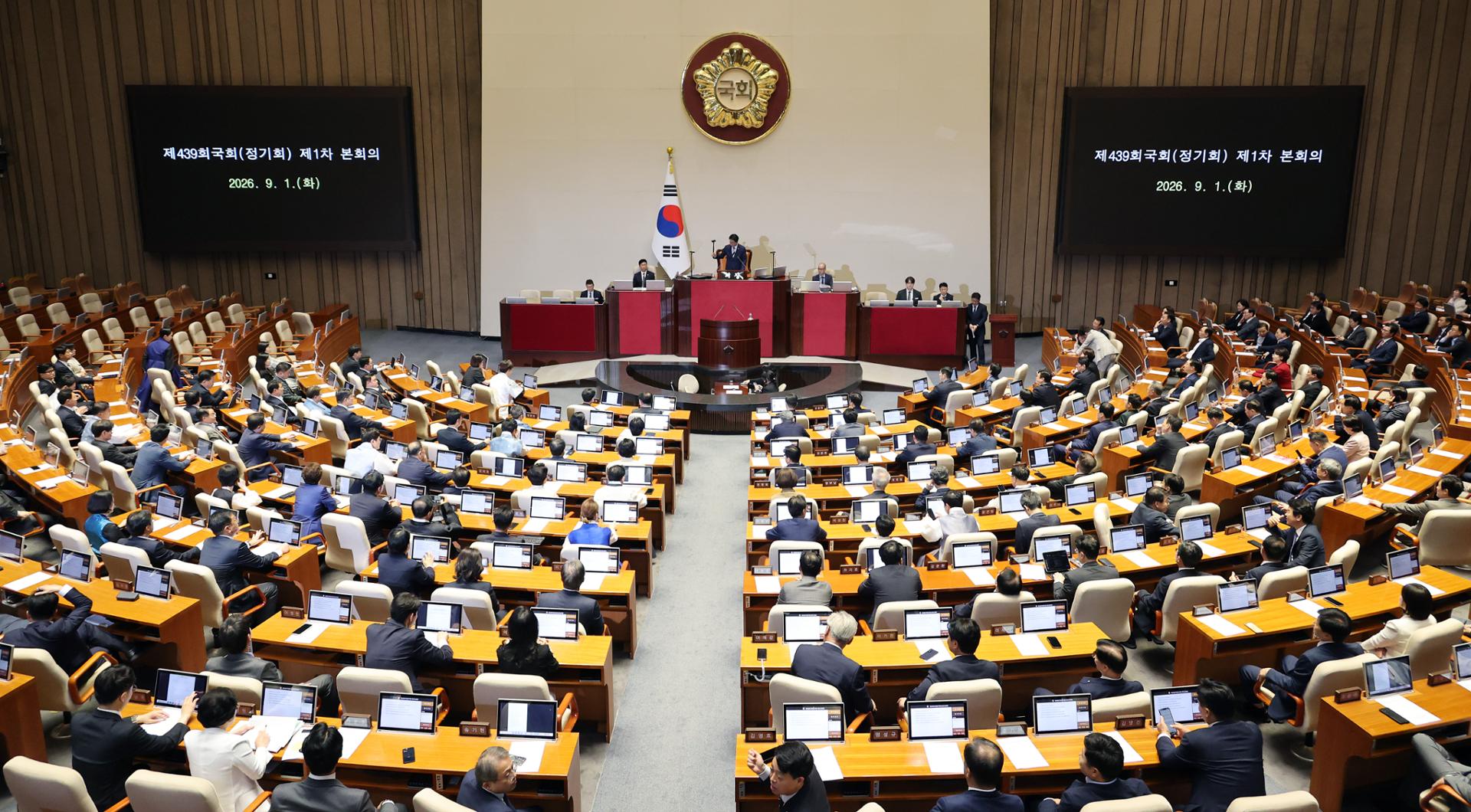
The National Assembly convened its regular session Tuesday, with heated clashes expected between the ruling and opposition parties over next year's budget and other key legislative issues.
During the 100-day session, which runs through Dec. 9, lawmakers are expected to wrangle over the government's 821 trillion-won ($595 billion) budget proposal for next year, as well as confirmation hearings for six minister nominees recently picked by President Lee Jae Myung. Under South Korea's National Assembly Act, the budget bill must be finalized by Dec. 2, or it takes effect as submitted by the government — a statutory deadline that typically concentrates negotiations into the final weeks of the session.
National Assembly Speaker Cho Jeong-sik called on lawmakers to make improving people's livelihoods their top priority, noting that the country's economic growth, driven by a semiconductor boom, has yet to be felt by people in their daily lives.
"The first, second and third priorities are all people's livelihoods," Cho said in his opening address during a plenary session.
Cho also cited artificial intelligence (AI), advanced technologies, youth, the climate crisis and peace on the Korean Peninsula as key agenda items for the country's future.
"A one-year delay in legislation creates a 10-year gap," he said, urging the rival parties to swiftly handle bills related to semiconductors and AI.
A number of contentious bills are likely to take center stage during the regular session, including a proposal to use parts of Yongsan Park in central Seoul for housing development, as well as judicial reform bills.
The floor leaders of the ruling Democratic Party of Korea (DPK) and the main opposition People Power Party (PPP) are scheduled to deliver policy speeches Monday and Tuesday, respectively. Their addresses will be followed by four days of interpellation sessions — attended by the heads of government ministries and key state offices — covering politics, diplomacy, security and other issues.
The confirmation hearings for the six minister nominees are expected to be held later this month, another potential source of partisan wrangling. The DPK has vowed to complete the hearings before the Chuseok holiday, which begins Sept. 24 this year.
Starting Oct. 6, parliament will conduct a three-week audit of government offices.
The unicameral parliament opens its regular session on Sept. 1 every year for a 100-day run. This session is the first regular session since Lee Jae Myung took office in June, and it marks an early test of whether the DPK-led legislature and the executive branch can advance the new government's agenda in the face of PPP opposition.
