South Korea's July Exports Reach Second-Highest Level on Record, Driven by Semiconductor Surge
Key Takeaways
- •South Korea's July exports totaled $98.89 billion, up nearly 63 percent year-on-year and the second-highest monthly figure on record.
- •Semiconductor exports soared 179 percent to $41 billion as global AI-driven demand for memory chips remained strong.
- •Exports excluding semiconductors still rose 26 percent, indicating a broad-based recovery across multiple sectors rather than reliance on chips alone.
- •Exports to the United States surged 68.7 percent to $17.4 billion, narrowing the gap with China as AI data center investments boost demand for Korean goods.
- •Industry Minister Kim Jung-kwan warned that growing trade protectionism and Middle East geopolitical uncertainties could pose headwinds for South Korean exporters going forward.
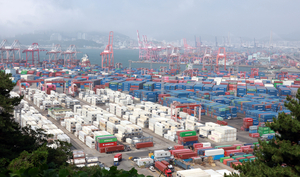
South Korea's monthly exports climbed to the second-highest level on record in July, rising nearly 63 percent from a year earlier amid robust global demand for memory chips, according to data released Saturday by the Ministry of Trade, Industry and Resources.
Outbound shipments totaled $98.89 billion in July, falling just short of the all-time high of $102.2 billion recorded in June. Imports increased 26.5 percent year-on-year to $68.56 billion, producing a trade surplus of $30.32 billion. For an economy where exports routinely account for roughly half of GDP, the back-to-back record-level figures underscore the central role of external demand in driving national growth.
Semiconductor exports—the backbone of Asia's fourth-largest economy—surged 179 percent to $41 billion, as global memory product prices stayed elevated despite intensifying competition. The sector has now surpassed the $40 billion threshold for two consecutive months. South Korea is home to Samsung Electronics and SK Hynix, the world's two largest memory chipmakers, making it a primary beneficiary of the global AI buildout that has driven voracious demand for high-bandwidth memory and advanced logic chips. Even excluding semiconductors, South Korea's total exports rose 26 percent on-year in July, signaling that the recovery extends beyond a single sector and marking a sharp reversal from the prolonged chip downturn that depressed exports throughout 2023.
Automobile exports gained 7 percent to $6.2 billion, supported by strong worldwide demand for hybrid and other eco-friendly models. Petroleum product shipments jumped 34.1 percent to $5.68 billion, while petrochemical product exports increased 10.3 percent to $4.18 billion. The industry ministry also reported that mobile device exports climbed 51 percent to $1.81 billion, as premium smartphones such as the Galaxy S26 lineup maintained solid sales despite rising chip-driven production costs.
By destination, exports to China nearly doubled to $21.68 billion, fueled by strong shipments of chips, nonferrous metal products, and petroleum goods. Exports to the United States surged 68.7 percent to $17.4 billion, driven by artificial intelligence (AI) data center investment projects launched by major high-tech companies. The U.S. has steadily gained importance as a destination for Korean goods, and the AI-driven surge further narrows the gap with China, traditionally Seoul's largest trading partner—a shift with long-term implications for Korea's trade architecture.
Exports to Southeast Asian countries rose 73.7 percent to $18.8 billion, propelled by robust shipments of semiconductors, displays, and ships. Exports to the European Union gained 55.7 percent to $9.38 billion on the back of broad-based strength across multiple product categories.
"Amid the strong performance of semiconductors, 19 of the country's 20 major export categories posted gains," Industry Minister Kim Jung-kwan said in a release, noting that South Korea has successfully diversified its export portfolio.
However, Kim cautioned that South Korean exports still face headwinds from growing protectionism in major economies and persistent geopolitical uncertainties in the Middle East. The warning comes as major economies including the United States and the European Union escalate trade policy measures spanning tariffs, export controls, and industrial subsidies—policies that could reshape supply chains on which Korean manufacturers depend.
"The government will closely monitor market conditions for major export products and utilize all available policy measures to help South Korean businesses respond to changes in the global trade environment, including tariffs and non-tariff barriers," Kim added. (Yonhap)

