South Korea to Ease Regulations Supporting Three Megaprojects in Semiconductors and AI
Key Takeaways
- •South Korea expects its deregulation measures to generate 4.2 trillion won ($2.96 billion) in combined investment across three semiconductor and AI infrastructure megaprojects.
- •Revised building permit rules will allow companies to obtain separate permits for new structures at the Yongin semiconductor cluster, accelerating 2.5 trillion won in planned investment.
- •Battery recycling firms will gain access to national industrial parks in Gumi and Pohang that were previously restricted to secondary battery manufacturers, stimulating approximately 100 billion won in new investment.
- •The deregulation push comes as governments worldwide deploy subsidies and regulatory reforms to secure domestic semiconductor supply chains, intensifying global competition.
- •South Korea aims to sustain its leadership in memory chips, a market dominated by Samsung Electronics and SK Hynix, amid surging AI-driven demand.
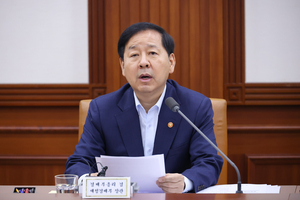
South Korea's government announced on Thursday that it will ease a series of regulations, including administrative procedures, to accelerate the country's three major megaprojects focused on semiconductors and artificial intelligence infrastructure, according to the Ministry of Economy and Finance.
Finance Minister Koo Yun-cheol presented the deregulation plan during a meeting with economy-related ministers. The government expects the measures to generate a combined 4.2 trillion won ($2.96 billion) in investment.
"The government came up with the measures to promptly address investment-related challenges on the ground, focusing on projects that are ready to proceed but have been held up by regulatory hurdles," the finance ministry said.
The ministry emphasized that deregulation is essential for the smooth execution of the three megaprojects, which are designed to transform the national economy through large-scale investments in semiconductors, physical AI, and AI data centers. The move comes as governments worldwide — including the United States, Japan, and the European Union — deploy subsidies and regulatory reforms to secure domestic semiconductor supply chains, making execution speed a competitive factor.
One of the key regulatory changes addresses building permit rules. Under the current framework, companies must revise their existing building permits each time they add new structures to an ongoing construction project. The government will revise the relevant regulations to enable companies to obtain separate permits for new buildings at the semiconductor cluster currently under construction in Yongin, located south of Seoul. The Yongin cluster is central to South Korea's ambition to maintain leadership in memory chips — a market dominated by domestic giants Samsung Electronics and SK Hynix — amid surging global demand driven by AI applications. This change is expected to accelerate the implementation of 2.5 trillion won in investment at the site.
In a separate measure, the government will expand access to national industrial parks in the southeastern cities of Gumi and Pohang. Currently, only manufacturing companies tied to the secondary battery industry are permitted to operate within these complexes. Under the new policy, battery recycling firms will also be allowed to use the facilities, a move projected to stimulate approximately 100 billion won in new business investment. Battery recycling has gained strategic importance as countries tighten rules on critical mineral recovery and as South Korean battery makers — including LG Energy Solution, Samsung SDI, and SK On — compete globally for supply chain resilience.
The announcement reflects Seoul's broader push to strengthen its position in advanced technologies, including semiconductors and rechargeable batteries, which are key pillars of the country's export-driven economy. (Yonhap)
