South Korea Consumer Sentiment Index Rises to 106.8 in July
Key Takeaways
- •South Korea’s Consumer Sentiment Index increased to 106.8 in July from a revised 106.6 in June.
- •The Bank of Korea compiles the index from a monthly survey of about 2,500 households.
- •A reading above 100 indicates that optimistic consumers outnumber pessimistic ones.
- •The index has remained in a narrow 105 to 108 range since March, showing stable but cautious sentiment.
- •Stable consumer confidence may help support domestic spending and retail or service-sector earnings.
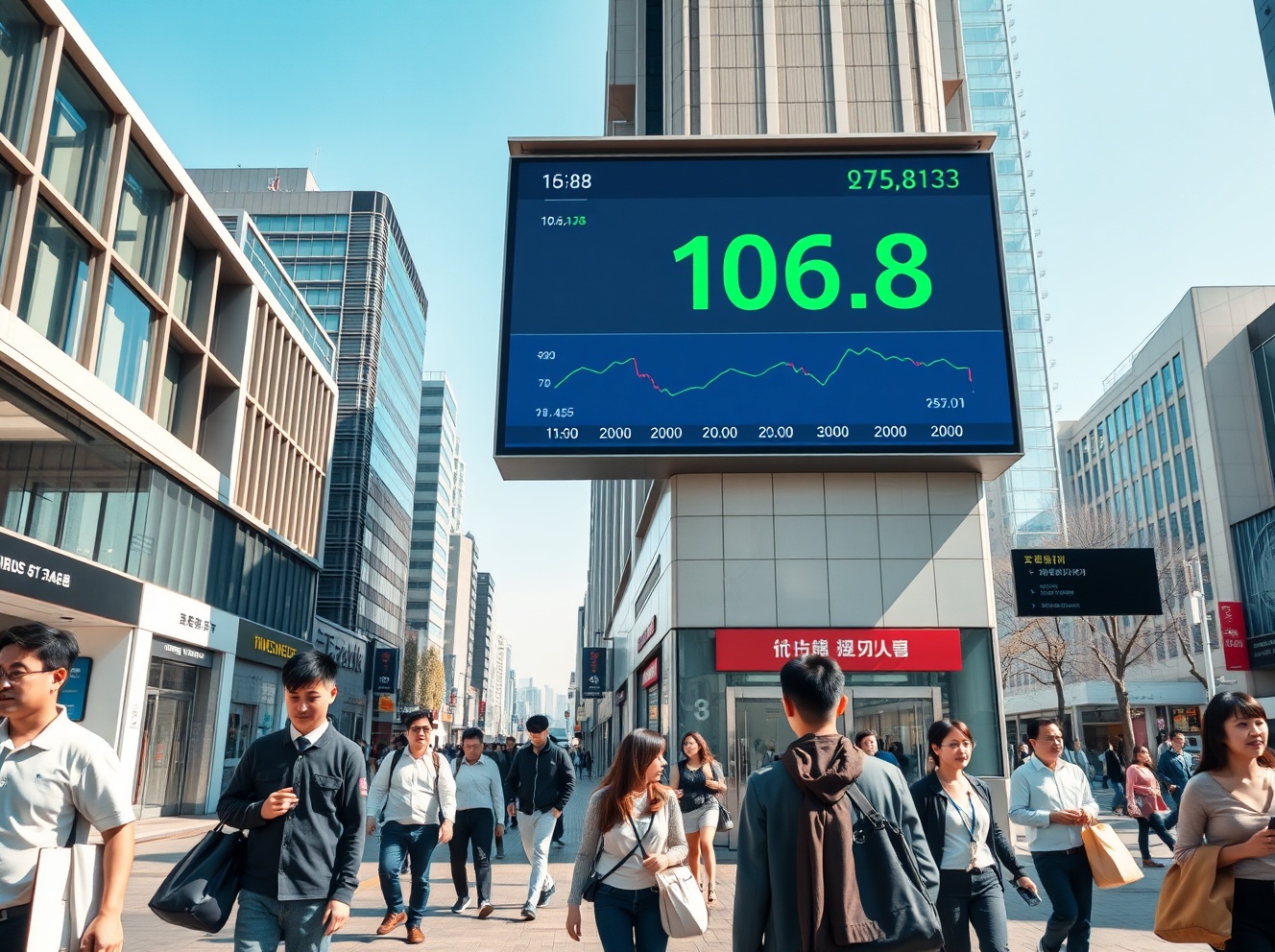
South Korea’s Consumer Sentiment Index (CSI) increased to 106.8 in July, according to the latest survey data, edging up from a revised 106.6 in June. The small gain indicates that household confidence in the country’s economic outlook remained broadly stable, despite continuing domestic and global economic pressures.
Consumer Sentiment Index Tracks Household Views
The CSI is a closely watched economic indicator compiled by the Bank of Korea. It is based on a monthly survey of approximately 2,500 households and measures consumer perceptions of current and future economic conditions, including employment, income, and spending.
A reading above 100 means optimists outnumber pessimists. July’s 106.8 reading therefore points to a moderately positive outlook among South Korean households and continues a pattern of cautious optimism seen through much of 2024. Because the index reflects expectations as well as current conditions, it is often read alongside hard data such as retail sales, inflation, and labor-market figures rather than as a standalone measure of economic strength.
July Reading Shows Stability After Uncertainty
The modest increase in July reflects a steady recovery in consumer sentiment after a period of uncertainty shaped by inflation concerns and global interest rate policies. Analysts note that the index has stayed within a narrow range between 105 and 108 since March, suggesting consumers are neither strongly upbeat nor deeply pessimistic about economic conditions.
This stability may help support domestic consumption, which remains an important component of South Korea’s economy even as the country continues to rely heavily on exports. Consumer attitudes can influence household spending behavior, and higher confidence typically supports increased consumption and broader economic growth.
Implications for Households and Markets
For South Korean households, the stable CSI reading suggests that expectations for income and employment remain positive. That environment could encourage continued spending on durable goods and services, provided broader economic conditions do not weaken.
For financial markets, the data indicates that consumer demand is not deteriorating, which may support corporate earnings in retail and service-related sectors. However, the CSI does not fully capture external risks, including global trade tensions or commodity price shocks, which could affect future readings.
The reading also matters for economic policymakers because household confidence can shape demand-side conditions at a time when inflation, borrowing costs, and external demand remain key variables for South Korea’s outlook. A stable index gives policymakers another data point on whether households are absorbing economic pressures without a sharp pullback in sentiment.
Outlook Remains Cautiously Positive
The July rise to 106.8 confirms a steady, if modest, level of consumer confidence in South Korea. While the month-on-month gain was limited, the reading reinforces the view that domestic sentiment remains on stable footing.
Policymakers and investors are likely to monitor upcoming CSI data for any change in direction as South Korea continues to navigate global economic uncertainties. Future releases will be watched for whether the index remains in its recent range or begins to show a clearer shift in household expectations for income, employment, and spending.

