Banks Struggle With Coin-Filled Vaults as Cashless Trend Deepens in South Korea
Key Takeaways
- •Commercial banks in South Korea are required to store coins on-site and return them to the Bank of Korea, creating a growing storage burden as consumers increasingly use digital payments.
- •The Bank of Korea only accepts coin deliveries on designated days and has at times refused shipments due to physical storage limitations at its facilities.
- •The total value of coins held across South Korea declined from 2.36 trillion won in 2020 to 2.22 trillion won in 2025, reflecting reduced reliance on physical change.
- •For six consecutive years, the value of coins collected by the BOK has exceeded the value of newly minted coins, most recently by 35.5 billion won.
- •The BOK introduced a waffling compression method in May to reduce the cost of recycling decommissioned coins into industrial materials, but has no plans to discontinue coin issuance entirely.
Banks Struggle With Coin-Filled Vaults as Cashless Trend Deepens in South Korea
Published Jul 31, 2026, 12:00 p.m. KST
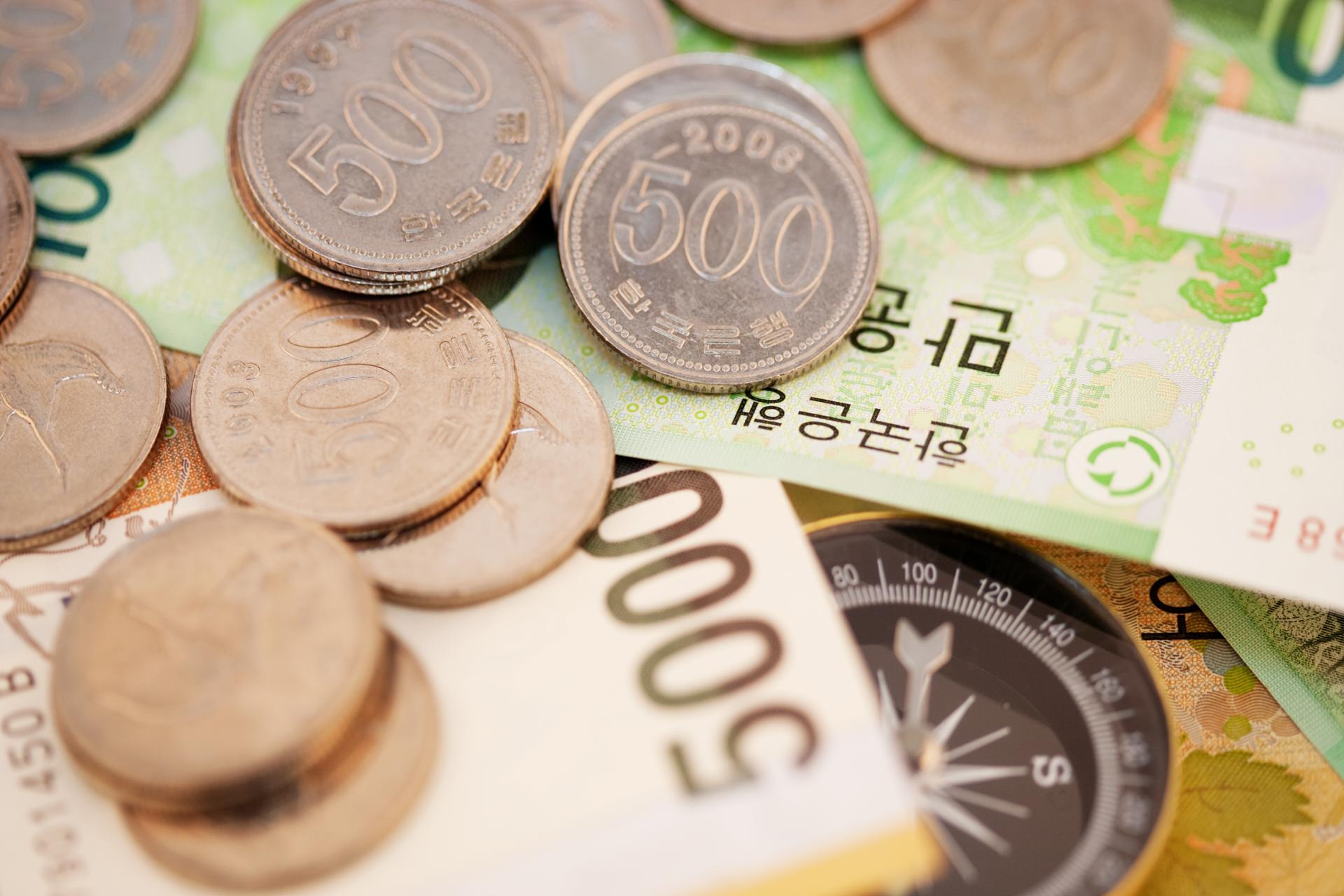
As South Korea grows increasingly cashless, commercial banks are confronting an unexpected consequence: vaults overflowing with coins that consumers rarely use.
The accumulation of loose change has become a significant logistical burden for lenders, which are required to store coins on-site and eventually return them to the Bank of Korea (BOK). Industry officials note that coins are substantially harder to manage than banknotes due to their weight and the complexity of processing them. The situation reflects a broader shift in a country that has ranked among the world's most digitally connected economies, where mobile payment platforms and prepaid transit cards have become deeply embedded in everyday transactions.
Branch-Level Bottlenecks
Many bank branches now accept coins only during designated hours. Customers deposit loose change into coin-counting machines that sort and package the coins, then either exchange them for banknotes or credit the equivalent value to the customer's account. Once packaged, the coins sit in branch vaults until transport to the BOK can be arranged.
"Banknotes move in and out, but coins are the real problem. Once they come in, they rarely leave. They take much longer to sort and count and are much heavier," said an official at a commercial bank branch in Gyeonggi Province.
Branches located in Seoul send their collected cash to the BOK headquarters, while branches in other regions ship coins to their nearest regional BOK office. Cash-in-transit companies handle the deliveries under strict security protocols, including the use of specially equipped armored vehicles fitted with cash storage systems and GPS tracking devices. All personnel must comply with identification and security procedures to enter central bank facilities.
Transport fees generally start at approximately 50,000 won ($35) per shipment for coins and 70,000 won per shipment for banknotes, with additional charges assessed based on weight.
"The fees are not the biggest issue. The bigger problem is that we can't send them whenever we want," the bank official said. "There are designated days when the BOK accepts coin deliveries, and if it cannot receive them, we have no choice but to keep them until the next transfer date."
Central Bank Also Faces Storage Strain
The challenge extends well beyond commercial banks. The steady buildup of returned coins has also created difficulties for the BOK itself.
According to BOK data, the total value of coins held by households, businesses, and financial institutions has declined gradually in recent years, dropping from 2.36 trillion won in 2020 to 2.22 trillion won in 2025. With fewer coins circulating through the broader economy, a growing share ends up accumulating in the central bank's vaults.
"We are well aware of the difficulties commercial banks are facing. But there are times when we simply cannot accept additional coin deliveries because of physical limitations," said an official at the BOK's currency management department.
Rather than minting large quantities of new coins, the central bank has increasingly relied on recirculating existing coinage. In the most recent year, the value of coins collected exceeded the value of newly issued coins by 35.5 billion won — the sixth consecutive year in which collections outpaced new issuance.
Recycling and Disposal Measures
Not every coin returned to the BOK re-enters circulation. Coins designated for disposal are melted down and recycled into industrial materials. To reduce the costs associated with this process, the BOK introduced a waffling method in May, which mechanically compresses coins into dense metal blocks before they are sent for recycling.
Despite the continued decline in coin usage, the BOK has stated that it has no plans to discontinue coin issuance entirely. The persistence of coin production reflects an ongoing need to serve segments of the population — including elderly residents and small traditional merchants — who continue to rely on physical currency even as the broader economy digitizes.
"We are adjusting coin production based on the number of coins already in circulation, existing inventories and public demand," the official said.

