Egypt Denies Iran's Involvement in Damietta Port Drone Attack
Key Takeaways
- •Egypt's Minister of Information formally rejected a Wall Street Journal report claiming Cairo had attributed the Damietta port drone strike to Iran.
- •The drone attack on two ships at Damietta, a strategic Mediterranean LNG and gas-transshipment hub, represents the first incident on Egyptian territory connected to the Israel-Iran conflict.
- •No party has claimed responsibility for the attack, leaving the perpetrator unconfirmed.
- •Prediction market odds regarding the likelihood of Iranian military actions against Gulf states fluctuated following Egypt's public denial.
- •The incident occurs against a backdrop of elevated regional maritime threats, including Houthi attacks on commercial shipping that have disrupted Suez Canal trade revenues.
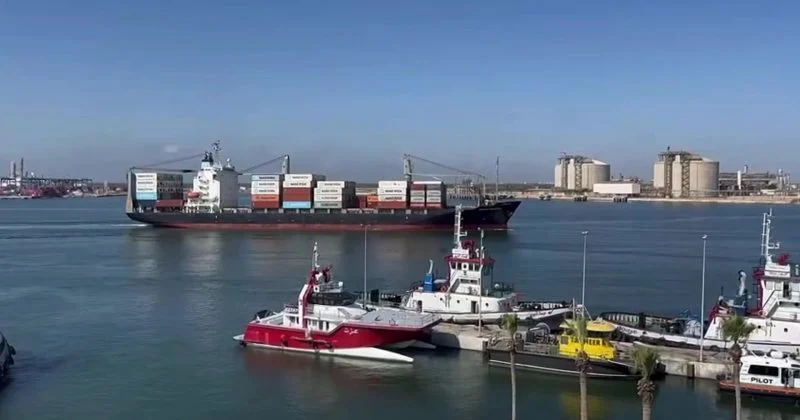
Egypt's Minister of Information has formally rejected a Wall Street Journal report claiming that the Egyptian government attributed a recent drone strike on two vessels at the port of Damietta to Iran. The denial, reported by Al Arabiya, clarifies Cairo's position amid escalating regional tensions.
The drone attack targeted two ships in Damietta, a strategically significant port on the Mediterranean Sea that serves as a major liquefied natural gas (LNG) and gas-transshipment hub. The incident represents the first attack on Egyptian territory connected to the ongoing Israel-Iran conflict. It also comes against a backdrop of elevated maritime threats across the region, including sustained Houthi attacks on commercial shipping in the Red Sea and Gulf of Aden that have already disrupted trade routes critical to Egypt's Suez Canal revenues.
Egyptian authorities stated that no party has claimed responsibility for the attack, further complicating the geopolitical landscape. The Wall Street Journal had previously reported that Egyptian officials suspected Iranian involvement, a claim the Minister of Information has now publicly countered.
The denial comes at a sensitive time, as the broader Israel-Iran conflict continues to raise concerns about regional stability. Egypt, which shares a border with both Israel and Gaza, has largely maintained a role as a mediator in the conflict. An attack on its territory marks a notable escalation, even as the perpetrator remains unconfirmed.
Following the Egyptian denial, prediction market odds regarding the likelihood of Iran conducting military actions against Gulf states experienced fluctuations, with an initial increase followed by a decrease as the new information was absorbed.
Observers are now closely monitoring for any additional statements from Egyptian or Iranian officials that could provide further clarity. The response of Gulf state actors, as well as any new evidence or claims of responsibility, will be critical in assessing the evolving threat landscape in the region.

