South Korea Launches AIDC Alliance to Build 18.4 GW of AI Data Centers
Key Takeaways
- •South Korea established the AIDC Alliance with twelve major companies to build 18.4 GW of AI data centers and export AI computation as a service to foreign enterprises and governments.
- •The National Growth Fund will expand from 150 trillion won to approximately 200 trillion won next year, with 30% to 40% earmarked for AI, semiconductors, and power infrastructure.
- •SK Telecom CEO Jeung Jae-heon serves as the alliance's first private co-chair, with members including Samsung SDS, Naver Cloud, LG Electronics, Kakao, KT, and chip designer FuriosaAI.
- •Subcommittee roadmaps are scheduled for Q3 2026, followed by the first leadership meeting and budget allocations in Q4, with cluster special zone designations beginning in Q1 2027.
- •Samsung, SK Group, and Nvidia announced combined semiconductor and data-center deals totaling approximately $700 billion during President Lee Jae-myung's July trip to San Francisco.
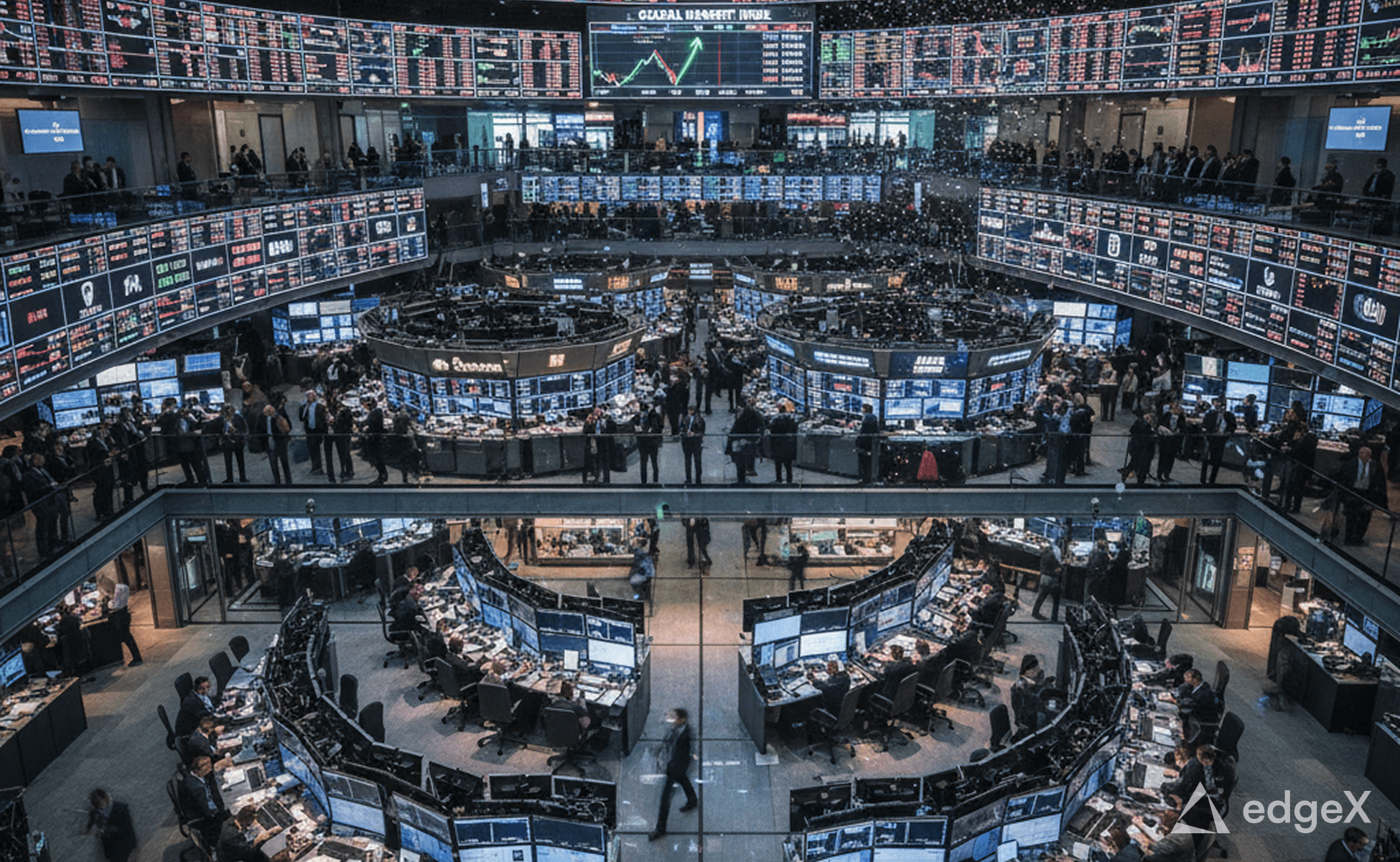
South Korea's government and twelve of its largest technology, power, and cooling companies have established a public-private partnership called the AIDC Alliance, with the goal of constructing 18.4 gigawatts (GW) of AI data centers and positioning the country as a global exporter of "intelligence tokens"—the raw output of AI computation that Seoul envisions selling as a service to foreign enterprises and governments, not merely as hardware.
The initiative places South Korea in direct competition with regional data-center hubs such as Singapore—which has tightly capped new capacity since 2019 over power and land concerns—and Japan, both of which are racing to capture surging demand for AI compute. Korea is betting that its vertically integrated semiconductor supply chain and grid infrastructure can differentiate it.
The Ministry of Science and ICT (MSIT) hosted the launch event at Lotte Hotel Seoul, drawing approximately 400 attendees from industry, academia, and four government ministries.
Leadership and Member Companies
The alliance's first private co-chair is Jeong Jae-heon, CEO of SK Telecom (KRX: 017670) and chairman of the Korea Information and Communication Industry Association. The leadership group includes SK Telecom (KRX: 017670), Naver Cloud, Samsung SDS (KRX: 018260), NHN Cloud, LS Electric, LG Uplus (KRX: 032640), LG Electronics (KRX: 066570), GS (KRX: 078930), Kakao (KRX: 035720), KT (KRX: 030200), KT NF, and chip designer FuriosaAI. The inclusion of FuriosaAI, which designs AI inference accelerators, signals an effort to extend Korea's semiconductor strength—currently concentrated in memory chips via Samsung and SK Hynix—into the AI processor segment.
Work within the alliance is organized into three subcommittees and an export task force. Naver Cloud will test domestic data-center technology and help local firms establish delivery records to present to foreign buyers. LG Electronics (KRX: 066570) will focus on localizing power, cooling, and IT equipment, addressing a critical bottleneck as AI workloads demand significantly higher rack power density than conventional cloud computing. Kakao (KRX: 035720) will handle permits, site selection, and workforce training. The state-run IITP will serve as secretariat.
Strategic Framework and Timeline
The alliance is tasked with executing the "AI Data Center National Strategy Industrialization" plan, which Seoul unveiled on June 29 as one of three megaprojects. The plan extends beyond the 18.4 GW construction target to encompass industrial clusters, large-scale testbeds, and the export of upstream and downstream industries that supply data centers. The referenced AIDC Special Act is expected to provide the legal framework for streamlined permitting, incentives, and zoning for cluster special zones.
The subcommittees and task force are scheduled to draft roadmaps in the third quarter of 2026. The fourth quarter will bring the first leadership meeting, next year's budget, draft enforcement rules for the AIDC Special Act, and cluster plans. A dedicated project group will launch in the first quarter of 2027, at which point the designation of cluster special zones will also begin.
Funding and Investment
Vice Chairman of the Financial Services Commission Kwon Dae-young announced that the National Growth Fund, currently at 150 trillion won (approximately $127 billion), will expand to 200 trillion won (about $133–134 billion) next year. Kwon indicated that 30% to 40% of the fund should be allocated to AI, semiconductors, and power, with an emphasis on ensuring capital reaches mid-sized, small, and venture firms as well as regional areas—not only large conglomerates.
The National Growth Fund was launched late last year to foster strategic high-tech industries, including AI, semiconductors, and renewable energy. The government initially planned to raise up to 150 trillion won over five years but now intends to scale up by an additional 50 trillion won.
The FSC also plans to establish the Korea Strategic Technology Partners (KSTP), a new investment management company focused on providing long-term capital for breakthrough technologies, targeting fields such as quantum supercomputing and AI semiconductors.
Private Sector Commitments
Nvidia (NASDAQ: NVDA) recently announced plans to invest approximately $1 billion in Naver (KRX: 035420) and support the expansion of its GAK Sejong data center from 55 megawatts to 200 megawatts by 2028, with Brookfield proposing up to $9 billion in additional funding.
The combined semiconductor and data-center deals announced by Samsung, SK Group, and Nvidia during President Lee Jae-myung's July trip to San Francisco totaled roughly $700 billion.
The early milestones to watch are the Q3 2026 subcommittee roadmaps and Q4 budget allocations, which will reveal how much of the National Growth Fund expansion is channeled into the AIDC Alliance versus other strategic priorities.

