Solana Fee Vote Splits Supporters as Charles Schwab Adds SOL Trading
Key Takeaways
- •SGP-0003 would replace Solana’s fixed signature fee with a fee based on transaction computation.
- •Anatoly Yakovenko supports usage-based fees but wants the reform divided into separate proposals.
- •He said smaller transactions currently pay proportionately far more than larger ones under the existing fee system.
- •Charles Schwab plans to add Solana, Chainlink and Avalanche to its crypto trading platform in the coming months.
- •The addition of Solana will be Schwab Crypto’s first expansion beyond Bitcoin and Ethereum.
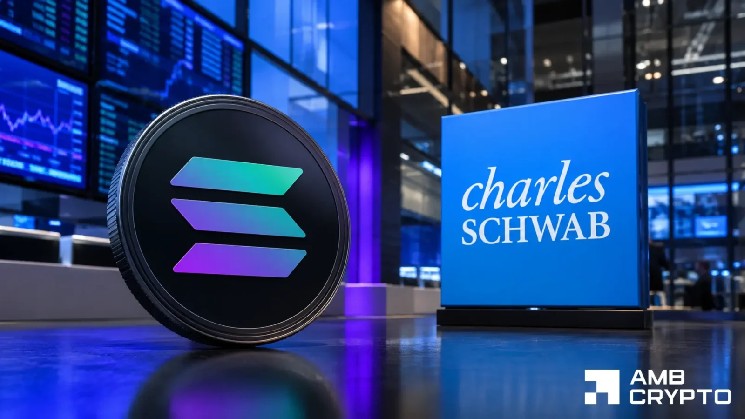
Solana’s first major governance cycle has exposed disagreement over how the network should change its transaction fees.
Anatoly Yakovenko said the proposal addresses a real problem, but he argued that it asks voters to approve too many issues at once. At the same time, Charles Schwab has chosen $SOL for the next expansion of its crypto trading service, underscoring that Solana is attracting attention both inside its own ecosystem and from larger financial platforms.
Yakovenko wants Solana fee reform split into separate votes
SGP-0003 proposes removing Solana’s fixed signature fee and replacing it with a fee tied to how much computation a transaction requires.
Under the current system, every transaction pays the same basic charge. Yakovenko said that arrangement is unfair to smaller transfers, which pay much more relative to the network resources they use. He noted that a small transaction pays proportionately nearly 280x higher, in terms of a unit of computing work, than a large transaction with the maximum write allowance.
Yakovenko said he supports moving toward usage-based fees and believes the proposed rate would help correct the imbalance. His concern is that SGP-0003 combines that change with another question: how the rate should be set in the future.
The Solana co-founder prefers a simpler approach that would divide the issue into two separate proposals. One proposal would replace the fixed signature charge, while a separate proposal would decide whether validators set the rate or an automatic system adjusts it using recent network fees.
He argued that bundling multiple decisions together could discourage voters who are interested in only part of the proposal. In his view, that could lead some participants to skip voting entirely or vote against the full package.
Yakovenko also said there is little opposition to charging fees based on computational use.
Schwab selects SOL for crypto platform expansion
As the internal debate over Solana’s fee structure continues, Charles Schwab is preparing to expand access to $SOL.
The company said Chainlink, Solana and Avalanche will be added to its crypto trading platform in the coming months.
Schwab Crypto began rolling out in May with direct Bitcoin and Ethereum trading. The addition of Chainlink, Solana and Avalanche will be its first expansion beyond those two assets, giving the platform a broader list of tokens as it builds out its service.
