SK Innovation to absorb SKIET, targeting 60 billion won in annual savings and separator turnaround
Key Takeaways
- •SK Innovation expects the merger with SKIET to generate about 60 billion won in annual cost savings.
- •The company aims to return the separator business to EBITDA profitability within two years.
- •SK Innovation and SKIET approved the merger at their separate board meetings on Tuesday.
- •SKIET’s global separator production will be concentrated in Poland, while a factory in China is set to be sold and Jeungpyeong production halted by year-end.
- •SKIET reported a 246.3 billion won operating loss last year, and its second-quarter revenue fell 52.2 percent year on year.
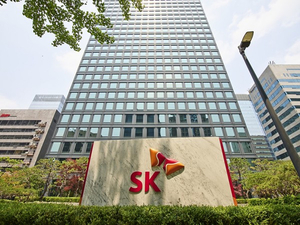
SK Innovation, the energy and battery arm of South Korea's SK Group, expects its merger with loss-making battery separator unit SK IE Technology to deliver annual cost savings of about 60 billion won ($43.3 million) and return the business to earnings before interest, taxes, depreciation and amortization (EBITDA) profitability within two years.
Executives outlined the plan during an online briefing Wednesday, saying the company will eliminate overlapping operations in marketing, production and other functions once SKIET is absorbed. The merger will also give SKIET access to SK Innovation's stronger credit profile, improving its financing capacity and lowering interest expenses.
"Together, these measures are expected to improve annual EBITDA by roughly 60 billion won through cost reductions," said Kim Yoon-hoe, head of strategic planning at SK Innovation. "We will continue identifying additional savings."
Kim said the company aims to restore the separator business to EBITDA profitability within two years, with further upside possible if the electric vehicle market recovers and policy conditions improve. "We believe there is room for further improvement if the electric vehicle market recovers and the policy environment turns favorable again," he said.
Merger mechanics
SK Innovation and SKIET approved the merger at their separate board meetings on Tuesday. SK Innovation will remain the surviving company, while listed subsidiary SKIET will be dissolved and its battery separator operations folded into the parent.
Under the plan, SK Innovation will issue new shares to SKIET shareholders at a ratio of 1 to 0.1177454, meaning investors will receive approximately one SK Innovation common share for every 8 1/2 SKIET common shares.
SK Innovation's board and SKIET shareholders are scheduled to approve the deal on Nov. 24. The merger will take effect Jan. 1, 2027, with the new SK Innovation shares set to list Jan. 18.
The deal comes seven years after SK Innovation spun off its materials business as SKIET in 2019. SKIET went public in 2021 amid rising demand for lithium-ion battery separators alongside the global electric vehicle market.
Separators prevent direct contact between the cathode and anode inside lithium-ion batteries used in EVs. The performance of this key component is critical to both safety and charging and discharging. Alongside cathodes, anodes and electrolytes, separators are one of the four core materials of a lithium-ion battery.
Market pressure
SK Innovation's decision to bring SKIET back into the fold comes amid a prolonged slowdown in the EV market and intensifying price competition from Chinese separator makers that have aggressively expanded capacity.
The squeeze extends beyond separators: across the battery materials industry, producers of cathodes, anodes and other components have cut output and postponed capacity additions as EV demand growth slowed.
SKIET's plant utilization rate stood at about 20 percent in the first quarter, putting pressure on earnings in a business with a high proportion of fixed costs. Lower sales and factory utilization have led to losses.
SKIET posted revenue of 261.9 billion won and an operating loss of 246.3 billion won last year. In the second quarter of this year, revenue fell 52.2 percent on-year to 39.5 billion won, while the operating loss widened to 63.4 billion won from 53.7 billion won a year earlier.
"The fundamental cause is the overall slowdown in the EV market," said Chung Jae-sung, head of management support at SKIET. "Changes among key customers and worse-than-expected downstream demand also played a role."
Chung added that capacity expansion by Chinese separator competitors and the resulting intensification of price competition have contributed to oversupply and deteriorating profitability.
Production overhaul
SK Innovation is reorganizing SKIET's production footprint. It plans to sell a factory in China and halt production at its Jeungpyeong facility in North Chungcheong Province by the end of the year. SKIET's global separator production will be concentrated in Poland, primarily serving customers in North America and Europe.
The Polish base aligns with broader efforts by Western automakers and governments to localize battery supply chains outside China, as Washington and Brussels have both raised trade barriers on Chinese EVs and batteries in recent years.
SKIET said it has invested about 2 trillion won in its Polish production base so far, with related capital spending expected to be largely completed this year.
SK Innovation expects the merger to strengthen technological competitiveness and improve efficiency by combining SKIET's separator expertise with its own research and development. The company also plans to expand into separators for energy storage systems.
Final stage of restructuring
The transaction is likely to cap a sweeping restructuring of SK Innovation's operations that began in 2024 to shore up its balance sheet and improve its energy and battery businesses.
SK Innovation merged with energy affiliate SK E&S in November 2024, creating an integrated company with about 100 trillion won in assets and giving the group a broader base of cash-generating energy businesses.
Battery maker SK On subsequently absorbed trading arm SK Trading International and energy-storage operator SK Enterm, followed by lubricant producer SK Enmove in November 2025.
SK On also reworked its US battery partnership with US carmaker Ford, converting the Tennessee plant — previously operated under the BlueOval SK joint venture — into an operation controlled by SK On.
Once the merger takes effect, SKIET will disappear as a listed company, and the two-year EBITDA turnaround target becomes the benchmark against which the consolidation will be judged.

