SK Hynix Employee Sentenced to 18 Months for Leaking Chip Technology to Chinese Firm
Key Takeaways
- •The Seoul High Court upheld an 18-month prison sentence for a former SK Hynix employee who leaked CMOS image sensor trade secrets to a Chinese company through a job application.
- •The employee printed confidential documents and photographed sensitive materials from the company's internal server while stationed at SK Hynix's China office, despite the firm's bans on external storage devices and tracked printing activity.
- •South Korea classifies CMOS image sensor technology under industrial technology protection laws, treating unauthorized disclosure as a national security issue rather than merely a corporate offense.
- •This case follows a similar 2024 incident where a Chinese national and former SK Hynix employee received an increased five-year sentence on appeal for stealing semiconductor documents before joining Huawei.
- •The sentence demonstrates that even with defendant cooperation and partial recovery of stolen materials, prison time remains the standard outcome for semiconductor technology leakage under South Korean law.
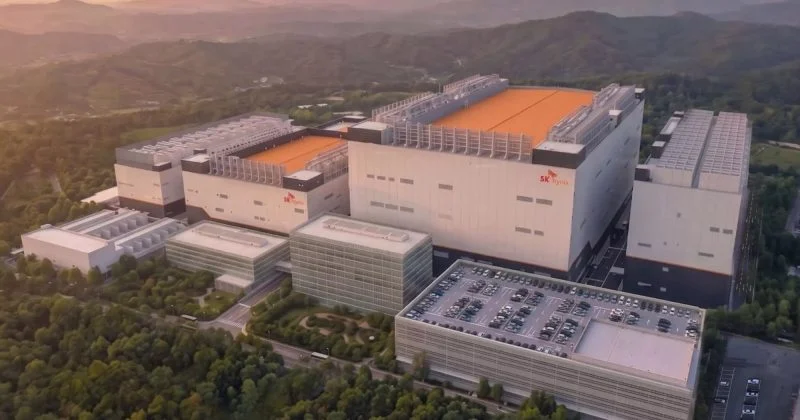
A former SK Hynix employee has been sentenced to 18 months in prison after the Seoul High Court upheld the penalty for leaking trade secrets tied to CMOS image sensor technology to a Chinese company. The August 2026 ruling closes a case originating in 2022, when the employee breached internal security protocols at one of the world's leading semiconductor manufacturers.
SK Hynix ranks as the world's second-largest memory chipmaker behind Samsung Electronics and is a critical supplier of DRAM and NAND flash used in everything from smartphones to data-center servers. The company has also invested in CMOS image sensor development as part of a broader diversification push, placing it in competition with Sony and Samsung, the two dominant players in that global market.
According to the court, the employee — stationed at SK Hynix's China office — printed confidential documents and photographed sensitive materials stored on the company's internal server. He subsequently disclosed those details as part of a job application submitted to an undisclosed Chinese firm.
What Was Stolen and How
CMOS image sensors are compact chips that enable smartphone and laptop cameras to capture images. They are also increasingly central to automotive vision systems, surveillance equipment, and industrial automation — segments where Chinese manufacturers have been rapidly expanding. South Korea classifies this technology under its industrial technology protection laws, elevating unauthorized disclosure beyond a corporate offense to a matter of national security.
SK Hynix maintains stringent internal safeguards designed to prevent such breaches, including a ban on external storage devices and tracked, logged printing activity.
Upon discovery, the defendant admitted to the charges. Authorities recovered most of the leaked material, a factor that likely influenced the court's decision to uphold the original 18-month sentence rather than impose a longer term.
A Pattern South Korea Seeks to Break
The case echoes a separate 2024 incident in which another former SK Hynix employee — a Chinese national — was initially sentenced to 18 months for stealing semiconductor manufacturing documents before joining Huawei. That sentence was subsequently increased to five years on appeal.
The two cases share notable similarities: both involved former employees exploiting access to SK Hynix's internal systems, both concerned technology protected under South Korea's core national technology laws, and both involved actual or attempted transfers of sensitive information to Chinese entities. South Korean prosecutors have flagged semiconductor technology leakage as a growing enforcement priority, with lawmakers periodically pushing for harsher penalties under the Act on Prevention of Divulgence and Protection of Industrial Technology.
Geopolitics and Corporate Security
The United States has imposed sweeping export controls on advanced semiconductor technology destined for China, with Japan and the Netherlands enacting their own restrictions. South Korea, home to some of the world's most advanced chipmaking operations, occupies a central position in this geopolitical landscape. Companies like SK Hynix and Samsung must navigate competing pressures: maintaining access to Chinese manufacturing and markets while complying with US-aligned export controls and protecting proprietary technology from transfer.
The 18-month sentence may appear modest compared with the five-year penalty in the 2024 Huawei-linked case. Nevertheless, it sets a clear baseline: even when defendants cooperate and stolen materials are largely recovered, prison time remains the standard outcome under South Korean law.
Source: CryptoBriefing

