SIM Swap Fraud Plagues Africa as Nigeria and South Africa Roll Out Countermeasures
Key Takeaways
- •Identity theft accounts for 63% of digital financial crime in Africa and costs an estimated $4 billion annually, while telecom-associated fraud adds roughly $1.59 billion a year, with SIM swap attacks among the main drivers.
- •ICASA's draft regulations published in October would require fingerprint or face checks against Home Affairs records for SIM activations, swaps, and number retention, and would cap mobile numbers per subscriber at five.
- •Vodacom's chief risk officer has stated that nearly 60% of South Africa's $320.5 million (R5.3 billion) yearly telecom-sector loss is driven by SIM swaps.
- •Nigeria's TIRMS, agreed between the Central Bank of Nigeria and the NCC in an April 2026 memorandum, is designed to let banks verify in real time whether a phone number was recently swapped, recycled, reassigned, or fraud-flagged, but it has missed its October 2026 go-live deadline.
- •New Nigerian banking controls restrict a mobile banking app to one active device, cap outflows at ₦20,000 in the first 24 hours after activation on a new device, and limit each BVN holder to a single phone number change effective May 1, 2026.
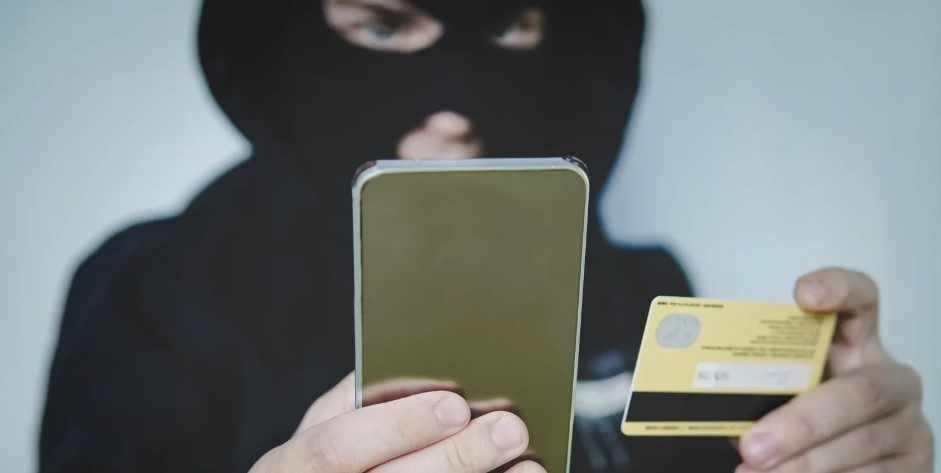
SIM swap fraud is fast becoming one of Africa's most damaging telecom scams. The attack unfolds when fraudsters hijack a victim's phone number, intercept one-time banking passwords, and take full control of another person's identity. It is also a leading cause of identity theft on the continent, orchestrated largely by criminals whose primary goal is to steal people's phone numbers.
The figures illustrate the scale. Identity theft accounts for 63% of all digital financial crime in Africa, costing an estimated $4 billion annually. A separate report found that telecom-associated fraud costs the continent roughly $1.59 billion every year, with SIM swap attacks among the primary drivers of that figure. A large share of these attacks specifically targets mobile money platforms, which fraudsters pursue for large financial gains.
Human carelessness — exposed PINs and passwords among them — plays its part, but Africa's weak cybersecurity systems significantly widen these SIM swap loopholes. Feeble security measures make it easier for criminals to take over phone numbers, access financial accounts, and assume their owners' identities.
How the scam works
SIM swap is the process of transferring an existing phone number onto a new physical SIM card or eSIM profile — the software-based equivalent of a SIM card embedded directly in a device. It is entirely legitimate when a telecom subscriber replaces a lost, stolen, or damaged SIM card or upgrades to a newer network. It becomes fraud — an attack — when it is carried out without the permission of the number's owner.
Part of what makes the hijack so damaging is the role phone numbers play in everyday banking: when one-time passwords are delivered to a subscriber's line, whoever controls the SIM controls the codes that unlock the accounts tied to it. Because such swaps are processed through carriers, telecom staff and insiders are frequently part of SIM swap syndicates, often acting as middlemen. A 2024 Kaspersky report emphasised the scale of this insider problem in Nigeria and identified at least 17 organised SIM swap syndicates active in the country alone.
The economics of the crime are also well documented. A corrupt telecom employee might receive ₦50,000 to process an unauthorised SIM swap. If the fraudster then gains access to a mobile money account holding ₦2 million, the return justifies the risk.
How, then, is Africa racing to curb these telecom attacks and protect its unsuspecting citizens?
South Africa: biometric checks and a five-SIM cap
Earlier this year, Vodacom Chief Risk Officer Johan Van Graan revealed that nearly 60% of South Africa's $320.5 million (R5.3 billion) yearly loss in the telecoms sector is driven by SIM swaps. He noted that the actual fraud does not happen when bad actors gain control of the SIM, but when they start accessing the financial information and resources of the phone line's owner.
South African regulators are now moving to address the situation. Until now, the country's RICA Act (Regulation of Interception of Communications and Provision of Communication-Related Information) has provided no means of verifying the owner of a phone during a SIM swap request — a gap that has left its customer registration process ranked among the bottom five globally. The loophole makes initiating SIM swap fraud as easy as registering a lost phone line: anyone can pick up an already identified line, walk up to a telecom agent, or pay an insider, and gain control of the number.
That is changing. Under draft regulations published by the Independent Communications Authority of South Africa (ICASA) in October, anyone activating a SIM card, swapping one, or keeping an existing mobile number would have their fingerprint or face checked against Home Affairs records — the government database holding citizens' identity information. All telecom operators would be required to verify the subscriber's identity through biometric verification against Department of Home Affairs records to ascertain true ownership of the SIM, and would have to refuse a swap if the person requesting it does not match the records of the subscriber assigned to the number. Because they are published in draft form, these requirements would only bind operators once ICASA finalises them.
In another section of the draft, the regulator is capping the number of mobile numbers an operator may assign to one subscriber at five. Setting this limit eliminates burner SIMs, closes loopholes in multi-SIM porting, and tightens identity verification. The possession of multiple SIMs is a key strategy for fraudsters, and ICASA's threshold cuts off the supply of excess cards used to receive stolen funds, set up mule accounts, or contact telecom call centres during social-engineering attacks. Capping total lines at five also makes it easier for operators to flag anomalies, and blocks the awarding of extra lines entirely if a customer already holds five numbers.
The regulation comes even as the number of active phone lines consistently far exceeds the number of people using them, owing to the multi-SIM paradox. South Africa has 117.3 million subscriptions against a population of 63 million; excluding 21 million minors, the country averages 2.79 subscriptions per person — a surplus that shows how normalised holding multiple lines is, and the scale on which the five-SIM cap will operate.
Nigeria: TIRMS and tighter banking controls
Nigeria may not be going the South African way, but a similar measure is being deployed. Its latest regulatory move against SIM swap fraud is the Telecom Identity Risk Management System (TIRMS), introduced through a Memorandum of Understanding signed in April 2026 between the Central Bank of Nigeria (CBN) and the Nigerian Communications Commission (NCC). Once operational, the portal will allow banks and telecom operators to share real-time telecom status data with financial institutions, letting banks check whether a phone number linked to a transaction was recently swapped, recycled, reassigned, or flagged for fraud. The system has yet to go live, however, and has missed an October 2026 deadline — which means the real-time swap checks it promises are not yet available to the banks it was designed for.
As for the mobile money fraud most closely associated with SIM swaps, the initiative restricts a mobile banking app to one active device at a time: switching devices deactivates the old one and requires fresh authentication. It also sets an outflow threshold of ₦20,000 during the first 24 hours after a mobile banking app is activated on a new device.
To secure real-time verification, the framework requires liveness checks and real-time BVN or NIN verification — Nigeria's Bank Verification Number and National Identification Number — for digital account opening and reactivation, along with enhanced multi-factor authentication for first-time internet-banking logins on a new device.
In a related measure, effective May 1, 2026, the Central Bank of Nigeria limited each Bank Verification Number (BVN) holder to one phone number change — another rule designed to curb SIM swap abuse.
Deployment will decide the outcome
As both countries' initiatives to combat growing SIM swap fraud await deployment, it remains to be seen how effective they will be. The near-term markers are concrete: whether ICASA's draft biometric and five-SIM requirements survive into final regulations, and whether TIRMS moves from a missed deadline to a live system delivering real-time number-status checks. Protecting unsuspecting users from mobile money and telecom-related fraud will depend on how rapidly the measures can be rolled out — and on the extent to which they can alleviate or eradicate the continent's rising financial dangers.

