Seoul's 'NEET Company' Offers Reclusive Youth a Low-Pressure Path Back to Society
Key Takeaways
- •Seodaemun District in Seoul is operating a virtual "NEET Company" through Oct. 19 for 33 reclusive young adults aged 19 to 39.
- •An estimated 540,000 young Koreans live in social isolation or reclusion, including about 130,000 in Seoul, nearly 5 percent of the capital's youth population.
- •Participants log in online five days a week, meet in person weekly, and set personal objectives instead of corporate assignments, with no performance metrics imposed.
- •The program ends with a public showcase in October organized entirely by the participants themselves.
- •Seodaemun District is partnering with the nonprofit NEET People to evaluate the program, with results likely to inform youth welfare policy in other districts and potentially other Korean cities.
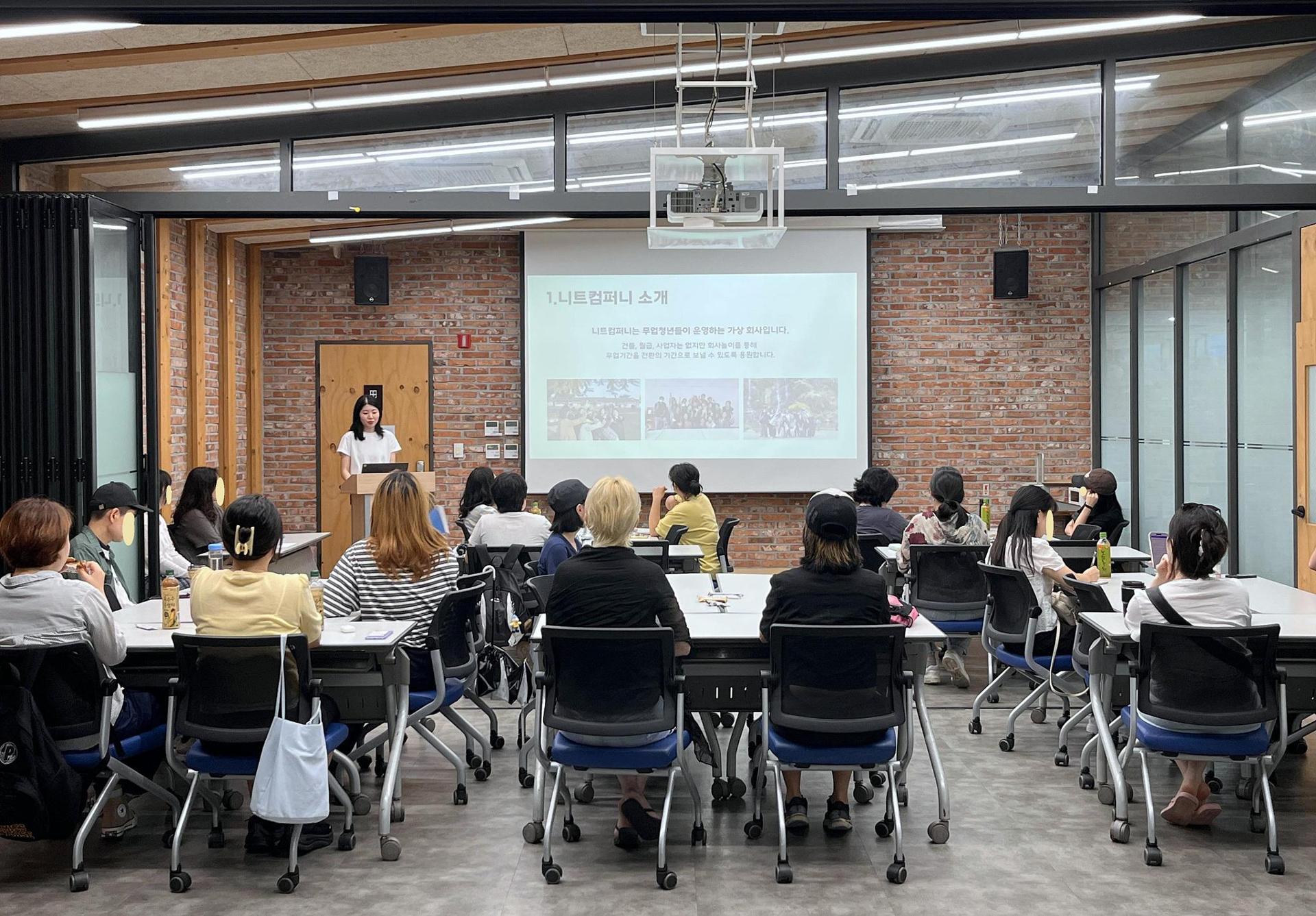
In a quiet community center in western Seoul, 33 young adults have recently committed to an unusual daily routine: waking up, dressing and reporting for work at a company that exists for the sole purpose of helping them reenter society.
For many of them, walking through the front door was a tentative first step back into the outside world after months or even years spent largely behind closed bedroom doors.
They are the newest employees of "NEET Company," a virtual firm operating in Seodaemun District through Oct. 19.
Despite its corporate appearance, the office imposes no sales targets, demands no career milestones and measures no corporate performance metrics. Designed specifically for reclusive youth and those classified as NEET — an acronym for adults not in education, employment or training — the municipal initiative functions as a low-stakes buffer zone. Its goal is to help participants rebuild daily life rhythms and human connections without the overwhelming pressure of traditional competitive employment.
A silent epidemic
The program addresses a silent epidemic sweeping Korea. According to comprehensive national health and welfare surveys, an estimated 540,000 young adults across the country live in state-defined social isolation or acute reclusion. In Seoul alone, municipal studies indicate that roughly 130,000 young people — nearly 5 percent of the capital's youth population — are socially withdrawn from public life.
Sociologists attribute the growing phenomenon to a combination of extremely competitive academic pressure, prolonged economic stagnation, rigid social expectations and a challenging entry-level job market. After encountering early academic or professional setbacks, many young Koreans experience severe burnout and deep feelings of inadequacy, causing them to withdraw from public life entirely in order to avoid the intense judgment of an achievement-oriented society.
The issue has drawn growing policy attention. South Korea's government has in recent years expanded youth welfare measures targeting social isolation, and Japan — which has long grappled with its own hikikomori population, estimated in the millions by cabinet office surveys — has similarly experimented with public programs easing reclusive individuals back into community life, making NEET Company part of a broader regional effort to treat reclusion as a public welfare concern rather than a private failing.
How the program works
At NEET Company, participants aged 19 to 39 learn to navigate the social world again on their own terms. Employees log in online five days a week to verify their routines and gather in person once a week at local municipal centers from 11 a.m. to 4 p.m. Rather than receiving corporate assignments, workers set personal objectives — such as self-care routines, career exploration or creative projects — as their official daily duties.
Collaboration within the virtual firm is entirely peer-driven. Participants propose internal "company clubs," organize hiking trips along the nearby Mount An, take part in animal-assisted therapy and join community environmental tours to reengage with their surrounding neighborhood.
The two-month experience culminates in October with a public showcase organized entirely by the participants themselves, offering them a tangible sense of shared accomplishment and professional dignity without corporate anxiety.
To measure long-term impact, Seodaemun District is partnering with the nonprofit advocacy group NEET People to conduct pre- and post-program interviews, gathering qualitative data to refine future youth welfare policies across the capital. With reclusion figures at this scale, the outcomes of such municipal pilots are likely to inform how other districts across Seoul — and potentially other Korean cities — design interventions for withdrawn youth.
"What reclusive youth need is not pressure to hurry back into society, but the time and space to restart their daily routines and reconnect with people at their own pace," said Park Woon-ki, mayor of Seodaemun District. "We hope these young adults find their footing and place in the community here."
This article was published with the assistance of generative AI and edited by The Korea Times.
