sEODo Band Releases Debut Full-Length Album 'ONE,' Nine Years After Shaping Music Around 'Chunhyangga'
Key Takeaways
- •sEODo BAND's debut full-length album "ONE" releases on August 14, 2026, evolving from a live set the group built nine years earlier using five passages from the pansori work "Chunhyangga."
- •The album title carries layered meaning across languages, referencing the Korean word for "circle," the emotional forces of resentment and longing central to the "Chunhyangga" narrative, and the English word marking the band's first full-length release.
- •The 12-track album contains seven songs and five "aniri" passages — the spoken narration component of pansori — each produced by a different band member, with no English lyrics included.
- •sEODo BAND was formed in 2017 and gained wider public recognition through broadcaster JTBC's traditional music competition show "Poongryu" in 2021, with vocalist sEODo later appearing on Season 4 of "Sing Again" in 2025.
- •The band resists being categorized strictly as "Joseon pop" and hopes listeners will view them as musicians incorporating traditional Korean elements rather than as traditionally trained artists crossing into popular music.
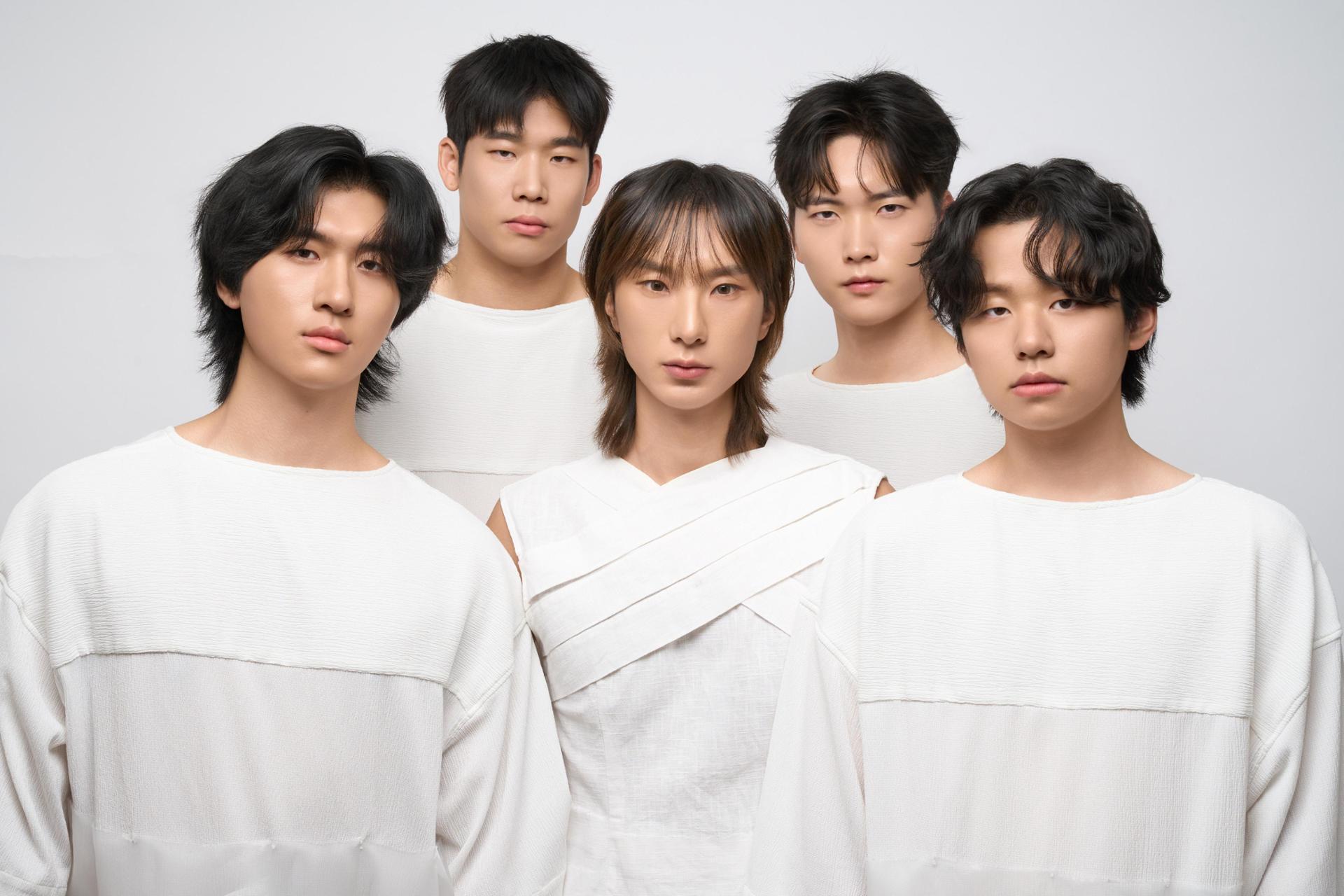
sEODo Band Releases Debut Full-Length Album 'ONE,' Nine Years After Shaping Music Around 'Chunhyangga'
Published Aug 14, 2026, 6:00 a.m. KST
Before sEODo BAND had built much of an audience, the group faced a challenge familiar to nearly every emerging act — it needed 30 minutes of music to fill a live set.
The solution came from an unexpected source. The band selected five highlight passages from the traditional pansori work "Chunhyangga," strung them together, and discovered that the half-hour set told the complete story of the 18th-century Korean love epic from beginning to end. "Chunhyangga" is one of the five surviving madangs, or narrative cycles, of pansori — the centuries-old Korean storytelling art in which a solo vocalist and a drummer perform an hours-long sung drama. Pansori was designated a UNESCO Masterpiece of the Oral and Intangible Heritage of Humanity in 2003.
Nine years later, that set has become the band's first full-length album, "ONE," slated for release on Friday, Aug. 14.
"It turned out to be more fully realized than we expected," the band's vocalist, sEODo, said during an interview at The Korea Times headquarters in central Seoul on Aug. 3. "Making a full-length in that shape became something the band had wanted to do for years."
Title as multilingual wordplay
The album's title carries layered meaning in Korean that English cannot fully convey. "ONE," or "won," means circle in Korean. It also corresponds to the "won" of resentment and of longing — the two forces that drive the lovers through the "Chunhyangga" narrative. The plot itself loops: a couple meets, parts, and meets again. The English word "one" simultaneously marks the band's first full-length release.
"An old story survived across time, and our recreating it now is another turn of the circle," sEODo said.
Formation and breakthrough
Formed in 2017, sEODo BAND pairs sEODo, who trained in traditional Korean vocal music, with a conventional rock lineup: guitarist Yeon Tae-hee, bassist Kim Tea-joo, drummer Jeong Hyun-bin, and keyboardist Kim Seong-hyun.
The group gained wider recognition on broadcaster JTBC's traditional music competition show "Poongryu" (2021). sEODo more recently appeared on Season 4 of the music show "Sing Again" in 2025. The band's 2024 five-song album, "Break Through," emerged from approximately three years of creative drought.
Defining — and resisting — "Joseon pop"
The descriptor that follows the band everywhere is "Joseon pop," a label the members have grown cautious about over-defining.
"I can't explain [Joseon pop] as a genre defined by using a particular rhythm or a particular scale," Kim Seong-hyun said. "If you call it a term that holds the emotional register Koreans can feel, that's broad enough to cover what our band does."
sEODo said the band spent its early years trying to explain "Joseon pop" in technical terms — borrowing this melody or that rhythm — but eventually stopped believing the explanation.
"Once we'd built the definition that way, we honestly weren't sure it meant anything," he said. "And we shouldn't be boxing in the music we make."
What the band offers instead is a direct musical experience. At festivals and outdoor performances, sEODo Band always closes with "Ganggangsullae," the traditional circle dance song that nearly every Korean knows without formal instruction. The song, like pansori itself, carries UNESCO recognition as intangible cultural heritage.
"Koreans who have never heard of us still know that song," sEODo said. "Our music has something that can be shared through that kind of inner resemblance. And it isn't about telling international listeners, this is uniquely Korean, you wouldn't get it. It's more like, there's something only Koreans have, maybe you could give it a try?"
Between two musical worlds
Sitting between the worlds of traditional music and modern pop-rock has been less contentious than one might expect. Criticism, sEODo said, has been scarce because each scene assumes the band belongs to the other.
"In the traditional music scene we're the pop act, and in pop we're the traditional act," he said. "So they end up placing us in a space of respect."
That very respect, however, is what bothers him most. He recently read an academic paper analyzing the band as a case study of traditional music's evolution. While the paper was generous in praise, sEODo felt it pointed in the wrong direction.
"I'd rather people see us not through the lens of a traditionally trained musician doing something, but as musicians, full stop, with a traditional element folded in," he said.
The band is hosting a listening session for critics the day before the album's release, hoping to provoke discussion rather than deference.
sEODo is unreservedly enthusiastic about the widening field around the band, including the newly debuted gugak-idol duo Dodree. The emergence of such acts signals a small but visible shift in a domestic music industry long dominated by K-pop, where gugak — traditional Korean music — has rarely been a commercial driver.
"It's as natural as hip-hop scenes growing in the United States," sEODo said. "It's the one weapon in the global music market that nobody can copy."
Track highlights and album structure
For international listeners, sEODo recommends the opening track, "Arirang," which is built on the triple meter that underpins Korean traditional music and turns, fittingly, in circles. "Arirang" is widely regarded as Korea's most iconic folk song, with regional variants numbering in the thousands and UNESCO recognition of its own in 2012. Guitarist Yeon Tae-hee nominates "Love Song," an R&B-influenced track whose melody moves through a pentatonic scale that resists the ear's expectations.
The 12-track album contains no English lyrics at all, which the band insists was unintentional. Between the seven songs sit five passages of "aniri" — the spoken narration component of pansori — each produced by a different band member.
"Like the name says, a circle keeps rolling," sEODo said. "It has rolled from the Joseon era until now, and we've set it moving again."

