U.S. Senate Advances Russia Sanctions Bill, Exposing India to Potential 100% Tariffs
Key Takeaways
- •The U.S. Senate passed a Russia sanctions bill with bipartisan support that could authorize tariffs of up to 100% on the world's five largest buyers of Russian energy, including India and China.
- •The legislation must still clear the House of Representatives and could undergo amendments before reaching the president, meaning its final form remains uncertain.
- •India does not face an automatic 100% tariff from the Senate vote alone, as the bill grants discretionary authority to the president rather than mandating immediate implementation.
- •Discounted Russian crude has become a significant component of India's energy strategy, and replacing those supplies entirely could raise sourcing costs for Indian refiners.
- •The bill extends beyond trade measures against Russian energy buyers to include additional sanctions on Russia's energy, defense, and financial sectors, as well as provisions targeting Iran.
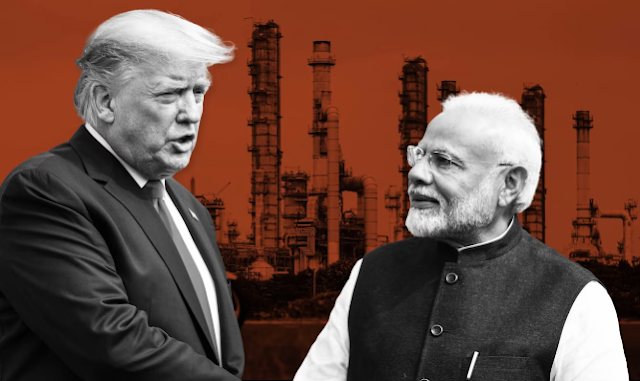
U.S. Senate Advances Russia Sanctions Bill, Exposing India to Potential 100% Tariffs
The U.S. Senate has passed a sweeping Russia sanctions bill that could grant President Donald Trump authority to impose tariffs of up to 100% on major buyers of Russian energy, placing India among the countries facing potentially significant economic consequences.
The legislation represents a major escalation in Washington's effort to pressure Moscow by targeting not only Russia itself but also some of its largest energy customers. The bill passed the Senate with overwhelming bipartisan support but must still clear the House of Representatives before reaching the president's desk.
The development was highlighted by Whale Insider on X, drawing attention from financial and cryptocurrency-focused audiences to the potential consequences for global markets.
Senate Vote Raises Pressure on Major Russian Energy Buyers
The Senate's approval marks a significant step for legislation that has been under discussion for months. The revised proposal focuses on countries continuing to purchase substantial quantities of Russian oil and natural gas.
Under the revised framework, the maximum additional tariff could reach 100% for the five largest purchasers of Russian energy. India, China, Slovakia, Hungary, and Azerbaijan have been identified as countries that could potentially fall within the measure's scope.
The legislation aims to increase the economic cost of doing business with Russia while reducing the flow of energy revenue that supports Moscow's economy. For India, however, the issue is particularly complex. Discounted Russian crude has allowed Indian refiners to secure supplies at competitive prices, meaning any sudden disruption could affect not only international trade but also domestic fuel economics.
India's Role as a Major Russian Oil Customer
India dramatically increased its purchases of Russian crude after the war in Ukraine disrupted traditional energy trade flows. Western countries imposed sanctions on Russia and attempted to limit Moscow's ability to generate revenue from oil exports. India did not join the Western sanctions regime and instead continued purchasing Russian crude, much of it routed outside the G7's $60-per-barrel price cap mechanism that restricts Western shipping and insurance services for Russian oil sold above that threshold.
The resulting trade relationship became increasingly important to both countries. For India, Russian oil provided access to relatively inexpensive crude. For Russia, India became a key destination for energy exports that faced restrictions in Western markets. That relationship is now creating tension with Washington, as the proposed U.S. legislation attempts to pressure major Russian energy buyers by threatening tariffs on their exports to the United States.
A 100% Tariff Would Represent a Major Economic Shock
A 100% tariff would represent an extraordinary increase in the cost of Indian products entering the U.S. market. In practical terms, it could substantially increase the landed price of affected goods, potentially reducing their competitiveness against products manufactured in the United States or sourced from other countries.
Indian exporters of pharmaceuticals, textiles, engineering products, chemicals, technology services, and other goods could face pressure depending on how the policy is ultimately implemented. However, the exact impact cannot be determined until the legislation becomes law and the administration decides whether and how to use the authority.
Critically, India does not currently face an automatic 100% tariff simply because the Senate passed the bill. The legislation grants the president the authority to impose such tariffs but does not mandate their immediate application.
The Bill Still Requires House Approval
The Senate vote is an important milestone, but it is not the final step. The legislation must move through the House of Representatives before it can reach the president's desk. The House could approve the legislation, amend it, or decline to advance it. Any differences between the Senate and House versions would also need to be resolved.
The final form of the legislation could therefore change significantly before implementation. For businesses and investors, the next stage of the congressional process may be just as important as the Senate vote itself.
Presidential Authority and Flexibility
One of the most closely watched elements of the legislation is the authority it would give the president. The revised proposal allows the president to impose tariffs of up to 100% on certain countries that continue to purchase Russian energy.
The legislation also includes mechanisms that could allow the president to waive sanctions under certain circumstances or determine that an exemption is in the national interest. This gives the White House considerable flexibility and means that even if the bill becomes law, a 100% tariff would not necessarily be imposed immediately. The administration could choose to use the authority as a negotiating tool.
India-U.S. Trade Relations Face New Pressure
The legislation arrives at a sensitive moment for Washington-New Delhi relations. India and the United States have expanded economic and strategic ties in recent years, including cooperation in technology, defense, manufacturing, and supply chains through frameworks such as the Quadrilateral Security Dialogue with Japan and Australia. Both countries have also been working to deepen trade relations.
A punitive tariff linked to India's purchases of Russian oil could complicate those efforts. Indian officials have previously indicated that New Delhi is closely monitoring developments surrounding the proposed U.S. legislation.
The potential conflict is clear: Washington wants to reduce Russia's energy revenue, while New Delhi wants to maintain energy security and secure crude at economically attractive prices. Those objectives do not necessarily align.
India's Energy Security at the Center of the Dispute
Energy security is one of the most important factors behind India's continued purchases of Russian crude. India is one of the world's largest energy consumers and depends heavily on imported oil. Any major increase in the price of imported crude could affect transportation, manufacturing, electricity generation, and consumer prices, making energy costs a critical national economic issue.
Indian refiners have benefited from access to Russian crude, particularly when it has traded at a discount to other international supplies. Some of that crude has also been processed into refined petroleum products and re-exported, adding a layer of complexity to the trade dynamics. A policy forcing India to significantly reduce Russian imports could therefore increase sourcing costs. The government would have to balance the economic benefits of cheaper Russian crude against the potential costs of U.S. trade penalties.
Broader Sanctions Targeting Russia and Iran
The legislation extends beyond tariffs on Russian energy buyers. It also includes additional sanctions targeting Russia's energy, defense, and financial sectors. Measures discussed in the revised legislation include action against Russia's shadow fleet of oil tankers and major energy projects. The broader objective is to make it more difficult for Russia to maintain revenue from energy exports and finance its war effort.
The legislation also contains provisions targeting Iran, adding another dimension to the sanctions package. The bill should therefore not be viewed solely as a trade measure against India but as part of a wider U.S. foreign-policy strategy.
China's Position Amplifies Global Significance
China is also one of the largest buyers of Russian energy, making the legislation potentially significant for the world's two most populous countries simultaneously. If Washington were to impose severe tariffs on both nations, the consequences could extend far beyond bilateral trade. Global supply chains could be disrupted, energy markets could become more volatile, and companies might reconsider where they manufacture goods intended for the U.S. market.
Global Oil Market Implications
The potential consequences extend into the global energy market. If major Russian oil buyers reduce purchases because of U.S. pressure, Russia could be forced to redirect more of its crude to alternative markets. Simultaneously, India and China would need to replace some Russian supplies with crude from other producers, potentially changing global trade flows.
Prices could become more volatile depending on how quickly alternative supplies become available. The impact would depend heavily on how aggressively the United States implements the sanctions and how Russia, India, and China respond.
Potential for Alternative Energy Suppliers
One possible response from India would be to increase purchases from other oil-producing countries. Potential suppliers could include countries in the Middle East, the United States, and other major energy exporters. India has already diversified its energy relationships over time, though replacing Russian barrels entirely could come at a higher cost.
The economics of crude oil are affected by quality, transportation distance, refining compatibility, and pricing, meaning replacing Russian barrels is not necessarily a simple one-for-one process.
Opportunities for U.S. Energy Producers
The dispute could also create opportunities for American energy producers. If India reduces its dependence on Russian crude, U.S. energy companies could potentially capture a larger share of India's import market. American crude exports have expanded significantly over the years, and India has already purchased U.S. energy. A shift in sourcing could strengthen U.S.-India energy trade, though the transition would depend on price competitiveness and logistics.
Impact on Indian Exporters and Key Sectors
If the tariff authority becomes law and is used against India, Indian exporters could find themselves caught between geopolitical policy and commercial realities. Companies selling products to the United States may face higher costs. Some could attempt to absorb those costs, while others might increase prices or shift production and supply chains. The ultimate impact would depend on the products involved and how easily buyers can find alternative suppliers.
India is a major supplier of generic medicines to the U.S. market, making pharmaceuticals one of the sectors investors will likely monitor closely. A significant tariff could raise costs throughout the pharmaceutical supply chain. However, pharmaceutical trade involves complex regulatory and public-health considerations, meaning the administration could treat certain categories differently. Until the final legislation and implementing regulations are known, it is too early to determine exactly which products would be affected.
Financial Market Sensitivity
Financial markets tend to react quickly to major geopolitical and trade developments. The Senate's passage of the bill could increase uncertainty around India-U.S. trade relations. Investors may monitor Indian equities, the rupee, energy companies, and exporters for signs of market stress.
The actual economic impact may remain limited until there is greater clarity about whether the House will approve the legislation and whether Trump ultimately uses the tariff authority. Markets therefore face a period of uncertainty rather than an immediate policy shock.
India's Strategic Options
The central question for policymakers is whether the threat of U.S. tariffs will change India's energy strategy. India could potentially reduce Russian purchases to lower the risk of U.S. penalties, though doing so could increase energy costs. New Delhi could instead continue buying Russian oil and negotiate with Washington, or diversify gradually while maintaining some Russian imports.
The passage of the Senate bill does not eliminate diplomacy. The threat of tariffs could itself become a negotiating instrument. Washington could use the legislation to encourage India to reduce its Russian energy purchases, while New Delhi could seek exemptions or alternative arrangements. The final outcome could therefore look very different from the headline risk of a 100% tariff.
Currency Market Considerations
Trade tensions can also affect currency markets. If investors expect weaker Indian exports to the United States, demand for the rupee could face pressure. Simultaneously, higher energy costs could increase India's import bill. Because crude oil is typically purchased in dollars, a higher oil bill can increase demand for the U.S. currency. That combination could create additional pressure on India's external balance, though the actual currency impact would depend on the scale and duration of any tariff policy.
Broader Implications for the U.S.-India Relationship
The dispute over Russian oil illustrates the complicated nature of the U.S.-India relationship. The two countries increasingly cooperate on strategic issues, but economic and geopolitical interests do not always align. India has maintained a degree of strategic autonomy in its foreign policy, rooted in decades of Cold War-era ties with Moscow and a long-standing reliance on Russian military equipment, even while strengthening relations with the United States and other Western countries. India's simultaneous membership in groupings such as BRICS alongside both Russia and China further underscores the complexity. Washington's sanctions strategy is now testing how far that balancing approach can continue.
Relevance for Cryptocurrency Markets
Although the legislation primarily concerns Russia, oil, and international trade, cryptocurrency investors may also pay attention. Geopolitical tensions can influence global risk sentiment. Higher energy prices, stronger inflation expectations, and trade disruptions can affect monetary policy and financial markets, which can ultimately influence Bitcoin and other digital assets.
If markets become more defensive, risk assets could experience volatility. Conversely, prolonged geopolitical uncertainty can sometimes strengthen the narrative around decentralized assets and alternative financial systems. The relationship is not direct, but macroeconomic developments remain relevant for cryptocurrency markets.
Next Steps in the Legislative Process
The next major step is the House of Representatives. If the House advances the legislation, lawmakers will have to resolve any differences between the congressional versions. The president would then have to decide whether to sign the bill. Even after enactment, implementation could involve additional decisions by the administration.
For India, that means there is still time for diplomacy. The current 100% tariff risk is serious, but it is not yet equivalent to a confirmed 100% tariff.
Outlook
The U.S. Senate's passage of the Russia sanctions bill has raised the possibility of a major new trade confrontation between Washington and India. The legislation could give President Trump authority to impose tariffs of up to 100% on some of the world's largest buyers of Russian energy, including India. However, the measure has not yet become law, and India is not automatically subject to a 100% tariff as a result of the Senate vote.
The bill must still navigate the House of Representatives and potentially undergo further changes before reaching the president. For India, the stakes are substantial: Russian crude has become an important part of the country's energy strategy, providing refiners with access to competitively priced supplies. For the United States, the legislation represents an effort to increase pressure on Russia by targeting countries that continue to purchase its energy exports.
For global markets, the outcome could affect oil flows, trade relationships, currencies, and investor sentiment. The central question now is whether the threat of severe tariffs will push India to reduce its Russian oil purchases or instead encourage a new round of negotiations between Washington and New Delhi. The Senate has made its position clear; the next stage will determine whether that threat becomes policy.

