Psychologist Identifies New 'Red Flags' in Trump's Public Behavior at Las Vegas and Oval Office Appearances
Key Takeaways
- •Dr. John Paul Garrison analyzed two recent Trump appearances — one in Las Vegas and one in the Oval Office — and reported identifying additional indicators of neurological change.
- •During the Las Vegas speech, Trump stumbled over words and exhibited frequent involuntary elbow jerks that Garrison associated with a condition called myoclonus.
- •Garrison observed that apparent impairments have been increasingly concentrated on the right side of Trump's body and have grown more frequent over time.
- •The psychologist stated that the observed changes are not consistent with normal aging and expressed concern they may be affecting the president's judgment and decision-making.
- •Garrison's analysis is based on publicly available video footage rather than a clinical examination, a limitation medical professionals typically note when discussing remote assessments.
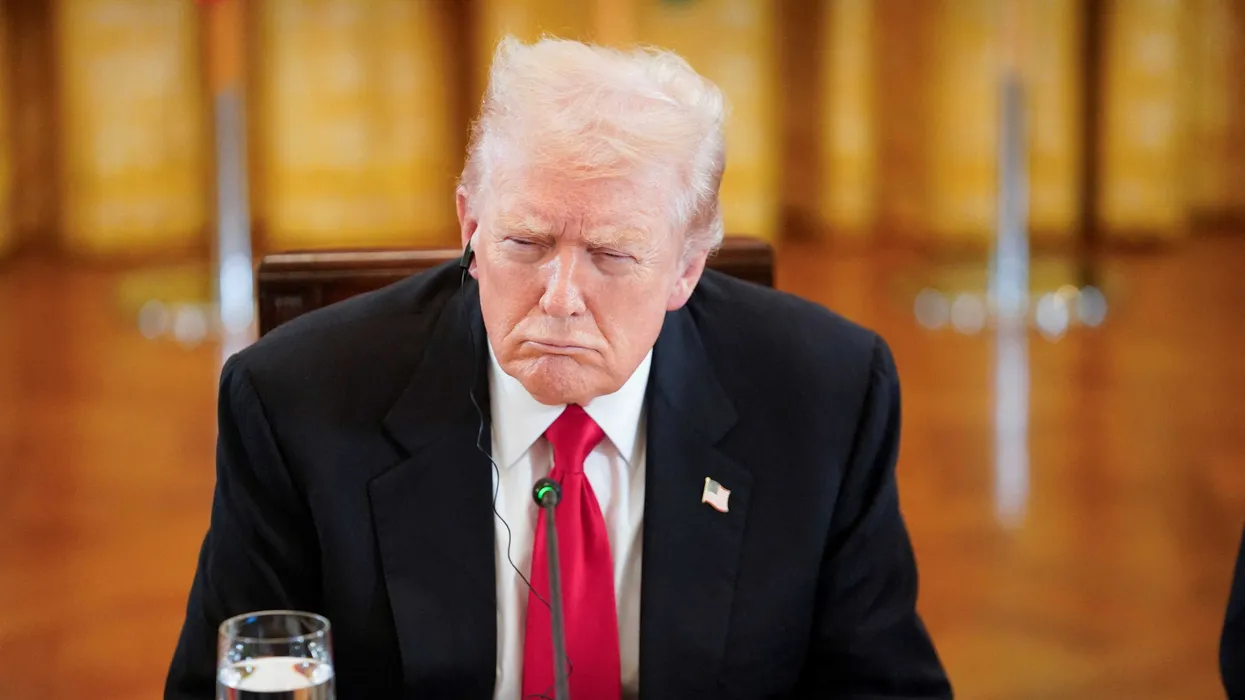
President Donald Trump continues to exhibit signs of what a licensed clinical psychologist describes as worsening mental decline, with new "red flags" emerging during two recent public appearances. The observations come amid heightened public attention to presidential fitness, an issue that has featured prominently in recent political discourse.
Dr. John Paul Garrison, a licensed forensic and clinical psychologist who specializes in body language analysis, detailed his observations in a recent video. Garrison's analysis is based on publicly available footage rather than an in-person clinical examination, a distinction medical professionals typically cite when discussing the limitations of remote assessments. Garrison, who has produced multiple videos assessing Trump's public behavior, analyzed two appearances — one at an event in Las Vegas and another in the Oval Office — and said both displayed further indicators of neurological change.
"Over the past several months, I've been frequently analyzing President Trump's behavior because it has gotten more erratic," Garrison said. "It's gotten more unusual, and we're seeing more neurological hiccups. As I've mentioned for months now, it appears that there are neurological changes from President Trump. Whether it's post-stroke or something else, we have seen distinct changes. The reason this matters so much, and the reason that I'm covering it so much, is that I believe we are seeing this play out on the world stage. I think it is affecting his judgment. I think that it is affecting his ability to make decisions, and it certainly is affecting his behavior, and I'm going to show you in what ways that it affects his behavior."
Garrison began by selecting a random point in Trump's Las Vegas speech to check for verbal difficulties. Within seconds, the president appeared to stumble over his words, at one point saying "respondering" while attempting to say "responding."
"I really did just pick a random spot in this video. It is wild how frequently this is happening," Garrison said.
Trump also showed occasional difficulty pronouncing R-sounds in certain words, which Garrison described as a common issue among patients experiencing neurological problems. The psychologist additionally pointed to an unusual jerk of Trump's elbow during the speech, stating: "It looks like myoclonus, which is basically an involuntary jerk, and that can be associated with a wide variety of neurological challenges." Garrison noted that this movement was "very frequent" throughout the address.
Garrison also addressed speculation surrounding Trump's hair at the Las Vegas event. Numerous observers noted that it appeared noticeably different, with some suggesting he may be wearing a wig or have undergone cosmetic alterations to change the color and add volume.
"I think historically he's very much had his own hair, but at this point it looks like there may be extensions," Garrison said. "His hair looks much fuller than normal because if we look at other pictures recently, it seems a lot more transparent than it does right now."
Garrison added: "I am a bit concerned about what that might mean psychologically for someone like Donald Trump. We are already seeing what I think is impaired decision-making. If he is starting to not like the way he looks, or if he is starting to have some sort of self-consciousness about his hair, which historically I don't think he's ever worn extensions, which it appears to be that he's wearing something like that now. That does have me concerned about more changes in his behavior because of that."
Turning to Trump's Thursday Oval Office appearance, Garrison noted a markedly different "energy" and "behavior." He highlighted a claim Trump made while arguing against birthright citizenship, in which the president asserted that some immigrants were found to have had 56 and 98 children, respectively.
"What we're observing here is his inability to use proper judgment," Garrison argued. "He does not understand that if he's exaggerating, that that's too much. That doesn't make any sense."
During the same appearance, Trump appeared to focus unusual attention on his right hand. Garrison noted that he has observed increasing issues associated with the right side of the president's body.
"It seems the impairments that are there are becoming more and more obvious and more and more frequent," Garrison concluded. "I do want to be clear that I do not think that what we're observing are normal age-related changes. There are a lot of changes that happen as people are getting older, but I do not think that adequately explains what we're observing in President Trump." Garrison's assessment joins a broader public conversation about the health and cognitive fitness of aging political leaders, a topic that has drawn sustained attention across the political spectrum.

