Clarity Act’s Senate Defeat Hands Crypto Rulemaking Reins to SEC and CFTC
Key Takeaways
- •The Senate fell short in a 49-50 procedural vote on the Clarity Act, leaving the crypto market structure bill well below the 60 votes needed to advance.
- •The legislation aimed to resolve whether the SEC or the CFTC has jurisdiction over digital assets.
- •Democrats voted as a bloc against the motion, joined by three Republicans, while Senator Thom Tillis switched his vote to no in a maneuver that preserves the option of reviving the bill.
- •Seven Democratic negotiators described the outcome as "a setback, but not the end" and said they remain committed to bipartisan efforts to pass the legislation.
- •Regulators are moving to fill the gap, with the SEC releasing an innovation exemption enabling tokenized stocks to trade onchain and the CFTC issuing no-action relief for software providers while sending a broader crypto rulemaking proposal to the White House.
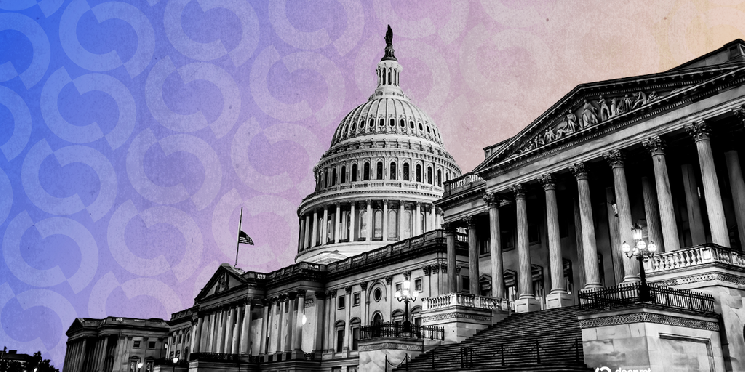
The Senate failed to advance the Clarity Act, crypto’s landmark market structure bill, in a 49-50 procedural vote on Tuesday, leaving the measure well short of the 60 votes needed to overcome a filibuster and move forward after more than a year of grueling bipartisan negotiations. The legislation aims to settle the jurisdictional question at the heart of crypto regulation — which of the two market regulators, the SEC or the CFTC, oversees digital assets. Democrats voted as a bloc against the motion, and three Republicans joined them in opposition. The breakdown triggered finger-pointing on both sides, though seven Democrats involved in the talks called the outcome “a setback, but not the end.”
For anyone tracking crypto policy in Washington, it was a long and bruising week — and one that marked a shift in the center of gravity from Congress to the regulators. The dramatic vote exposed how deeply President Trump’s crypto dealings have eroded Democrats’ willingness to work with Republicans on regulating an industry they themselves say badly needs oversight.
Attention has now turned to agencies that are already moving. SEC Chair Paul Atkins tied a new tokenized-stock innovation exemption to the bill’s failure, while the CFTC issued no-action relief for certain software providers and sent a broader crypto rulemaking proposal to the White House.
Republican Sens. Susan Collins (R-ME), Josh Hawley (R-MO), and Jerry Moran (R-KS) crossed party lines to oppose the motion. Senator Thom Tillis (R-NC) initially voted yes before switching to no, a procedural maneuver that preserved the option of bringing the bill back at a later date. That left the final recorded tally at 49-50.
Down in the basement of the Capitol, negotiations continued right up until the vote began. A Democratic staffer told Crypto In America that Tillis was willing to delay the vote to keep negotiating, but that a staffer for Senate Banking Committee Chair Tim Scott (R-SC) abruptly ended the talks without explanation.
The collapse quickly gave way to mutual recriminations. Republicans accused Democrats of never being serious about passing the bill, while Democrats accused Republican leaders of forcing the vote before negotiations were finished to protect what one staffer called Trump’s “grift.”
“Senate Democrats proved they were never truly serious about protecting consumers and preserving American leadership,” said Sen. Cynthia Lummis (R-WY), the bill’s chief architect. “I sat at the table with Senate Democrats working in good faith to get this done while they played games.”
But some of the same Democrats who voted no insist the bill is not dead.
“It’s not going to die,” Sen. Angela Alsobrooks (D-MD) told Crypto In America immediately after the vote. “You know why it’s not going to die? Because over 70 million Americans are engaging in an industry that is unregulated, and we have a responsibility to regulate.”
Alsobrooks was joined by six other Democrats involved in the negotiations: Sens. Kirsten Gillibrand (D-NY), Mark Warner (D-VA), Cory Booker (D-NJ), Catherine Cortez Masto (D-NV), Ruben Gallego (D-AZ), and Raphael Warnock (D-GA). The group described the vote as “a setback, but not the end” and said it remained “committed to working in a bipartisan fashion” to pass the Clarity Act.
The statement landed amid early efforts to restart bipartisan talks and gauge appetite on both sides for returning to the table, according to three sources familiar with the discussions.
Significant fatigue persists across the industry,, with many now looking to regulators to write the rules of the road rather than waiting on Congress.
“Congress passed the GENIUS Act and pushed hard on the Clarity Act, but the political will to get it across the finish line wasn’t there. Congress had its chance and didn’t rise to it,” said Solana Policy Institute President Kristin Smith. “We’re now looking to regulators for guidance, and that’s the more viable path forward right now.”
The GENIUS Act, which established a federal framework for stablecoins, was signed into law in July — leaving market structure as the major piece of crypto legislation Congress has yet to deliver.
SEC Chairman Paul Atkins explicitly tied the agency’s newly released innovation exemption to the Clarity Act’s failure to advance in the Senate. The highly anticipated measure, published Thursday, opens a pathway for tokenized U.S. stocks to trade onchain and has fueled fresh excitement across the industry as regulators move to take the lead.
The CFTC is also pressing ahead. Staff issued a no-action position for passive software providers, while the agency submitted a broader crypto markets rulemaking proposal to the White House for review — the administrative step that typically precedes a public draft. Details of the proposal are not yet public. The exemption’s implementation and the proposal’s path through White House review are now the near-term markers to watch as regulators fill the gap left on Capitol Hill.
The industry is getting clarity in one form or another. For now, it will come with a lowercase “c,” delivered by regulators rather than Congress.
Crypto in America is a newsletter written by Eleanor Terrett.

