Secret Service report undercuts Trump's case against Comey
Key Takeaways
- •The Secret Service reportedly classified the Comey seashells matter as a “non-referred” case.
- •People involved in the probe allegedly described some investigative steps as “overkill” and “legally questionable.”
- •Trump’s allies have argued that Comey’s “8647” post was part of a broader pattern that endangered the president.
- •Todd Blanche said during his confirmation hearing that the post was not an isolated incident and was presented to a grand jury as part of wider evidence.
- •The dispute comes against the backdrop of Trump’s long-standing anger over Comey’s role in the FBI’s Crossfire Hurricane-related investigations.
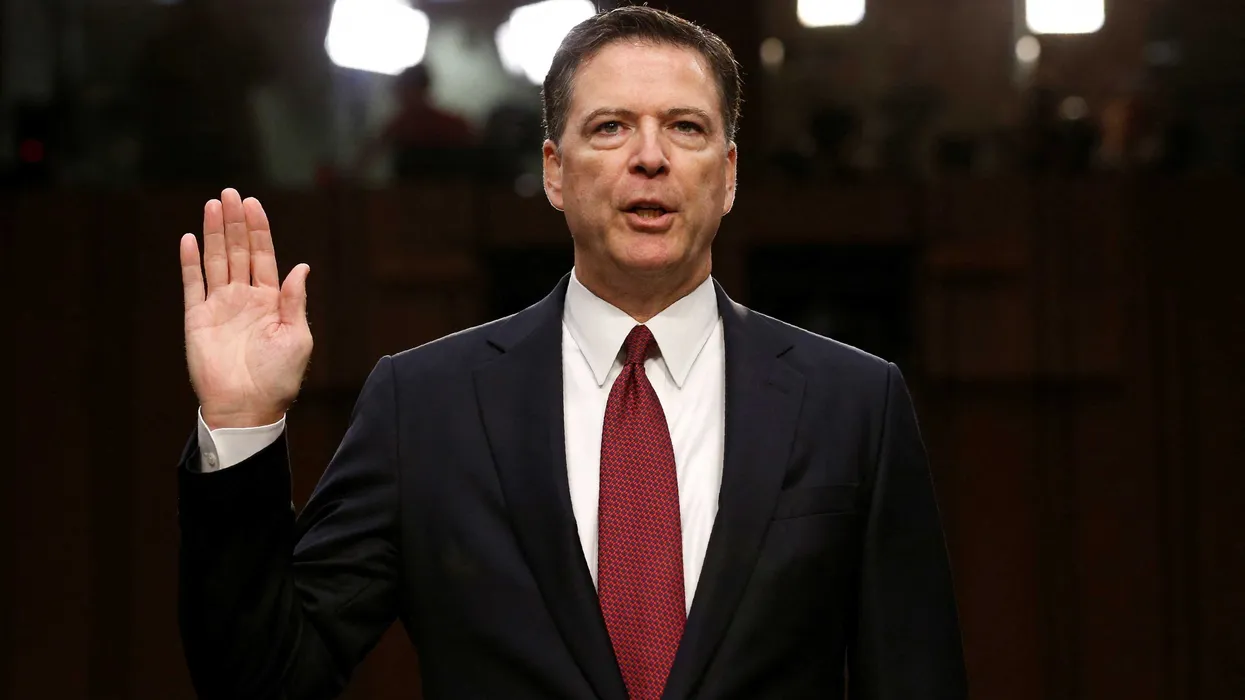
Even though President Donald Trump insists that former FBI Director James Comey threatened his life by photographing seashells that spelled "8647," a new Secret Service report indicates that even those investigating the former lawman are skeptical of the president's case.
"The Secret Service categorized Comey's seashells prosecution as 'non-referred' — and the probe's participants called certain steps 'overkill' and 'legally questionable,' per a new defense brief," Adam Klasfeld, editor-in-chief of All Rise News, posted on X on Tuesday.
Klasfeld shared an embedded government document that said the government had failed to note "that its investigation here predated the Virginia indictment undermine the likelihood of vindictiveness. Shortly after the Secret Service opened the investigation—and undertook steps that its participants described as 'overkill' and 'legally questionable,' Mot. 9-10—the Secret Service categorized the case as 'non-referred.'"
The filing adds a layer of context to a dispute that has already become politically charged: the key question in the government’s handling of Comey’s post is not just what the message meant, but how investigators themselves assessed it at the time. That distinction matters because the report, as described in the brief, appears to undercut the idea that the case was straightforward or uniformly viewed as a serious threat.
By contrast, Trump's attorney general Todd Blanche claimed during his confirmation hearing in May that the "8647" post was part of a pattern of behavior by Comey that jeopardized the president's life.
"This is not just about a single Instagram post," Blanche said at the time. "This is about a body of evidence that [prosecutors] collected over the series of about 11 months. That evidence was presented to the grand jury."
CBS News reported in August that Trump is angry at Comey at least in part because the former bureaucrat inadvertently led to the FBI's investigation known as Oxferd Comma, which examined possible collusion between the then-Republican presidential nominee and the Russian government during the 2016 presidential election. After Trump fired Comey shortly after the start of his first term, the FBI secretly began the Oxferd Comma aspect of its Trump-Russia investigation.
"The official said the investigation, known as Oxferd Comma, was a subcomponent of Crossfire Hurricane, the FBI probe into potential collusion between the 2016 Trump campaign and the Russian government — an investigation that has long drawn Mr. Trump's ire," CBS News reported at the time. "The predicate of Oxferd Comma was the newly elected president's decision to fire Comey in 2017. The case was marked sensitive, which is generally done to keep a case off the books from other agents, the official said. The agents who opened the case said they believe it was going to be the least intrusive method to address a serious national security risk."
CBS News also quoted an official who said, "I was unaware that the predicate for the obstruction included a claim that Donald Trump was somehow acting on behalf of Vladimir Putin. The short of it is, almost everything in the FBI's possession at that point had debunked or ruled out that Trump or his campaign was colluding with Russia at that time."

