The Race for Compute: Why African Leaders Are Pushing for a Pan-African Shared AI Grid
Key Takeaways
- •Speakers at the GITEX NIGERIA 2026 summit in Abuja concluded that African countries need a domestic sovereign floor for sensitive data while sharing compute, power and connectivity infrastructure regionally.
- •Africa holds roughly 18% of the global population but only about 0.6% of worldwide data-centre capacity, with closing the broader infrastructure gap estimated to cost about $100 billion annually.
- •NITDA Director General Kashifu Inuwa Abdullahi called for statutory data classification, and Nigeria has adopted the Nigeria Data Protection Act, a National Data Strategy and a Sovereign Cloud Regulatory Framework.
- •Dr Mactar Seck of UNECA proposed an interconnected African data-centre backbone supported by the African Continental Free Trade Area that could become operational within five years.
- •Mozambique is prioritising explainable, open-weight AI architectures, and panelists identified reliable electricity and cooling as the biggest constraint on high-density AI data centres.
Foreign silicon currently processes nearly every algorithmic decision shaping Africa. Policymakers across the continent are drafting ambitious national AI frameworks, yet the physical engines required to train and run these systems sit in server farms across Europe and North America. Digital sovereignty, in other words, cannot be legislated without control of the hardware. The stakes have grown as training frontier AI models has become one of the most compute-intensive activities in the global economy, concentrating advanced chips and data-centre capacity in a handful of countries and a few dominant cloud providers.
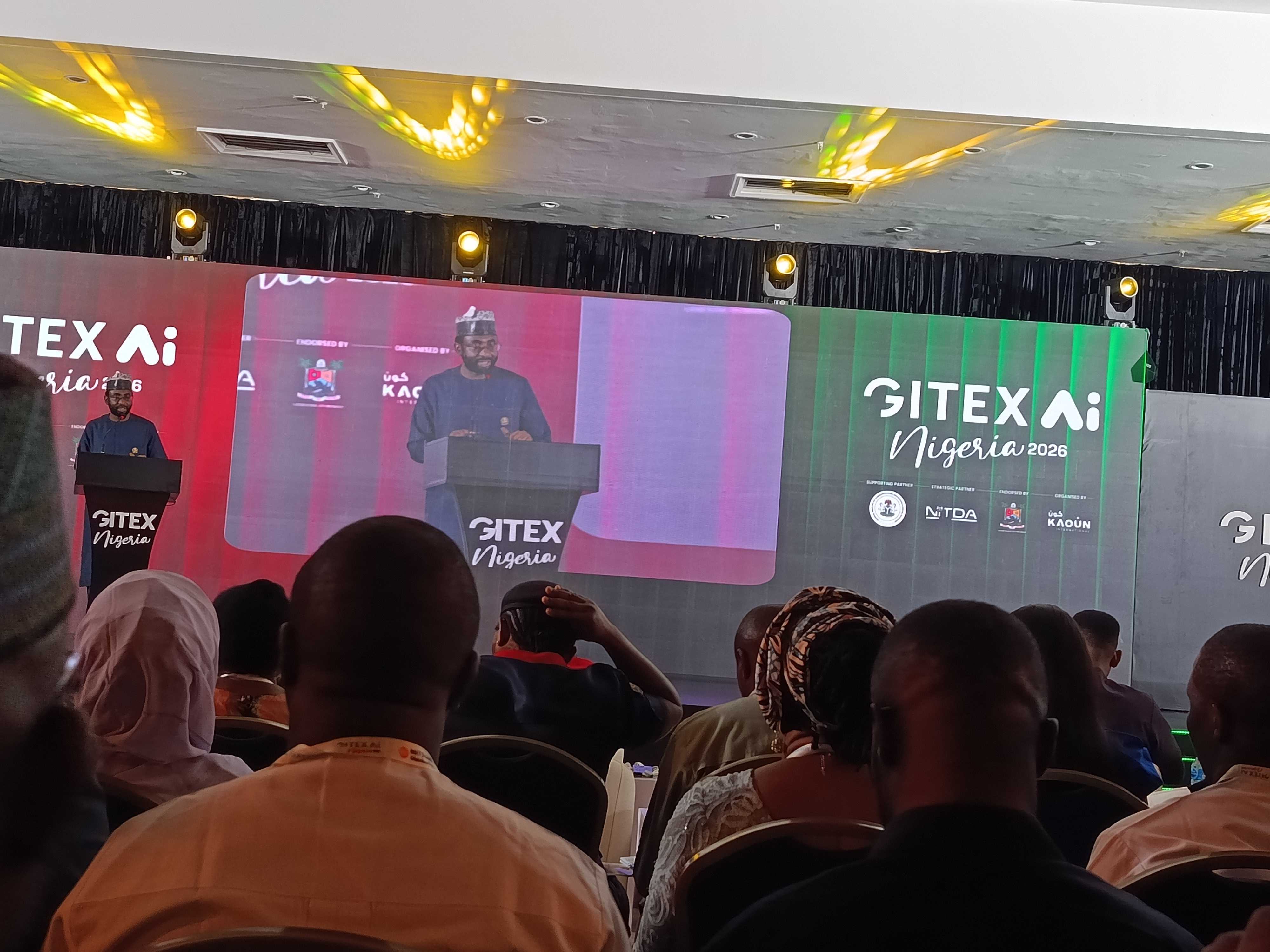
That vulnerability took centre stage in Abuja at the Government Leadership and AI Summit, which opened GITEX NIGERIA 2026. Held under the patronage of President Bola Ahmed Tinubu, the event brought together technology leaders and digital economy stakeholders to advance West Africa's sovereign AI ambitions. It is part of a broader push by African governments to translate the African Union's continental digital transformation agenda, including the Digital Transformation Strategy for Africa and the AU's Continental AI Strategy adopted in 2024, into concrete infrastructure.
In a panel titled "Africa's AI Compute Capacity: Sovereign or Shared?", continental leaders debated whether African nations should build isolated infrastructure or pool resources into a regional compute grid. The discussion featured Kashifu Inuwa Abdullahi, Director General and CEO of the National Information Technology Development Agency (NITDA); Dr Lourino Chemane, President of the Board of Directors at Mozambique's National Institute of Information and Communication Technologies; and Dr Mactar Seck, Chief of the Innovation and Technology Section at the United Nations Economic Commission for Africa (UNECA). Nosike Nwigene, Strategic Communications and External Affairs Advisor at Nonfictly, moderated the session.
Sovereignty as control of the stack
Abdullahi defined AI sovereignty in terms of control over the technology stack. "For me, when we talk about sovereignty, it comes down to control," he said. "We must look at the technology stack end-to-end: digital sovereignty, not just isolated data or AI sovereignty."
He outlined four layers: algorithmic control and model weights; local data governance and privacy; data centres and GPUs; and the underlying energy, water and connectivity required to operate them. Africa remains weak across these capabilities, he said, with countries lacking sufficient ownership of the technology, reliable power and capital to deploy compute at scale. The constraint is sharpened by global dynamics: export controls on advanced AI chips and long waiting lists for high-end GPUs mean that even well-funded buyers outside established markets struggle to secure hardware.
Sovereignty, however, does not require African countries to own every physical layer immediately, Abdullahi argued. They can begin with data and algorithmic control, including how AI systems make decisions. The alternative leaves governments with "virtually no control over the underlying training data, no control over the decision-making weights, and no jurisdiction over the laws governing those platforms," he warned.
A domestic floor, then shared infrastructure
Chemane brought the capital challenge into sharper focus. While drafting Mozambique's national AI strategy, he said, the government recognised the difficulty of investing in large-scale data centres and high-performance AI compute. His proposed solution is neither complete national ownership nor total dependence on shared infrastructure.
Every country, he argued, needs a domestic floor for sensitive workloads. "Data is not merely a technical asset; it is a matter of national sovereignty, economic self-determination, and human rights." Countries that cannot afford hyperscale clusters should then plug into regional and continental infrastructure.
Chemane also called for inspectable AI systems. Mozambique is prioritising explainable, open-weight architectures that allow local researchers to examine and adjust models. Systems trained only on foreign data can "hallucinate or misrepresent African realities," he warned, making openness essential for adapting AI to African languages, institutions and public services. The concern reflects a well-documented gap: most large language models are trained predominantly on English-language web data, leaving African languages — many spoken by tens of millions of people — under-represented.
The gap in continental terms
Seck placed the infrastructure gap in continental perspective. Africa has roughly 18% of the world's population but only about 0.6% of global data-centre capacity. Closing the wider infrastructure gap could require about $100 billion annually, with $4 billion to $7 billion specifically for digital infrastructure.
"If we do not actively build our own foundations, we will remain perpetual consumers in the global digital economy," he said.
Rather than a data centre in every country, Seck proposed regional AI factories, infrastructure funds and specialised hubs, with Côte d'Ivoire, Nigeria and Senegal serving as ECOWAS anchor backbones. He pointed to an existing model in Africa's energy sector: cross-border systems such as the West African Power Pool and Southern African Power Pool already demonstrate how countries can share infrastructure. "We must apply the same cross-border model to high-speed data and compute backbones," he said.
Data classification as the first step
For Abdullahi, the first practical step is statutory data classification. Without clear rules, organisations risk feeding proprietary information into public AI models, while hyperscalers lack confidence that enough local demand exists to justify expensive facilities.
His proposed framework is straightforward: defence and national-security data remain in-country and on-premises; health records and citizen tax data stay in domestic cloud infrastructure; commercial data can use the hybrid cloud; and public or open research data can use the global public cloud.
Nigeria, he said, has moved beyond its privacy law with the Nigeria Data Protection Act, the National Data Strategy, data classification guidelines and the Sovereign Cloud Regulatory Framework. "Privacy law alone is not enough," he said, pointing to the European Union's combination of the GDPR, Digital Markets Act, Digital Services Act and AI Act as a model for integrated digital sovereignty.
Chemane identified power and cooling as Mozambique's immediate infrastructure advantages, given its hydro, solar and thermal resources. He also highlighted legal certainty, cybersecurity, university compute labs, regulatory sandboxes and indigenous-language datasets as priorities.
Seck argued that investment should follow regional readiness: Southern Africa needs more foundational infrastructure and clean energy; West Africa, anchored by Nigeria, should prioritise regional data-flow rules and advanced skills; and North Africa can focus on research partnerships and market access. Across all three regions, he said, Africa needs "a unified African voice in global tech governance."
The panel's conclusion was therefore hybrid: countries need a sovereign floor for sensitive data, cybersecurity and algorithmic oversight, while sharing the compute, power, connectivity and talent infrastructure that smaller economies cannot finance alone.
Testing the vision: an interview with Seck
After the panel, the author sat down with Seck for an exclusive interview to test the vision's operational reality. Asked whether Africa was genuinely building sovereign capacity or simply renegotiating terms with foreign technology giants, he was unequivocal: "If you want digital sovereignty in computing, you need to build your own infrastructure."
He acknowledged, however, that building massive data centres in every African country is unrealistic. His answer is sub-regional collaboration: an interconnected African data centre backbone supported by the African Continental Free Trade Area, potentially becoming operational within the next five years. The AfCFTA, which entered into force in 2019 and became operational in 2021, already provides a legal framework for the free movement of goods, services and, in principle, digital trade across 54 signatory states — infrastructure Seck believes can be extended to compute.
Power remains the biggest constraint. High-density AI data centres require massive amounts of reliable electricity and cooling water. Challenged on the contradiction between ambitious AI roadmaps and unreliable power grids across much of the continent, Seck said energy and digital infrastructure cannot be developed separately. Governments must expand energy capacity alongside data centres because the two are inseparable from Africa's broader economic development.
The interview also addressed the tension between data localisation and the borderless datasets needed to build effective AI models. Protectionist policies alone are insufficient without physical infrastructure and technical skills, Seck argued. Sensitive national security and financial data may need to remain within borders, but countries must classify their data clearly to determine what can be shared regionally.
The message from the panel and the subsequent conversation with Seck was clear: Africa's AI ambitions cannot remain confined to policy documents. The continent needs pooled capital, stronger energy infrastructure and shared compute capacity. A regional AI grid could give African countries something they currently lack: greater control over the infrastructure powering their digital intelligence.

