Mississippi Elects First Democratic Senator in 44 Years as Scott Colom Upsets Cindy Hyde-Smith
Key Takeaways
- •Scott Colom narrowly unseated incumbent Sen. Cindy Hyde-Smith, becoming the first Democrat Mississippi has sent to the U.S. Senate in 44 years and the state's first Black senator since 1881.
- •Hyde-Smith blocked Colom's 2022 federal bench nomination in 2023, and he launched his Senate campaign against her two years later.
- •Colom's campaign turned Hyde-Smith's remark that consumers have 'so many proteins to choose from' into an advertisement widely regarded as decisive, amid ground beef prices rising from $5.55 to $6.79 per pound.
- •Colom held events in all 82 Mississippi counties while outside groups backing him outspent those supporting Hyde-Smith roughly three to one, even though she raised about $6.3 million.
- •The win brings Democrats to 55 Senate seats, potentially 56 depending on Alaska's ongoing count, reducing the Republican votes needed to break a filibuster from six to four.
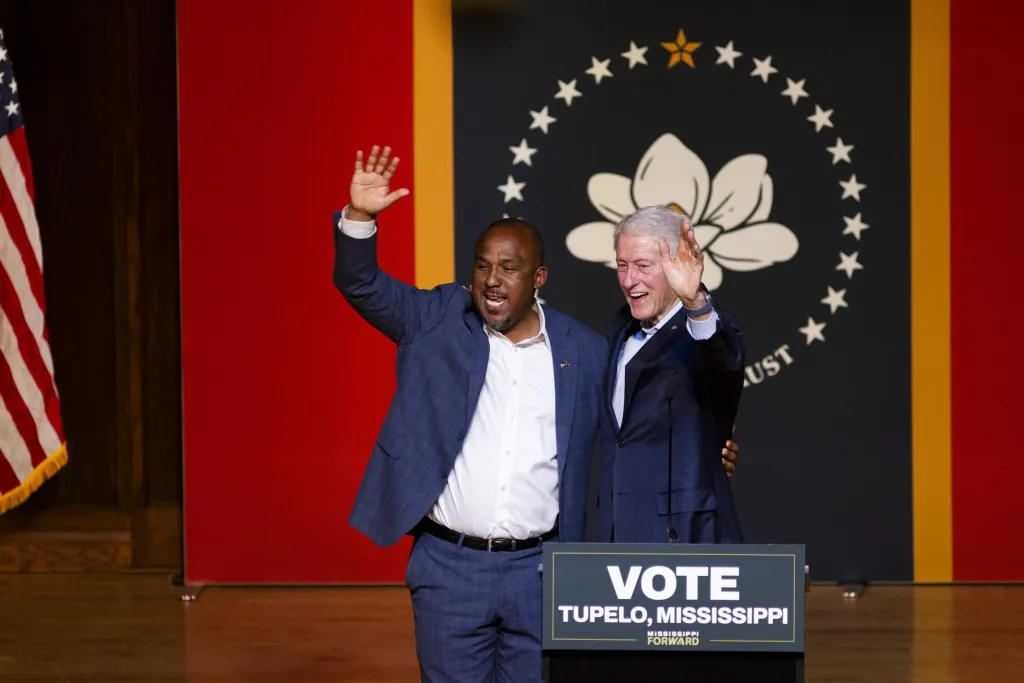
Democrat Scott Colom has narrowly unseated incumbent Sen. Cindy Hyde-Smith in Mississippi's U.S. Senate race, becoming the first Democrat the state has sent to the Senate in 44 years. The margin was razor-thin — and, arguably, the decisive factor was that Colom let his opponent do the talking.
For four decades, the national Democratic Party's default plan for Mississippi was to leave it alone. The party appears to have finally found a winning formula there: spend almost nothing, draw little attention, and let the other candidate's remarks drive the narrative.
Mississippi, rated nearly unanimously as a solidly Republican state until last week's elections, is also the only state in the country that does not allow automatic recounts. That means a losing candidate must go to court to have the votes reexamined — a provision that carries real weight in a race decided this narrowly.
From blocked nominee to Senate challenger
What stood out about the race was the sheer lack of attention it drew — at least until recently — and how Colom became a viable contender in the first place.
In 2022, President Joe Biden nominated Colom, a district attorney, to the federal bench in northern Mississippi. Mississippi's senior senator, Republican Roger Wicker, supported the nomination. Hyde-Smith blocked it in 2023, citing Colom's "opposition to legislation to protect female athletes" and past support from a political action committee funded by George Soros. Had the nomination gone through, Colom might be a federal judge today instead of Hyde-Smith's successor. Two years later, he announced his campaign against her.
Chuck Schumer, the likely Senate Majority Leader when the new Congress convenes in January, saw an opening. He told the New York Times in 2025 that he wanted to help elect a Democrat in Mississippi and identify other winning tickets in states where competing would be relatively cheap. Though Schumer referenced Colom at the time, Colom said Schumer was not the reason he ran. In his campaign launch video, he cited his two daughters and Hyde-Smith's vote for a law he said would cut more than 100,000 Mississippians from their health care.
Kitchen table economics
That kitchen-table economic sentiment may explain why Colom won in a state represented, for now, by a cattle rancher.
In February, a reporter asked Hyde-Smith, who is married to a fifth-generation cattle rancher, what Republicans were doing about rising beef prices. "You know, you have so many proteins to choose from," she said.
Ground beef had risen from $5.55 a pound when President Donald Trump returned to office to $6.79 in September, according to the Bureau of Labor Statistics.
Colom's campaign turned her answer into an advertisement featuring Mississippians reacting to it — a move widely regarded as having tipped the scale in his favor. The ad's release also marked the point at which the national Democratic Party began showing up. Former President Bill Clinton rallied for Colom in Tupelo on Oct. 30. "Scott is the correction," Clinton told the crowd.
Still, the Democratic Senatorial Campaign Committee — the party's campaign arm for Senate races — put just $500,000 into the race in its final week, in line with the low-cost approach Schumer had described, while Hyde-Smith raised about $6.3 million for her campaign. Colom was not entirely outgunned, though: counting outside groups, money spent backing him outpaced money backing Hyde-Smith roughly three to one, according to Federal Election Commission data.
A grassroots campaign across 82 counties
The win belonged mostly to Colom. He held events in all 82 Mississippi counties, the Washington Post reported, while Hyde-Smith had not held a town hall in six years. Local organizers did the rest. When Holmes County, home to about 15,000 people, reported its votes near midnight on election night, the surge in turnout put Colom ahead by 28 votes.
Colom also flipped Forrest County, named for the Ku Klux Klan's first grand wizard, 12,064 votes to 9,749, and won Jefferson Davis County, named for the president of the Confederacy, 2,943 to 1,534.
The victory carries historic weight beyond party lines. Colom will be Mississippi's first Black senator since Blanche K. Bruce, who was born into slavery and left office in 1881, and the first Black senator the state's voters have ever chosen directly. Mississippi's first Black senator, Hiram Revels, was also the nation's first; he was appointed by the state legislature in 1870.
Democrats with 56 seats
Democrats entered Election Day with 47 Senate seats and were projected to flip at least seven. With control of both chambers already secured, Colom's win brings the total to 55 — and hands the party a Mississippi seat for a full six-year Senate term. If Democrat Mary Peltola holds her narrow lead in Alaska, where counting continues, the party reaches 56, with Alaska's unfinished count deciding between the two totals.
The difference between 54 and 56 seats shows up in the filibuster. Most legislation needs 60 votes to end debate and pass the Senate. At 54 seats, Democrats would need six Republicans to cross party lines; at 56, they need four.
A larger majority also gives Schumer more room within his own caucus. With 51 seats, a single Democratic defection can sink a nominee or a party-line vote. With 56, he can lose several members and still confirm judges and officials, which requires only a simple majority. That matters for Trump's picks as well: a Democratic Senate can now block his nominees to the federal bench — the kind of seat Colom was once denied.
A warning for both parties
The lesson of Mississippi is not only for Democrats. Voters named the cost of living and government corruption as their top two issues in AP exit polls, surveys of voters taken as they leave polling places. Two years earlier, in the 2024 presidential election, voters who were worried about the economy broke for Trump by 2 to 1. The issue that won Republicans the White House helped cost them the Senate.
Some Republicans saw it coming. Trump, however, called affordability "a con job" by Democrats, even as nearly three-quarters of his own voters rated the cost of living bad or the worst ever. Vice President JD Vance warned his party not to blame young people for socialism's growing appeal when they could not afford homes, then answered one young voter's affordability question with a joke.
"We used to own the affordability issue just two years ago," Republican Rep. Elise Stefanik of New York said. "We let that slip away."
This story was originally featured on Fortune.com.

