Experts Call White House Threat Against Incoming Oversight Chair Garcia 'Legally Baseless'
Key Takeaways
- •The White House counsel's office sent a letter Tuesday to incoming House Oversight Chair Robert Garcia asserting that threats to subpoena individuals could be illegal, and Garcia responded Wednesday by citing voter support for fighting corruption.
- •Legal scholars including NYU's Peter M. Shane and Ryan Goodman said the warning lacks legal foundation because the Speech and Debate Clause protects members of Congress from prosecution for legislative acts such as issuing subpoenas.
- •Ryan Goodman argued that the letter itself could violate laws against corruptly obstructing Congress through threatening communications and could damage the Trump administration in any litigation Congress pursues.
- •Disputes over the scope or validity of congressional subpoenas are historically handled through civil enforcement proceedings in federal court rather than criminal charges against the lawmakers who issue them.
- •Princeton's Deborah Pearlstein dismissed the letter as intimidation, while commentators noted the committee's first document and testimony requests of the new Congress will provide the earliest test of Trump's posture toward Democratic oversight in 2027.
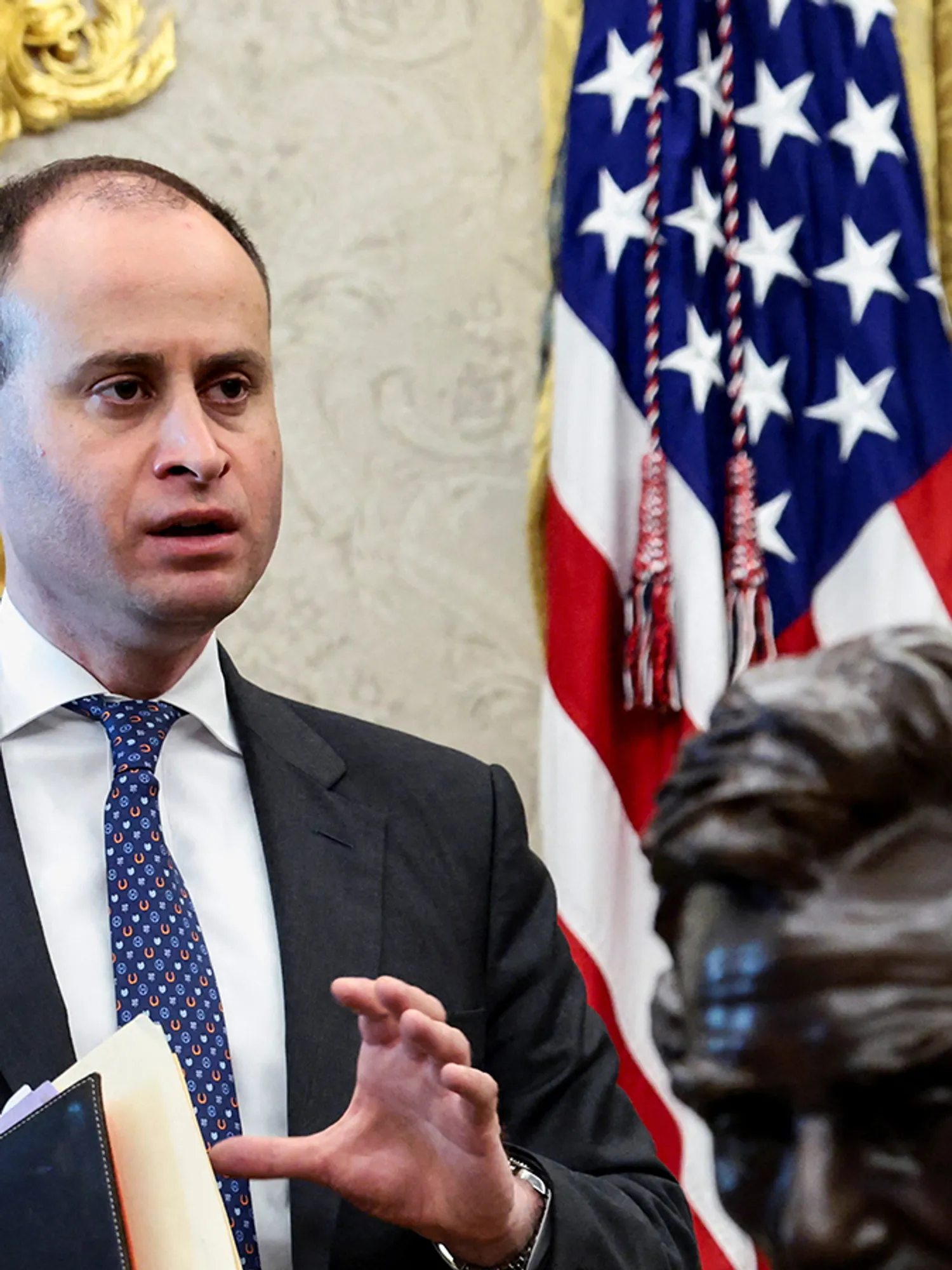
Legal scholars are sharply pushing back on the escalating exchange between the White House and incoming House Oversight Committee Chair Robert Garcia (D-Calif.), warning that President Donald Trump's threats amount to little more than intimidation without legal foundation.
On Tuesday, the White House counsel's office sent a letter to Garcia asserting that "threats" to subpoena people "could be" illegal. Garcia responded with a statement of his own on Wednesday, making clear that he attaches little weight to the White House's position, given that voters in the United States just delivered Democrats a "mandate" to fight "corruption," among other things.
Speaking to the New York Times on Wednesday, Peter M. Shane, a public-law scholar at NYU, called White House counsel Will Scharf's threat "legally baseless."
"Our Constitution protects legislators from the threat of criminal prosecution while performing official duties as an essential bulwark to repel executive overreach and defend checks and balances," he told the Times.
The House, he noted, holds not only its Article II powers but also the protections of the "Speech and Debate Clause." Part of Article I of the Constitution, the clause protects members of Congress from being questioned in any other place for any speech or debate tied to their legislative work — a shield courts have long recognized as central to keeping Congress independent of the executive branch.
Ryan Goodman, an NYU law professor and co-editor-in-chief of Just Security, agreed — while adding that the language the White House put in writing could create problems of its own. The letter "may trigger law against 'corruptly' by 'threatening letter or communication' obstructing Congress," Goodman wrote on Bluesky. He also labeled it a "self-own."
"It is also a self-own: The ignominious Scharf letter will very likely damage the Trump administration in any litigation that Congress pursues in courts," Goodman wrote.
"Congressional oversight and the issuance of subpoenas by definition cannot be the focus of legitimate criminal prosecution," Shane said of the White House threat, explaining that Trump cannot turn protected legislative acts into crimes no matter how desperately he might want to. Judges, he added, have the power to reject any improper subpoenas that treat lawmakers as if they were criminals.
"It may be that an occasional subpoena may be quashed as outside the committee's jurisdiction or for some other reason, but that is not a criminal offense," Shane said. Under longstanding practice, disputes over the scope or validity of congressional subpoenas are aired in federal court through civil enforcement proceedings — not criminal charges against the lawmakers issuing them.
Deborah Pearlstein, director of Princeton's Program in Law and Public Policy, described the move on Bluesky as "a particularly ham-fisted stab at intimidation." She added that it was clearly "driven by fear and an attempt to appease wealthy friends of the president who benefited from the grift and now may be on the receiving end of a congressional inquiry. It's worth the paper it's written on, not more."
"During the first Trump term I was appalled by former White House Counsel [Pat] Cipilone's letter to Congress, which I called 'bananas' and 'a barely layered middle finger to Congress.' This is worse," said Gregg Nunziata, the executive director of the Society for the Rule of Law, in a post on X.
Georgetown Law professor Steve Vladeck offered a wry interpretation on Bluesky: "Only 'we' get to threaten to abuse our constitutional authority in order to intimidate other branches from exercising their constitutional prerogatives."
The panel Garcia is set to lead has historically functioned as Congress's chief investigative committee, with jurisdiction spanning federal government operations and the power to compel documents and testimony through subpoenas — tools that chairs of both parties have deployed against sitting administrations.
Punchbowl News' Jake Sherman asked, "Will this deter Democrats?" He noted the answer is "unlikely. There is ample precedent that Congress can investigate nearly anything it wants. But this does set the tone for Trump's posture toward Democrats in 2027."
The committee's first document and testimony requests of the new Congress, and the White House counsel's response to them, will offer the earliest concrete test of that posture.
What Trump can do, however, is cost people money, make their lives stressful, raid their homes and allow FBI agents to take their possessions and valuables until individuals can fight to get them back — as civil asset forfeiture cases litigated by the Institute for Justice have illustrated. Under civil asset forfeiture, the government can seize property it suspects is tied to an offense — often without charging the owner with a crime — leaving individuals to wage their own legal battles to recover what was taken.

