Anthony Scaramucci Recounts the Moment He Saw Trump’s Administration as Destructive
Key Takeaways
- •Scaramucci describes Trump’s first administration as divided among hostile factions that frequently leaked information about one another.
- •He says his willingness to speak frankly to Trump became unwelcome after Trump assumed the presidency and contributed to his removal as communications director.
- •Scaramucci recalls that White House counsel Don McGahn explained Congress could override a presidential veto with a supermajority.
- •His criticism of Trump’s treatment of Democratic lawmakers eventually led him to sever ties with Trump and the Republican Party.
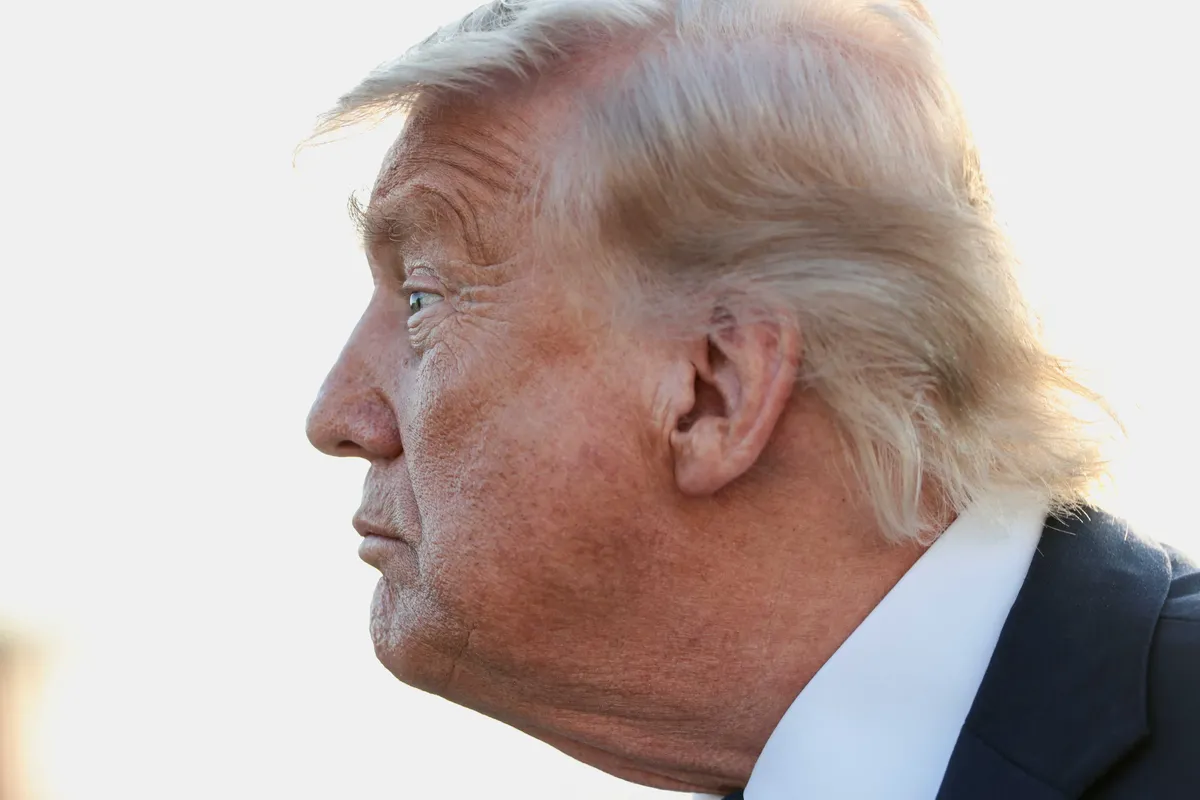
An edited excerpt from Anthony Scaramucci’s new book, All the Wrong Moves, published in the Saturday issue of The Guardian, describes how quickly Donald Trump’s former communications director recognized the chaos inside Trump’s first administration.
“Working for Trump wasn’t just a huge mistake. It gave me the opportunity to make a lot of other huge mistakes. I got famous for them, and in the fallout, my whole life looked like it would fall apart,” Scaramucci said. He is now an avowed and vocal critic of his former employer.
Scaramucci said he quickly concluded that the administration was divided into hostile, leaky silos.
“Trump had offered me a job: director of the Office of Public Liaison, the White House unit that interacts with interest groups. Reince Priebus, Trump’s chief of staff, blocked that appointment. Steve Bannon, the chief strategist, was also against my working in the White House. I was a traditional moderate Republican type with connections to Trump’s daughter Ivanka and her husband, Jared Kushner,” Scaramucci said.
He described the Kushner group as one silo, with Priebus representing another centered on the Republican National Committee. Bannon, he said, represented the MAGA far right. The groups were mutually hostile, with Priebus and Bannon constantly leaking information about one another, but they agreed that Scaramucci should not be close to Trump.
Scaramucci later said that Priebus and Bannon attempted to divert him by offering him an ambassadorial appointment. Before an announcement in the Oval Office, they asked him to meet in the chief of staff’s office.
“So I met with them in the chief of staff’s office and called them (CENSORED) who were leaking on each other and hurting the president. In other words, things were not going well. Already,” Scaramucci said. He describes himself as “a front stabber.”
After he obtained the communications director position, Scaramucci said, a Capitol Hill operative called to warn him that he was performing the job too effectively.
“You’re getting too much attention. You’re talking in complete sentences. Trump’s gonna … fire you. Be careful.’ I said to myself, ‘I’m never doing another press conference.’ But that wasn’t going to work. Because I couldn’t read the situation. Meaning I couldn’t read Trump,” Scaramucci said.
He said Trump’s attitude toward him changed after Trump won the presidency. During the campaign, Scaramucci said, he could openly criticize Trump’s decisions.
“During the campaign, when I thought Trump was doing something stupid, I’d say, ‘This is … stupid.’ And he would look at me and say, ‘Well, why is it stupid?’ And then, if he agreed with me, he wouldn’t do it; and if he didn’t agree, he would keep doing it,” Scaramucci said.
Trump told Jared Kushner that Scaramucci reminded him of Kushner’s father, Fred Trump, according to Scaramucci. He said he spoke his mind, was “classic New York,” and had made money independently rather than inheriting it from his father. For those reasons, Scaramucci said, Trump sought his opinions.
Remaining frank after Trump’s election, however, proved to be a mistake, Scaramucci said. “Right away, I now see, it irritated the hell out of him. He was president of the United States. He expected to be flattered with total obsequiousness by everybody he talked to. I didn’t see it then,” he said.
Scaramucci recalled advising Trump not to veto a Russia sanctions bill related to election interference because it had been passed by Trump’s “own team” of Republicans.
“He looked me straight in the face. ‘They can’t do that. I’m the president of the United States.’ ‘They can do that,’ I said. Now we were doing eighth‑grade social studies. He picked up the phone and called the general counsel, Don McGahn. Probably as startled as I was that he had to explain it, McGahn confirmed that, with a supermajority, Congress can override a presidential veto.”
The exchange, as Scaramucci recounts it, also underscored that presidential authority over legislation is subject to Congress’s constitutional veto-override power.
Soon afterward, Kushner told Scaramucci that he had “embarrassed Trump and was probably going to lose [his] job.” Scaramucci did lose the job.
By 2019, Scaramucci said, Trump’s continual shifting of policy positions had made it more difficult to defend the president. “Trump was exploiting the suffering of the people for his own narcissistic and malevolent ends,” he said.
Scaramucci’s criticism of Trump’s demand that certain Democratic lawmakers “go back” to the countries they came from triggered what he called a “flame war” on Twitter. The dispute led him to break with both Trump and the Republican Party.
“He’d picked a vulnerable major party, my party, and went after it and did a mergers-and-acquisitions transaction. Even as I was separating from the party, the rebranded Trump-GOP was magnifying itself. Guys like Henry Kissinger and Dick Cheney started leaving. And people like Marco Rubio started going all in,” Scaramucci said.
He said the experience forced him into a personal and political reassessment.
“But if I hadn’t gone through it, if I hadn’t been forced toward a moral and existential reckoning, I never could have arrived at the ideas about our country and our crisis that I have now,” Scaramucci said. “I’m more empathetic, more psychologically minded; I know myself better. I’m aware of the frailty of others – and my own frailty, too. I bought into Trump, and I almost lost myself.”

