Scandium’s Small Market Highlights Big Questions for Critical Minerals Supply
Key Takeaways
- •Less than 0.5% scandium can materially improve aluminum alloy strength without adding significant weight.
- •Global scandium output is estimated at about 20 tonnes per year, with demand slightly above current production.
- •China produces roughly 65-75% of global scandium supply, while Russia accounts for about 15-25%.
- •China added scandium to its export-control list in April 2025, increasing concerns about supply availability for strategic industries.
- •Canadian scandium projects include Rio Tinto’s Sorel-Tracy by-product production and Scandium Canada’s Crater Lake development.
What makes scandium notable?
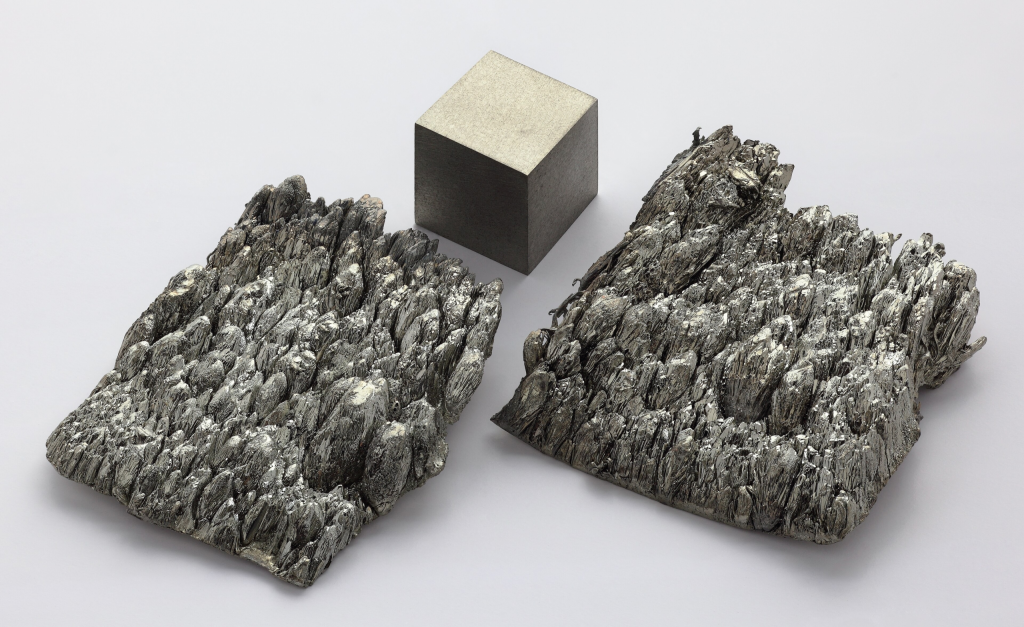
Scandium is a critical metal often grouped with the rare earth elements, even though it receives far less attention than metals such as gold or copper. Its importance comes from the effect it can have in small quantities, particularly when added to aluminum. Scandium appears on critical minerals lists in several Western jurisdictions because it combines specialized industrial uses with a supply chain that is small, concentrated and difficult to expand quickly.
The addition of less than 0.5% scandium can significantly increase the strength of aluminum alloys with almost no meaningful increase in weight. That improvement comes from the formation of extremely fine, stable grains within the metal’s structure. These nanoscale grains help prevent deformation and allow the material to maintain structural integrity at temperatures of up to roughly 350°C. Many more commonly used aluminum alloys begin to lose strength at much lower temperatures.
Aluminum-scandium alloys also retain flexibility. They do not become brittle as the price of added strength; instead, they become stronger and more resilient. The combination of strength, heat resistance and flexibility in a lightweight material is valuable, particularly because aluminum is one of the world’s most widely used metals.
Demand drivers
Scandium demand has historically come from niche, high-performance applications. In transportation, aluminum-scandium alloys can reduce weight while maintaining strength, a combination that may appeal to automotive manufacturers seeking improved fuel efficiency and longer vehicle range.
In aerospace and defence, scandium alloys have been used where performance margins are important. Russian military aircraft such as the MiG-29 have incorporated aluminum-scandium components, while American firearm manufacturers including Smith & Wesson have used scandium alloys in lightweight revolvers and pistols.
These applications are not mass-market uses measured in millions of tonnes, but they show where scandium’s properties can provide a practical advantage. The larger question is whether wider industrial adoption could occur if supply became more stable and scalable. Manufacturers are often reluctant to redesign supply chains or product platforms around a material that is difficult to source consistently. In sectors such as aerospace, new materials also require lengthy qualification and testing before they can be used in certified components, making reliable long-term supply an important part of adoption.
That dynamic may leave scandium in a feedback loop: limited supply discourages adoption, while limited adoption discourages investment in new supply. There is precedent for this pattern. Platinum group metals were once highly specialized materials used in niche industrial processes before strategic demand and technological shifts supported broader adoption.
Although scandium is mainly used in high-performance applications today, it could find wider use in consumer products. Adding scandium to aluminum chassis could make laptops and smartphones thinner and more resistant to bending or drops. Sports equipment, from baseball bats to camping gear, could gain strength without additional weight. Medical devices such as wheelchairs, crutches and walkers could also become lighter and more durable.
Current scandium demand remains relatively small. However, if supply expanded reliably and industries continued to prioritize lightweight, high-strength materials, adoption could accelerate. In a market of this size, even a relatively modest shift could significantly alter the supply-demand balance.
Why scandium matters
Despite its usefulness, global scandium production remains low. Estimates suggest that only about 20 tonnes are produced each year worldwide, with demand slightly higher. By comparison, global iron ore production is roughly 2.5 billion tonnes annually.
The difference is not necessarily because scandium is extraordinarily rare. Scandium is more abundant in the Earth’s crust than lead and occurs at concentrations of roughly 25 grams per tonne. The challenge is geological and economic: scandium rarely forms concentrated, standalone deposits. Instead, it is found in trace amounts within other ores.
As a result, scandium is typically produced as a by-product of uranium mining or rare earth element (REE) processing. Its supply is therefore tied to the economics and production decisions of other commodities. This creates an unusual market structure. Scandium is valuable as a technology-enabling material, but global output depends less on direct scandium demand than on developments in other mining sectors. That differs from larger commodity markets, where producers can often respond more directly to price signals by expanding mines dedicated to the material itself.
Recovery is technically challenging, processing can be complex, and capital allocation rarely prioritizes scandium alone. That structural constraint is a major reason prices remain elevated, often around $3,000 per kg and reaching close to $6,000 per kg at higher purities. In scandium’s case, scarcity is less about how much exists in the ground and more about how little is economically recoverable today.
Supply constraints
Supply is not only limited but also geographically concentrated. China accounts for 65-75% of global scandium output, while Russia contributes roughly 15-25%. Ukraine and Kazakhstan produce smaller additional quantities. In total, an estimated 80-95% of global supply comes from a small number of jurisdictions that are not always politically aligned with Western Europe and North America.
Recent policy decisions show how this concentration can become a supply risk. In April 2025, China placed scandium on its export-control list, giving Beijing authority to slow or deny exports on a case-by-case basis. A February 2026 Reuters report suggested that the policy had already contributed to shortages affecting parts of the U.S. aerospace and semiconductor industries.
For retail investors following critical minerals, that concentration is significant. Geopolitical friction has already reshaped supply chains in lithium, rare earths and semiconductor materials. When production is both limited and concentrated, pricing power and strategic leverage tend to follow.
Canada hosts several scandium projects. These include Rio Tinto’s (ASX, NYSE, LSE: RIO) Sorel-Tracy facility, which currently produces scandium as a byproduct, and Scandium Canada’s (TSXV: SCD; US-OTC: SCDCF) Crater Lake development, which is positioned to become the only primary source of scandium in North America. Whether these projects can scale successfully remains to be seen. Still, the broader theme is clear: politically stable jurisdictions with established mining infrastructure may attract more attention if global demand for scandium grows. For supply watchers, the key practical issue is not only whether scandium exists in a deposit, but whether it can be recovered consistently at commercial purity and cost.
Scandium’s small market size also cuts both ways. Because annual production is measured in tonnes rather than thousands of tonnes, modest changes in either demand or supply could have outsized effects on pricing. Some studies have estimated that global scandium demand could reach 5,500 tonnes annually by 2030, equal to a 22,000% increase in demand. At present, scandium remains a small market with the potential for large swings.
The investment angle
The scandium story is not primarily about what is happening at scale today. It is about what could happen if supply constraints ease and adoption follows. From an investment perspective, scandium sits at the intersection of critical mineral security, advanced materials innovation and aerospace modernization. It is a niche metal, but one with exposure to performance-driven industries.
This is not a simple commodity thesis. Investors evaluating scandium need to consider jurisdictional stability, processing capability, capital intensity and realistic timelines for demand growth. Because production volumes are extremely small, execution risk at the project level is significant. Offtake agreements, pilot-scale recoveries, metallurgical results and customer qualification processes are therefore important markers to watch, because scandium supply depends heavily on whether projects can move beyond resource potential into repeatable production.
At the same time, small markets can create asymmetric outcomes. When annual global supply is measured in tens of tonnes, incremental demand from even a single industry could have meaningful pricing implications. In mining and critical minerals, value is often shaped not only by the current size of a market, but also by positioning ahead of structural change.
Scandium may never become a bulk commodity like copper or iron ore, and it does not need to do so to matter. Its role is not to replace existing materials, but to enhance them. The central question is what comes first: mass production or mass adoption.
Liam Brennan holds an honours bachelor of science in chemistry and a master’s degree in molecular science. The analyst at CEO.ca focuses on making complex commodity and technology topics accessible to investors. Story ideas and suggestions can be sent to liam.brennan@earthlabs.com.

