Sberbank Targets December 1 Launch of Crypto Trading Infrastructure
Key Takeaways
- •Sberbank aims to deploy crypto trading infrastructure by December 1, focusing on custody, routing, and settlement systems rather than a complete consumer-facing application.
- •As Russia's largest bank, Sberbank's entry into crypto infrastructure carries greater market significance than a launch by a smaller private firm and could enhance institutional legitimacy for digital assets in Russia.
- •The fixed target date indicates that regulatory and operational conditions are nearing readiness, consistent with Moscow's broader efforts to establish a formalized digital asset market.
- •The initiative builds on Sberbank's earlier crypto-adjacent products, including Bitcoin-linked bonds previously offered to Russian investors.
- •Key details including eligible users, supported digital assets, the compliance model, and whether the offering targets retail or institutional clients remain unspecified.
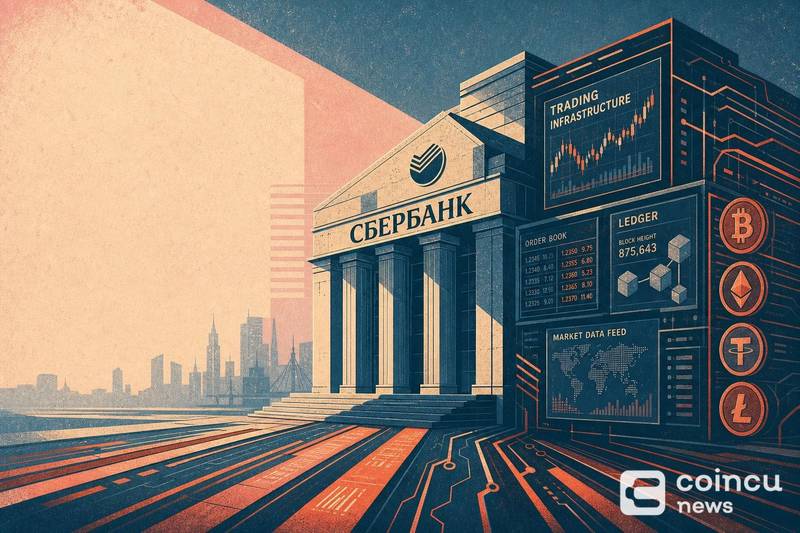
Sberbank, Russia's largest bank, is preparing to launch crypto trading infrastructure by December 1, positioning the country's dominant lender at the forefront of a bank-led digital asset push in Russia.
According to reporting on the bank's plans, the timeline centers on a December 1 target for the rollout of a compliant crypto product. This would make Sberbank a first mover among major Russian financial institutions in the digital asset space, where regulated access, custody, and settlement remain central questions for any bank-backed offering.
Scope of the Planned Infrastructure
In practical terms, "crypto trading infrastructure" refers to the systems a bank needs to custody, route, and settle digital asset transactions — not a finished consumer-facing trading application. The initiative builds on Sberbank's earlier ventures into crypto-adjacent products, including Bitcoin-linked bonds offered to Russian investors.
Sberbank's scale amplifies the significance of the move. As the largest bank in Russia, its entry into crypto infrastructure carries substantially more weight for market structure and institutional legitimacy than a comparable launch by a smaller private firm. For banks, infrastructure-level launches can also matter before broad user access appears, because they establish the operational rails needed for later products to meet custody, transaction monitoring, and settlement requirements.
Significance of the December 1 Deadline
A fixed target date signals concrete execution planning rather than a vague long-term aspiration. Setting December 1 as a deadline indicates that the bank believes regulatory and operational conditions are nearing readiness. This aligns with reporting that Moscow has been clearing a path for the market.
However, announcing infrastructure is distinct from immediately offering full retail trading access. The development should be regarded as an early-stage signal of readiness rather than confirmation that broad-based trading is imminent. Russia's central bank has continued to shape the rules governing digital assets, and the ultimate scope of any launch depends on that regulatory framework.
Potential Impact on Russia's Crypto Landscape
The entry of a major domestic bank into crypto infrastructure could shift perceptions of legitimacy within the Russian market. When an institution with Sberbank's balance sheet participates, it alters the risk calculus for both cautious users and other banks observing from the sidelines.
Bank-led infrastructure may accelerate institutional engagement more effectively than smaller private launches, because settlement through a regulated lender directly addresses counterparty and compliance concerns. This development fits into a broader pattern in Russia, where the Moscow Exchange moved to launch Bitcoin index futures. Together, these initiatives point to a more formalized digital asset market structure, even as access conditions and permitted use cases remain dependent on regulators and product design.
That said, any adoption effect depends on execution and product scope. While Sberbank's market weight makes this story relevant well beyond a single product update, tangible impact will hinge on what actually ships.
Unresolved Questions Ahead of Launch
Available reporting confirms intent and timing but does not define the full product scope. Key open questions remain regarding eligible users, supported digital assets, and the compliance model that will govern trading activity.
What has been reported is a December 1 target for crypto infrastructure deployment. What remains unspecified is whether the offering will extend to retail customers or focus initially on institutional rails — a distinction raised by coverage of Sberbank's plans for a compliant crypto wallet by year-end.
These details matter because they determine how the launch should be interpreted — whether as a narrow custody tool or a broad market gateway. Until further specifics emerge, the announcement represents a significant but still developing step in Russia's evolving digital asset ecosystem.
Source: CoinCu

