SAVE America Act Declared 'Effectively Dead' as Senate Adjourns for Five-Week Recess Without Vote
Key Takeaways
- •The Senate adjourned for its five-week August recess without holding a vote on the SAVE America Act, effectively killing the bill's prospects for the midterm election cycle.
- •The legislation would have mandated that states identify noncitizen voters and required individuals to present proof of U.S. citizenship such as a passport or birth certificate, even though noncitizen voting is already a federal crime under a 1996 law.
- •Senate Majority Leader John Thune proceeded with the recess despite vocal objections from Republican senators including Mike Lee and Ashley Moody.
- •Republicans lacked the 60 votes needed to overcome a filibuster, meaning they required Democratic support that was not secured.
- •Senator Todd Young suggested that the bill's provisions could potentially be attached to a budget reconciliation package when the Senate returns in September, a mechanism requiring only a simple majority to pass.
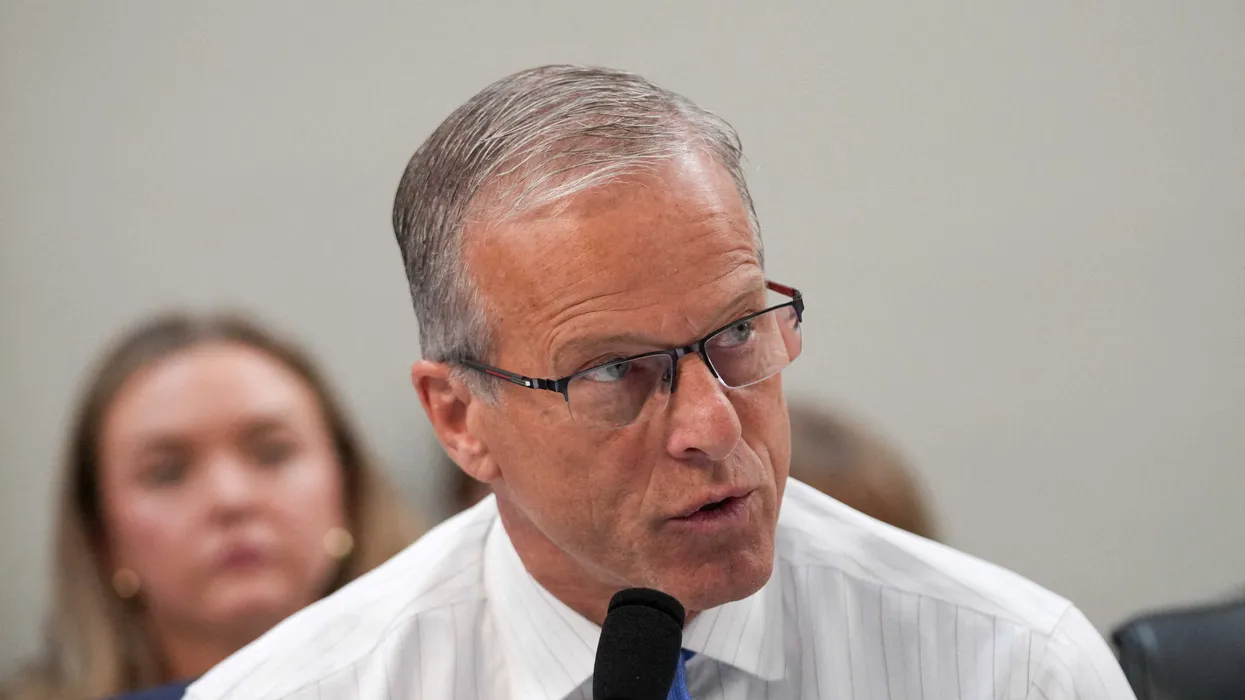
The SAVE America Act, a bill that President Donald Trump aggressively lobbied Republican senators to pass ahead of the midterm elections, is "effectively dead" after the Senate adjourned for its August recess without taking up the legislation, according to multiple Capitol Hill reports.
Bloomberg reporter Steven Dennis wrote on X Saturday that the bill "isn't going to pass before the August recess. It's effectively dead for the midterm elections." He later added, "Yeah, the Senate is going to go on a five-week recess. A lot of ink spilled to get to the result that seemed obvious all along."
NBC News senior congressional reporter Sahil Kapur confirmed the development on X: "By UNANIMOUS consent, the Senate adjourned for recess until Monday, September 14 without passing the SAVE America Act. Nobody objected to the request or asked for a roll call vote."
The SAVE America Act would require states to identify noncitizen voters and mandate that individuals provide proof of U.S. citizenship when participating in elections, primarily through a valid passport or birth certificate. The legislation also seeks to strengthen voter identification requirements at polling places. Noncitizen voting in federal elections is already a criminal offense under a 1996 federal law, a fact that critics have pointed to in characterizing the measure as both "dystopian" and redundant.
Trump pressed forcefully for the GOP-controlled Senate to advance the bill. He went so far as to refuse to sign a bipartisan housing bill in an attempt to leverage its passage, though that housing bill ultimately became law regardless. The strategy failed to yield the desired result, as the Senate departed for recess on Saturday without acting on the legislation. The bill's collapse deprives Republicans of a centerpiece election-integrity talking point heading into the midterm cycle, despite the GOP's Senate majority.
Conservative social media influencer Eric Daugherty reported that Senate Majority Leader John Thune (R-SD) "forced the Senate into August recess without the Save America Act, but MIKE LEE and ASHLEY MOODY were among those yelling at the top of their lungs objecting."
Thune has been the target of Trump's frustration in recent weeks over the stalled legislation. Under standard Senate rules, most legislation requires 60 votes to advance past a filibuster, meaning Republicans would have needed Democratic support to bring the bill to a final vote.
Senator Todd Young (R-IN) addressed the outcome in a statement: "The Senate passed a number of important items this week, but I am disappointed that we failed to advance two major priorities. A budget reconciliation bill with SAVE America Act provisions and the Stop Insider Trading Act, to ban members of Congress from trading stocks. Discussions continue on how to get the votes needed to pass these bills." Young's reference to a reconciliation vehicle—a legislative mechanism that allows certain fiscal measures to pass with a simple majority rather than the usual 60-vote threshold—indicates that discussions about attaching the bill's provisions to a broader spending package may resume when the Senate returns on September 14.

