Samsung Relocates Heat Pump Boiler Production to Korea With New Gwangju Line
Key Takeaways
- •Samsung is the first heat pump manufacturer to join Korea's heating electrification program, which is designed to bring overseas production back home.
- •The new 2,132-square-meter line at Samsung's Gwangju plant will have an annual capacity of more than 100,000 EHS heat pump boilers, all of which will be sold in Korea.
- •Mass production is scheduled to begin at the end of September once Samsung finishes checks on manufacturing processes, equipment, and product performance and quality.
- •Samsung states that the EHS heat pump boiler, which uses electricity and outdoor air heat for space heating and hot water, can generate nearly five times as much heat energy as the electricity it consumes.
- •Korea's long-term electricity supply plan calls for approximately 5 million heat pumps to be supplied by 2035, and Samsung plans to join a second-phase Jeju project covering 1,418 households in the second half of the year.
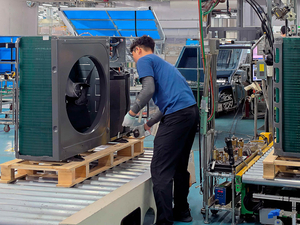
Samsung Electronics said Monday that it is shifting production of its eco heating system (EHS) heat pump boilers to Korea, making it the first heat pump manufacturer to take part in the government's heating electrification program, which is designed to bring overseas production back home.
The program reflects a broader policy push to electrify home heating in a country where most households have long relied on gas boilers, with heat pumps promoted as a way to raise energy efficiency and cut carbon emissions from buildings.
The company began trial production Wednesday at a newly built 2,132-square-meter line at the second campus of its Gwangju plant. Mass production is scheduled to start at the end of September, once Samsung completes checks on manufacturing processes and equipment along with comprehensive evaluations of product performance and quality.
The new line will have an annual production capacity of more than 100,000 EHS heat pump boilers, with all units to be sold in Korea. Samsung also plans to raise the domestic share of key components and manufacturing processes, a step it expects will strengthen cooperation with suppliers and contribute to the local economy.
The EHS heat pump boiler runs on electricity and heat drawn from outdoor air to provide space heating and hot water. According to Samsung, the system can generate nearly five times as much heat energy as the electricity it consumes. That ratio points to the core advantage of air-source heat pumps, which move existing heat rather than generating it by burning fuel.
Alongside the launch of EHS heat pump boilers tailored to Korean residential conditions, Samsung has been conducting field tests across the country as it seeks to broaden the use of heat pumps in the domestic market.
The company is supplying the products to a heating electrification program currently underway on Jeju Island and plans to participate in a second-phase project covering 1,418 households in the second half of the year. The phased deployments fit into a larger national goal, with Korea's long-term electricity supply plan calling for about 5 million heat pumps to be supplied by 2035.
Samsung is also testing the heating and hot-water performance and energy efficiency of the EHS heat pump boilers in actual residential settings in Yangpyeong, Gyeonggi Province; Chungju, North Chungcheong Province; and Namhae, South Gyeongsang Province.
Separately, the company is testing its EHS all-in-one solution, a system that combines cooling, heating and hot-water functions in a single unit, on Jeju Island and at Samsung C&T's housing research center in Yongin, Gyeonggi Province.
With mass production set to begin at the end of September, the ramp-up of the Gwangju line and the results of the residential field tests mark the next steps to watch as Samsung and the government seek to widen heat pump use in Korean homes.
"By combining the heat pump technology we have accumulated in global markets with our manufacturing and service capabilities in Korea, we will continue to introduce solutions optimized for Korean residential environments," said Lim Seong-taek, executive vice president at Samsung Electronics' digital appliances business.

