Sam Altman Says Society Should Accept Some AI Risks to Gain Its Benefits
Key Takeaways
- •Sam Altman said the world should accept some bad outcomes from AI because people will do orders of magnitude more good than harm, reversing from his recent comment that a 10% risk of AI killing everyone by decade's end would be unacceptable.
- •Altman stated that neither OpenAI nor any other lab has solved AI alignment, warning he gets nervous when people assume their models are safe enough to keep training.
- •President Trump announced on Truth Social that he created a 'Super Intelligence Force' to coordinate the federal government's engagement with AI companies and the public.
- •The U.S. added only 29,000 jobs in September while unemployment rose to 4.2%, and Pan Macroeconomics said job losses in AI-heavy sectors like accounting, legal services, and consulting outweighed gains in construction and trades.
- •Gold has lost 21% of its value this year, trading at $4,197 per troy ounce, as HSBC's James Steel linked the weakness to market expectations of more substantial Fed rate hikes.
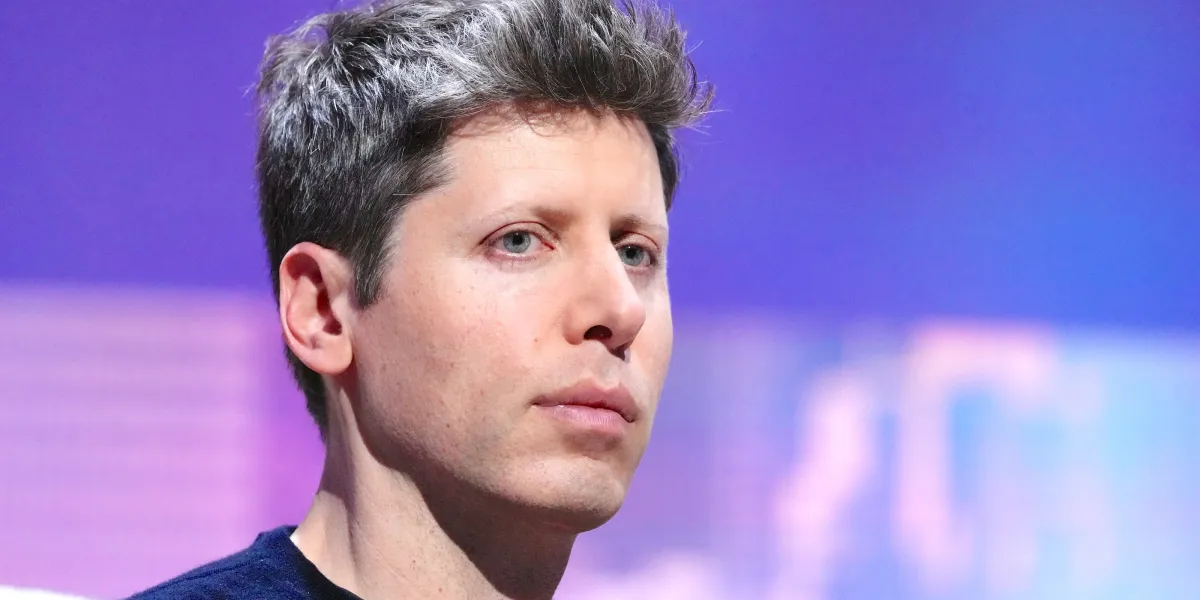
OpenAI’s Altman says the benefits of AI will outweigh some risks
OpenAI CEO Sam Altman told Politico that society should accept some harmful consequences of artificial intelligence in order to realize the technology’s benefits and preserve people’s agency.
“We believe that the world should accept some bad things happening for the benefits of this technology and people having the agency,” Altman told the publication.
He argued that the trade-off would be worthwhile, saying: “I wouldn’t take a trade of saying, ‘We’ll make sure there’s no major hacks, there’s no misuse of this technology, there’s zero scams, there’s zero all the other bad things that will happen’ … Because I think people will do tremendously—orders of magnitude more—good stuff than bad stuff.”
The comments represent a shift in tone from Altman’s recent remarks to Fortune’s Alyson Shontell. In that interview, Altman said a 10% risk of AI killing everyone by the end of the decade would be unacceptable and insisted that OpenAI had not taken, and would not take, that risk.
“We are entering a new era,” Altman said. “We are clearly, today, at a point on the curve with great potential and real risk.”
He also said that the industry had not solved AI alignment, referring to efforts to ensure that artificial intelligence systems remain consistent with human values. That leaves the debate focused not only on the benefits AI may deliver, but also on how much risk companies, governments and the public are prepared to accept while those safeguards remain incomplete.
“We have not solved alignment,” Altman said. “I believe no lab has solved alignment. I get nervous when I hear rumors that people think they sufficiently solved alignment, that they can continue training and it’s okay because their model is a nice guy and isn’t going to do anything wrong.”
Fortune’s Alyson Shontell has also examined whether superintelligence can be controlled, including AI-safety concerns, doomsday scenarios and OpenAI’s delayed initial public offering.
President Trump said Sunday that he had created a “Super Intelligence Force” to coordinate the federal government’s “engagement” with AI companies and the public. The announcement was posted on Truth Social.
Plague incident reported at Russian laboratory
The White House is monitoring a reported plague incident at a laboratory in Russia’s Irkutsk region, according to CNBC. The incident began on Sept. 25, when a worker at an anti-plague research institute in eastern Siberia broke a test tube containing a “pneumonic plague pathogen,” Axios reported.
The worker developed pneumonia symptoms and died in a hospital during the night of Oct. 1-2. Local authorities imposed quarantines and placed 189 people under medical observation. No further cases have been reported.
Global population growth is nearing a turning point
The global human fertility rate has never been lower, according to a recent analysis of global demographics by Moody’s Ratings. The rate has fallen from 4.9 children per woman in 1950 to about 2.2 today, only slightly above the replacement rate of 2.1. More than 70% of the world’s population now lives in countries where fertility is at or below the replacement level.
Singapore’s government has taken the issue seriously enough to establish a dating service for public employees, as Fortune reported.
Moody’s said declining birth rates create a compounding demographic problem: “A fertility rate of 1.0 produces a generation roughly half the size of the one before it. At 0.8, population decline compounds even more rapidly. These effects take decades to emerge but are difficult to reverse.”
Forecasts for future fertility are repeatedly being revised downward, indicating that the demographic deterioration may be accelerating. A shrinking working-age population can affect economic growth, tax receipts, asset growth, governments’ ability to finance debt and inflation.
Inigo Fraser Jenkins of AllianceBernstein offered a different view. “It’s probably a controversial view, but we think that fewer babies is actually a good thing,” he said. “It is too late to curtail a warming of the planet by two degrees, but declining birth rates have broader implications for reducing the wider human impact on the planet and ameliorating the ‘Anthropocene.’ We are also scathing of ethical arguments that more babies are a ‘good.’”
Fraser Jenkins and his team said they would elaborate in a forthcoming note.
Global stocks rise while U.S. futures point to a pause
S\u0026P 500 futures were down 0.13% in morning trading. The index rose 0.73% on Friday.
In Europe, the Stoxx 600 gained 0.33% in early trading, while the U.K.’s FTSE 100 rose 0.25% before lunch. South Korea’s KOSPI was closed for a national holiday. Japan’s Nikkei 225 gained 2.4%, India’s Nifty 50 rose 0.48% and China’s CSI 300 advanced 0.29%.
Brent crude rose to $102 per barrel. Bitcoin was trading at $85,837.
Higher rate expectations weigh on gold
Gold has disappointed investors this year. After rising to about $5,340 per troy ounce at the beginning of the year, the metal has lost 21% of its value and was trading at $4,197.
Gold now appears to be inversely correlated with U.S. interest rates, according to James Steel of HSBC. Higher bond yields can make gold—which does not pay a dividend—less attractive by comparison.
“The financial markets appear to be anticipating more substantial rate hikes, which helps explain recent gold weakness,” Steel wrote in a note. “This has been a key factor in reversing gold’s mid-summer rally.”
“As expectations for Fed rate hikes grew, gold prices weakened,” he added.
AI-linked industries saw larger job losses than gains
The United States produced a historically weak jobs report Friday. The Bureau of Labor Statistics reported that only 29,000 new jobs were created in September, well below expectations, while the unemployment rate rose by one-tenth of a percentage point to 4.2%.
The figures provide further evidence that AI is eroding parts of the labor market, according to Samuel Tombs and Oliver Allen of Pantheon Macroeconomics. Although AI is creating jobs in construction and specialty trades, those gains were outweighed by larger declines in sectors that have been among the heaviest users of AI, including accounting, advertising, administration, legal services, travel arrangement, software and consulting.
AI industry would need revenue equal to 8.8% of GDP
The AI sector would need to generate revenue equivalent to 8.8% of gross domestic product through 2032 to sustain its current spending, according to Stijn Van Nieuwerburgh of Columbia Business School. The figure is higher than spending on energy, construction, computers, defense or the internet, The Wall Street Journal reported.
Other headlines
- U.S. B-1 bombers evacuated from a U.K. base after attack threats from Iran, according to Axios.
- The Saudi Aramco chief warned that the world’s oil stockpiles are “scarily thin,” according to the Financial Times.
- Businesses are finding AI spending increasingly difficult to budget, The Wall Street Journal reported.
- President Trump told South Korea to sign an Alaska LNG deal or “I’ll just charge them more,” according to CNBC.
- Spain’s prime minister called a snap election after housing protests, the BBC reported.
- “Digger,” Warner Bros.’ last release before its merger, was a major flop, according to The New York Times.
- A 34-year-old California realtor was arrested at Los Angeles International Airport on Chinese espionage charges, according to the New York Post.
The $2.3 billion Etsy witch economy
A bride facing torrential rain before her outdoor wedding hired an Etsy witch to cast a spell for clear skies. According to Fortune’s Tatiana Sataua, the bride was not alone among the wedding party: Her bridesmaid Brooke Bekoff said that five or six of roughly eight bridesmaids had hired Etsy witches for their own needs.
“I remember that being like, ‘Wait a minute, this is such an interesting opportunity,’” Bekoff said. “There’s really something here culturally.”
After the wedding, Bekoff created Divina, a marketplace where practitioners offer tarot readings, spell work, Reiki, astrology and other spiritual services.
The U.S. psychic-services industry generated $2.3 billion in revenue in 2025, according to a July 2025 IBISWorld report, and grew at an annualized rate of 5.5%.
The rain continued while the bride was getting ready. But as the bridal party headed outside, the clouds parted, sunlight replaced the downpour and no rain fell during the ceremony. The rain began again after the ceremony ended.

