Nebraska Parents Hit by Childcare Subsidy Delays Tied to Trump's ‘Big, Beautiful Bill’: ‘Never Had This Problem Before’
Key Takeaways
- •Nebraska's Department of Health and Human Services has slowed its processing of childcare subsidy approvals as it implements stricter eligibility requirements from Trump's 'Big, Beautiful Bill,' approved by Congress in July 2025.
- •The state agency now says eligible families may wait up to six weeks for subsidy approval, and DHHS spokesman Jeff Powell attributes the added time to a shift from an honor system to verification, which he calls temporary.
- •Working families such as Josh Wiggington's have faced stalled subsidy reauthorizations, threatening the childcare arrangements that allow both parents to work while their child is transported to school.
- •Cognitive scientist Stephan Lewandowsky argues that rural voters' continued support for Trump despite economic costs reflects social and psychological currents, including religion, racial attitudes, and beliefs about personal responsibility.
- •A May ethnographic study sponsored by the Johns Hopkins Agora Institute, analyzed by commentator Jonathan V. Last, found many Trump supporters are willing to absorb economic pain as long as groups they dislike appear to be hurting more.
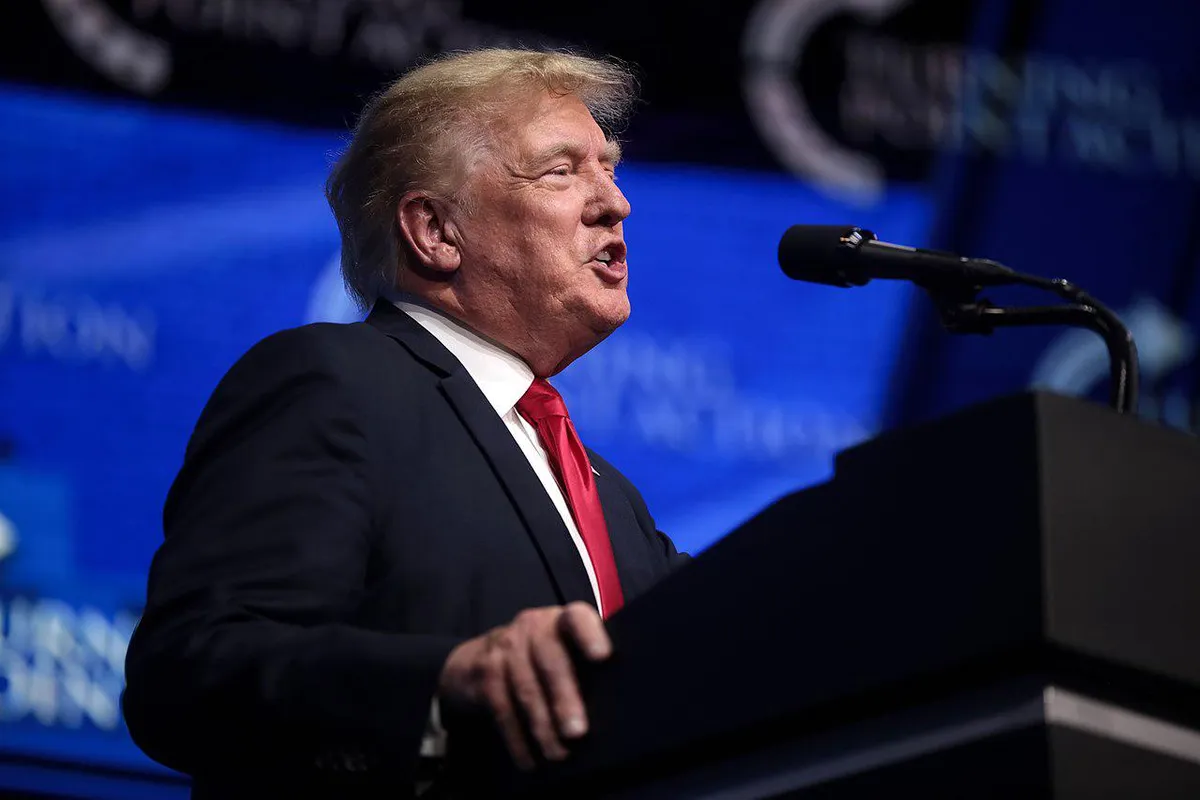
When Donald Trump won the 2024 presidential election, nearly three out of five Nebraska voters backed his return to the White House. Now, many of those same families are finding that one of Trump's signature programs is making it harder for them to make ends meet — and they are speaking out.
According to a report published Sunday by the Nebraska Examiner, the state's Department of Health and Human Services (DHHS) has slowed its processing of childcare subsidy approvals, a delay officials attribute in part to stricter eligibility requirements contained in Trump's “Big, Beautiful Bill,” which Congress approved in July 2025.
“The DHHS website states that approval of a subsidy for eligible families ‘may take up to six weeks to complete,’” reporter Cindy Gonzalez wrote. “The full cost may be covered. Depending on income, some may owe a monthly fee paid directly to a qualified provider. The provider bills DHHS for the remainder.”
DHHS spokesman Jeff Powell acknowledged a “temporary” increase in processing times for programs including childcare subsidy approvals, saying it stems partly from the stepped-up eligibility restrictions. He explained that the delays have occurred because “the move away from the honor system to verification for certain eligibility criteria is requiring more staff time to process.” Powell described the increase as temporary; in the meantime, the department's published six-week window is the timeline families have to plan around.
The backlog is already straining households. Gonzalez highlighted the case of Josh Wiggington, whose family's long-standing routine nearly collapsed earlier in the week after the state took an unusually long time to reauthorize the family's annual childcare subsidy — the benefit that pays toward their daughter's care.
“Josh Wigginton and his wife each went to work Friday,” Gonzalez wrote. “One dropped off daughter Nayeli at their childcare center, which transports the 7-year-old to school and back. The other parent picked her up after the work day.”
Wiggington told Gonzalez: “We've never had this problem before. An email to our caseworker came back undeliverable. I've been calling. I get hung up on. … I'm nervous.”
The stakes in cases like this are logistical as well as financial: a stalled reauthorization puts the arrangement that gets a child to school each morning — while both parents are at work — on hold.
The frustration in Nebraska echoes a broader question that psychologists and commentators have been probing: why many rural voters continue to support Trump even as his economic policies impose costs on them.
Speaking to AlterNet in August, University of Bristol cognitive scientist Stephan Lewandowsky argued that the disconnect stems from a tangle of social and psychological currents.
“Being hypocritical — feeling pain for yourself but not making the connection that maybe this other person is also in pain, and maybe we should support each other rather than throwing welfare recipients under the bus so I can have subsidy — different people come to different conclusions about that,” Lewandowsky said.
“There's so much tied up in this. There's latent racism. There's religion,” he continued. “There's the general conservative idea that poor people are — it's their fault, they're just lazy, everybody is responsible for what happens to them… except me, because I'm a farmer, and therefore I'm not lazy, and I've tried everything, and I deserve a subsidy.”
He added: “There's a lot of attitudes and underlying currents tied up in this that are difficult to disentangle. But, as you said before, there is an angle of racism that I think is underlying pretty much all of this misogyny. If you sort of give an instrument to people that measures their racism and misogyny, well, it tells you about who they're gonna vote for and all that kind of stuff pretty well.”
Conservative commentator Jonathan V. Last, writing for The Bulwark in June, analyzed an ethnographic study of Trump voters — a May study sponsored by the Johns Hopkins Agora Institute — which found that many supporters are willing to absorb economic pain as long as groups they dislike appear to be hurting more.
“As a wise man once said: They are who we thought they were,” Last wrote. “I want to go deep on this question because the people in the study describe a remarkable consistency about why they dislike democracy. It's not that they're misled, or mistaken. They have a coherent worldview. It's just not very nice.”
In his reading, the study's subjects view themselves as “a minority under threat from a tyrannical majority” who “believe that there is a cultural schism in America, with good, God-fearing people like themselves on one side and the wicked majority on the other. They detest this imaginary majority and fear that ‘democracy’ would allow that majority to gain political power.”
“We are firmly out of the realm of policy here,” Last wrote. “Or reality, even.”
He concluded: “So long as there is a trans activist in San Francisco posting on BlueSky, these people will be aggrieved. Even if their preferred political party holds the presidency, controls Congress, and has an openly corrupt majority in the Supreme Court. Domination of the political system is not enough; they want the people who disgust them to disappear.”

