Russia Faces Mounting Military Losses, Energy Infrastructure Damage, and Escalating Western Sanctions
Key Takeaways
- •Russian military casualties have exceeded 450,000 killed and one million wounded or missing since the February 2022 invasion, with monthly losses surpassing 30,000 and outpacing new recruitment of approximately 27,000 per month.
- •The EU's 21st Sanctions Package froze the Russian oil price cap at $44.10 per barrel for at least another year and added 41 vessels to its shadow fleet asset freeze list, while authorizing the confiscation and sale of oil cargoes on detained vessels.
- •The US Senate voted 86-12 to advance the Graham Sanctioning Russia and Iran Act of 2026, which would impose tariffs of up to 500% on Russian imports and up to 100% on goods from the top five countries purchasing Russian oil and gas.
- •Ukrainian drone strikes have hit Russian refineries at least 194 times since January 2026, damaging approximately 43% of Russia's operating refinery capacity and contributing to domestic fuel shortages.
- •Russia's central bank cut its 2026 GDP growth forecast to 0-1% and the National Wealth Fund's liquid assets have fallen from 6.5% of GDP to 1.8%, signaling that the wartime economic expansion has reached its limits.
More than 1,600 days into what Russian President Vladimir Putin initially characterized as a 10-day special military operation, the situation for the Kremlin continues to deteriorate on multiple fronts. Since Moscow deployed troops into Ukraine on 24 February 2022, over 450,000 Russian personnel have been killed, with an additional 1 million wounded or missing.
Ukraine's rapid development of its domestic military capabilities — including a substantial expansion of its drone program — has pushed Russian monthly casualties past a critical negative replacement threshold. Monthly dead and wounded now exceed 30,000, surpassing the approximately 27,000 new recruits that can be brought in during the same period. The casualty ratio has shifted dramatically, now standing at 8 Russian casualties for every 1 Ukrainian casualty, up from roughly 3:1 earlier in the conflict.
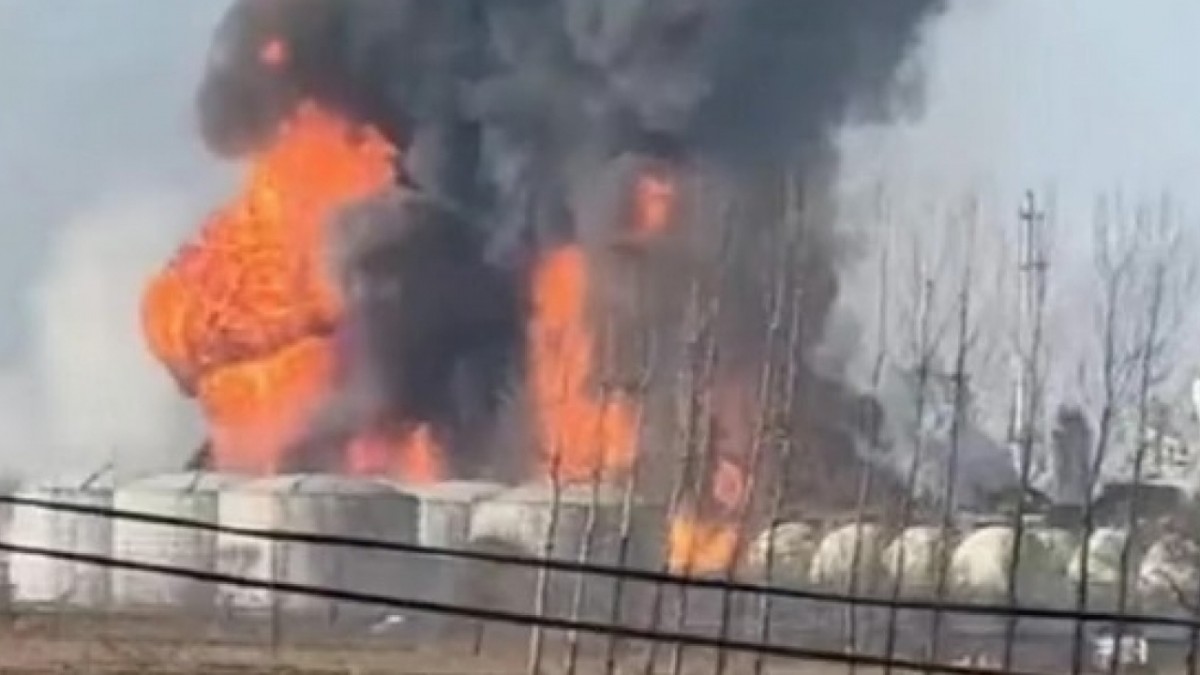
Compounding these military setbacks, Russia's key oil and gas infrastructure has faced sustained Ukrainian drone attacks since early 2024, followed by an intensified campaign beginning in August 2025. Since the start of 2026, Ukrainian drones have struck Russian refineries at least 194 times, causing cumulative damage to nearly 43% of Russia's entire operating refinery capacity. The scale of disruption has contributed to domestic fuel shortages inside Russia, undermining one of the few sectors that had sustained wartime economic output.
EU Tightens Oil Price Cap and Targets Shadow Fleet
Beyond Ukraine's military pressure on Crimea — illegally annexed by Russia in 2014 — and its continued strikes on Russian energy installations, the United States and Europe are preparing new sanctions designed to push Russia's economy into outright crisis by year's end.
On 23 July, the European Union's 27 member states agreed in their 21st Sanctions Package against Russia to freeze the oil price cap at its current level of US$44.10 per barrel for at least another year. The cap — established in December 2022 by the G7-led Price Cap Coalition comprising the G7 nations, the EU, and Australia — applies to Russian seaborne crude oil and petroleum products exported to third countries outside the EU, most notably China and India. It works by requiring Western-owned insurance, shipping, and financial services providers to verify that Russian oil is sold at or below the agreed price threshold. As the EU has already prohibited all direct imports of Russian oil, the cap's leverage comes from controlling the infrastructure that enables Russian exports to reach global buyers. This freeze prevented an expected increase of more than US$10 per barrel that would have resulted from the bloc's scheduled July review under the floating calculation mechanism adopted last year.
The EU also escalated measures against Russia's shadow fleet — the estimated 600-plus vessels that Russia has assembled to circumvent Western maritime oversight, operating without standard Western insurance or regulatory compliance. The EU added 41 vessels to the asset freeze list and, for the first time, expanded its authority to sanction vessels that do not directly carry Russian oil but provide support services to shadow fleet tankers. Any vessel caught refuelling, towing, or conducting ship-to-ship cargo transfers with a blacklisted shadow tanker will now be automatically designated and subjected to a total maritime services ban. A further escalation authorizes EU countries to confiscate and sell oil cargoes found on detained shadow fleet vessels.
European Commission President Ursula von der Leyen stated: "At a time when Ukraine has built military momentum, our sanctions continue to weaken the economic foundations of Russia's war effort."
US Senate Advances Sweeping Sanctions Legislation
The EU's moves are paralleled by likely next-round U.S. sanctions following the Senate's overwhelming 86-12 vote on 28 July to advance the Lindsey O. Graham Sanctioning Russia and Iran Act of 2026. For Russia, the bill represents the most far-reaching set of punitive measures tied to its 2022 invasion of Ukraine.
The legislation would authorize the U.S. to impose massive targeted tariffs on imported goods from the top five countries that purchase Russian oil or gas or facilitate sanctions evasion, measured over the most recent 12-month period preceding enactment. This secondary sanctions approach — compelling third countries to choose between access to the U.S. market or continued trade with Russia — mirrors the architecture the U.S. has long applied against Iran and, more recently, North Korea. As of now, the top five individual countries are China, India, Turkey, Brazil, and Azerbaijan. The EU as a bloc would rank fourth collectively, remaining the largest global buyer of Russian liquefied natural gas (LNG) at 49% of Russia's total LNG exports and still receiving 32% of its remaining pipeline gas through exemptions for countries including Hungary and Slovakia. The EU has committed to ending all imports of Russian LNG by January 2027, natural gas by September 2027, and crude oil by December 2027.
Specifically, the bill would impose duties of up to 100% of the value of all goods from the five worst offenders, with similar taxes applied to countries judged to have facilitated Russian oil sanctions evasion. The law would prohibit any new U.S. investment in Russia's energy sector and ban exports of U.S. energy products to Russia within 30 days of enactment. Additionally, tariffs of up to 500% would be applied to all goods imported directly from Russia, including oil, natural gas, LNG, petroleum products, and coal.
Mirroring EU actions against the shadow fleet, the Graham Act would designate foreign vessels transporting Russian-origin crude oil, uranium, natural gas, LNG, petroleum products, or coal as "blocked property" (frozen assets) if they lack proper maritime insurance or evade compliance with price caps established by the Price Cap Coalition or the U.S.
Former Russian Officials Warn of Economic Crisis
At a recent Atlantic Council Eurasia Center forum, former Russian Federation officials warned that increased oil sanctions could tip Russia's economy into crisis. Former Prime Minister Mikhail Kasyanov stated: "Mr Putin will face a big problem by the end of this year […] This is a good period of creating, I would say, coordinated pressure on Putin on all sides: Ukraine, the West, and of course, growing problems in Russia."
In the early months of the war, Russia earned significantly more from oil and gas exports than it had in the pre-invasion period, driven by a price spike. The country benefited for roughly two subsequent years from its transition to a wartime economy, but this expansion appears to have reached its natural limits, producing a spiral of severe stagflation, a shrinking sovereign safety net, and a systemic domestic fuel crisis.
In June 2025, Central Bank of Russia (CBR) Governor Elvira Nabiullina declared during an address at the St. Petersburg International Economic Forum that Russia's "free resources" were exhausted. Her assessment highlighted a critical depletion of labor, manufacturing capacity, and National Wealth Fund assets, pointing toward a projected economic stall.
The CBR subsequently cut its 2026 GDP growth forecast to 0–1%, while the Ministry of Economic Development projected just 0.4%. Official data from Rosstat showed the economy contracted by 0.2% in the first part of the year, ending a multi-quarter streak of wartime growth. Russia's National Wealth Fund — the country's sovereign reserve — has seen its liquid assets fall from 6.5% of GDP to just 1.8%.
Conscription Expansion Expected After September Elections
This economic deterioration provides an unfavorable backdrop for a likely widening of military conscription, expected to be announced after nationwide legislative and regional elections scheduled for 18–20 September 2026 — the first major parliamentary vote in Russia since the full-scale invasion of Ukraine began. Under Russia's heavily managed electoral system, in which genuine opposition parties are largely barred from participation, the vote is widely seen as a test of the Kremlin's ability to maintain a domestic facade of legitimacy rather than a competitive contest.
"Putin will wait until after these have taken place to announce his plan to boost numbers [of soldiers] at the front, and if this does include, as many expect, a widening of conscription, then the anti-war feeling already present in the cities could spread quickly," a senior source working closely with the EU's security complex told OilPrice.com.
By Simon Watkins for Oilprice.com

