Putin Signs Russia's First Comprehensive Cryptocurrency Law: Legal Trading Framework Established, Payments Remain Banned
Key Takeaways
- •Only exchanges registered on a government registry may operate legally, with existing operators required to complete registration by July 1, 2027, and maintain minimum capital of 15 million rubles.
- •Non-accredited investors are restricted to purchasing the most liquid cryptocurrencies through licensed intermediaries with an annual limit of 300,000 rubles per intermediary, while qualified investors face no purchase cap.
- •The legislation guarantees court protection for cryptocurrency owners regardless of whether they previously declared their digital assets.
- •The law permits cryptocurrency settlements under foreign trade contracts between Russian residents and nonresidents, a carve-out likely to draw scrutiny from Western regulators as Russia increasingly relies on crypto for cross-border commerce amid sanctions.
- •Most provisions of the law take effect September 1, aligning with the timeline for Russia's digital ruble initiative that banks must support by the same date.
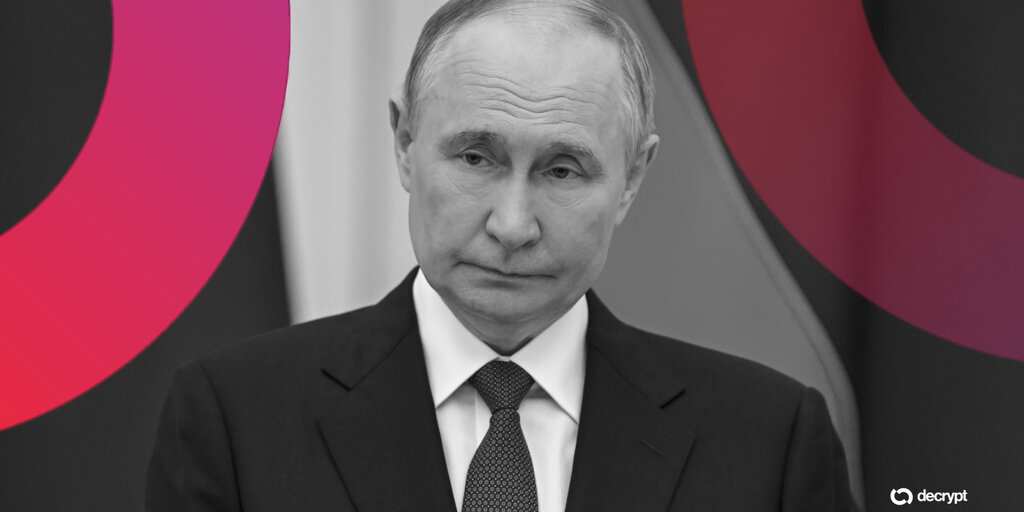
Russian President Vladimir Putin has signed the country's first comprehensive law governing digital currencies, establishing rules for how cryptocurrency is issued, stored, accounted for, and traded, according to state news agency Tass.
The legislation, signed on Tuesday, brings crypto exchanges, digital depositories, brokers, and clearing houses under a single regulatory framework. However, it stops short of creating a free market: the ban on using cryptocurrency and digital rights as payment for goods and services remains in force, and advertising that promotes crypto payments is prohibited.
Russia legalized cryptocurrency mining in 2024 through a separate bill signed by Putin. The new law fills the regulatory gap on trading and custody that the mining rules had left open. The framework arrives after years of debate within the Russian government: the Bank of Russia had previously advocated for a broad crypto ban, while the Ministry of Finance pushed for regulation, a tension the new law resolves in favor of licensed access under central-bank supervision.
Exchange Registration and Capital Requirements
Only organizations listed on a special government registry are permitted to operate crypto exchanges. Existing operators receive a grace period to complete registration by July 1, 2027.
Registered exchanges must hold a minimum of 15 million rubles (approximately $187,000) in own capital and must join a financial-market self-regulatory body. A firm's activity is classified as regular exchange activity once its monthly trading volume exceeds 3.5 million rubles.
Banks and branches of foreign lenders are required to reject any transfers they suspect are routed through unregistered providers.
Retail Investor Protections
Retail access is capped and gated. Non-accredited investors may purchase the most liquid cryptocurrencies—a list to be disclosed—through licensed intermediaries, with an annual limit of 300,000 rubles per intermediary. Both retail and qualified investors must pass a knowledge test. Qualified investors face no purchase limit.
The law also guarantees court protection for cryptocurrency owners, regardless of whether they previously declared their assets.
Effective Date and Digital Ruble Alignment
Most provisions of the law take effect September 1. The framework aligns with Russia's digital ruble initiative, which the central bank governor has said banks must support by the same September 1 deadline. As Decrypt reported as the bill neared passage, the deliberate gap between allowing citizens to buy crypto and barring them from spending it reflects Moscow's intent: a regulated on-ramp rather than a parallel currency.
Foreign Trade and Sanctions Implications
The law's exceptions carry particular significance outside Russia. Settlements under foreign trade contracts between residents and nonresidents are permitted, along with transactions involving mined coins and payments within digital asset platforms.
That carve-out is likely to draw scrutiny from Western regulators. Russia has increasingly relied on cryptocurrency for cross-border trade as sanctions pressure has intensified following the invasion of Ukraine, which disrupted access to the SWIFT international payment messaging system for major Russian banks.
The legislation grants Russian cryptocurrency holders something they previously lacked: legal standing and access to licensed venues. It also delivers what the state sought: a central bank-supervised pipeline it can monitor.

