Russia Approves Bitcoin, Ether and USDT for Retail Trading Starting Nov. 17
Key Takeaways
- •The Bank of Russia has finalized rules allowing exchanges to offer Bitcoin, Ether, and Tether USDt to retail investors beginning Nov. 17.
- •Non-qualified investors may purchase up to 300,000 rubles (about $3,700) in cryptocurrency annually per intermediary, while qualified investors face no limits and all traders must pass a mandatory test.
- •The framework stems from legislation signed by President Vladimir Putin on Aug. 4, with BTC, ETH, and USDT selected based on market capitalization, trading volume, and at least five years of price history on foreign exchanges.
- •Moscow Exchange is set to launch pilot cryptocurrency trading on Dec. 1, after Sberbank received authorization to offer crypto exchange services in October.
- •Russia will prohibit direct peer-to-peer crypto trading starting July 1, 2027, alongside existing bans on transfers to self-custody wallets and crypto payments for goods and services.
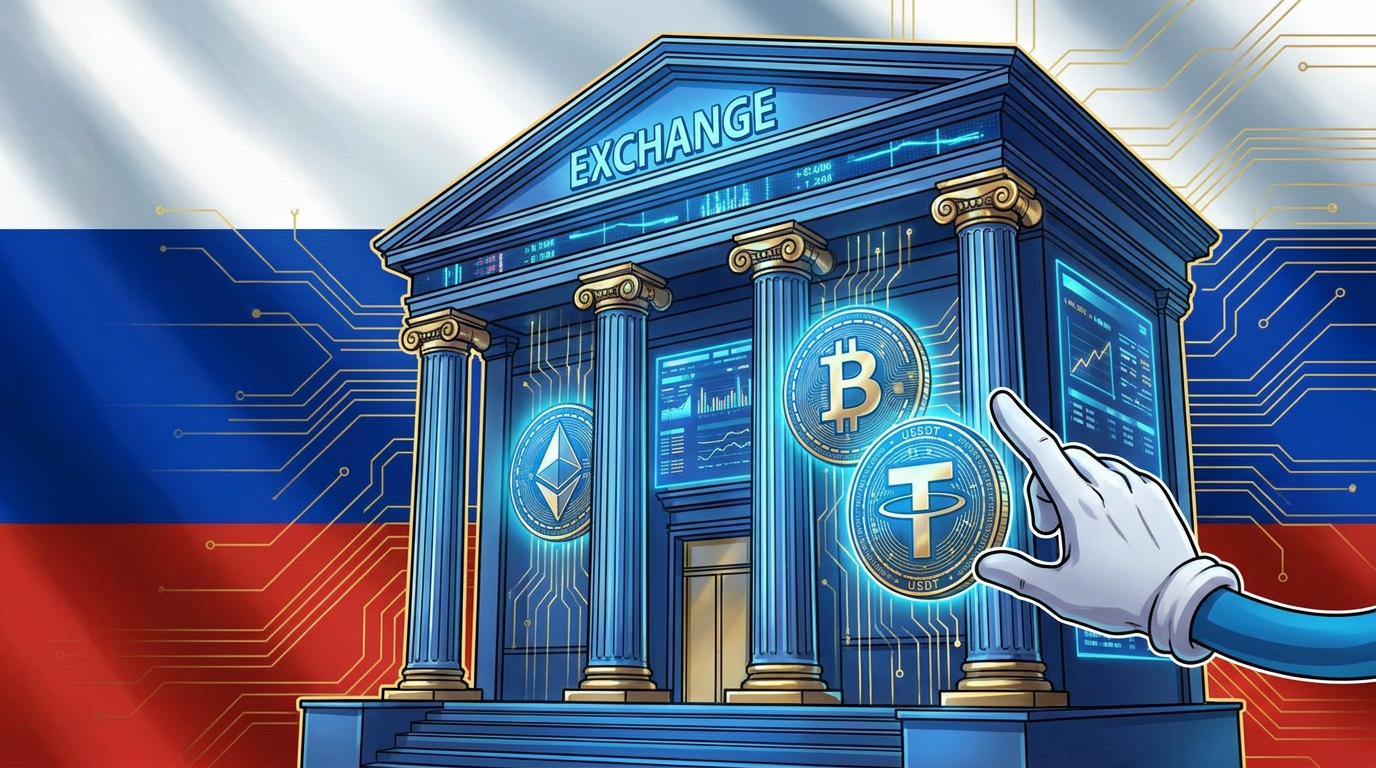
Russia's central bank has finalized rules allowing exchanges to offer Bitcoin (BTC), Ether (ETH) and Tether USDt (USDT) to retail investors beginning Nov. 17.
Under the rules published by the Bank of Russia, non-qualified investors may purchase up to 300,000 rubles (around $3,700) in cryptocurrency annually through each intermediary, including brokers, asset managers and crypto exchange providers. Qualified investors face no purchase limits, but all investors must pass a mandatory test before trading. The tiered setup means retail access now hinges on qualification status, with the mandatory test serving as the entry gate for anyone looking to buy.
The directive builds on legislation signed by Russian President Vladimir Putin on Aug. 4 establishing a regulated cryptocurrency market under central bank oversight. A week later, on Aug. 11, the Bank of Russia published draft regulations identifying BTC, ETH and USDT as eligible for public trading based on market capitalization, average daily trading volume and at least five years of price history on foreign exchanges. Those eligibility benchmarks explain why the initial list covers only three assets rather than the broader crypto market.
The law took effect Sept. 1, and the central bank subsequently authorized Sberbank, the country's largest bank, to offer crypto exchange services in October.
The regulatory developments come as Moscow Exchange, Russia's largest securities exchange and a publicly traded company, prepares to launch cryptocurrency trading on Dec. 1, initially offering the three cryptocurrencies through pilot transactions. With retail purchases permitted from Nov. 17 and the exchange pilot following on Dec. 1, those two dates offer the nearest markers for how the supervised market takes shape.
Russia to Restrict Peer-to-Peer Crypto Trading
While expanding access to cryptocurrencies through regulated platforms, Russia is also tightening restrictions on transactions outside those channels. Direct peer-to-peer crypto trading will be prohibited starting July 1, 2027, while transfers from regulated digital accounts to self-custody wallets are already banned, according to the Bank of Russia. The country also maintains a prohibition on using cryptocurrency to pay for goods and services. Taken together, the rules channel retail crypto activity into central bank-supervised intermediaries while closing off informal routes, setting the perimeter of what ordinary investors can legally do with digital assets under the new framework.

