National Security Analyst David Rothkopf Warns Trump's Decline Creates Power Vacuum for Inner Circle
Key Takeaways
- •David Rothkopf said Trump is showing signs of physical and cognitive decline, including bruising, swelling, fatigue, and erratic behavior.
- •Rothkopf argued that Trump’s family and senior staff have incentives to keep him in office because they benefit from his presidency.
- •He cited historical examples of presidents whose illnesses or incapacitation were concealed while power shifted to close associates.
- •Rothkopf said the 25th Amendment exists for presidential incapacity, but he believes informal power transfers are often more likely in practice.
- •He named Deputy White House Chief of Staff Stephen Miller and Trump’s sons as possible beneficiaries if Trump’s condition worsens.
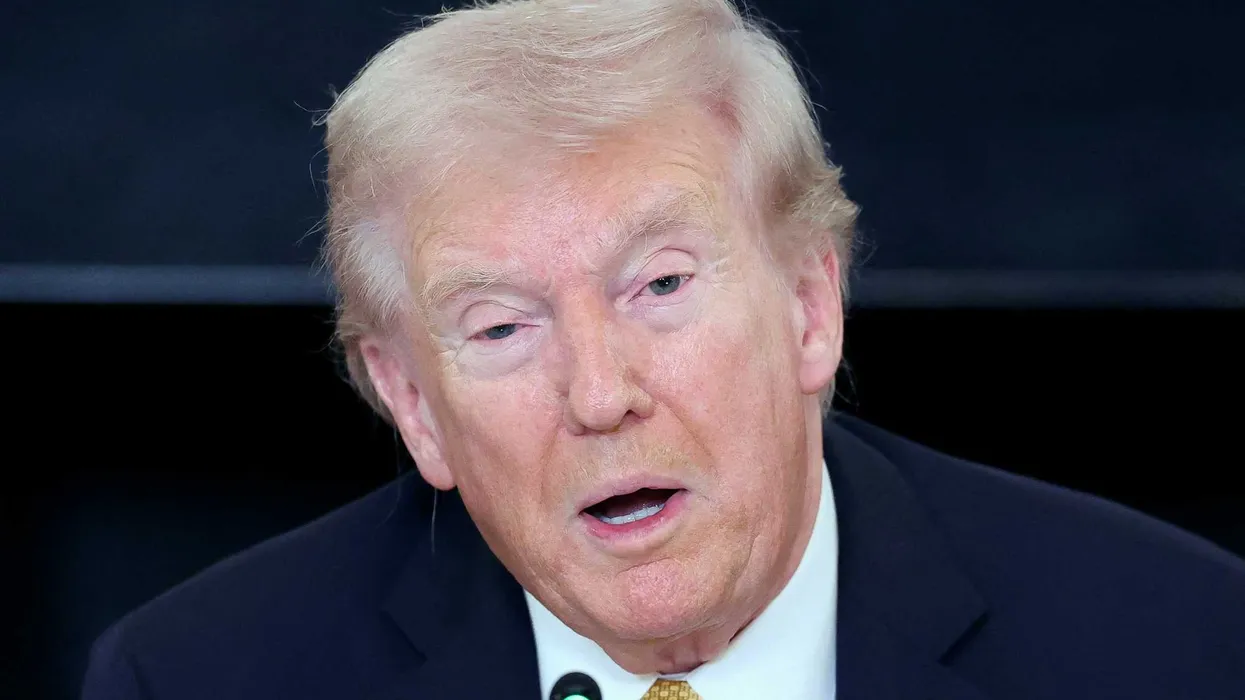
National security analyst David Rothkopf argues in an interview with the Daily Beast that President Donald Trump is experiencing a visible physical and cognitive decline, and that those surrounding the president are leveraging his deterioration for their own gain. Rothkopf, a former Clinton administration commerce official and former CEO of Foreign Policy magazine who has written extensively on executive power and U.S. national security, frames the situation as part of a recurring pattern in American presidential history.
"We are watching the president ripen and rot before our very eyes," said Rothkopf. "If he were a banana, he'd be in the trash right now — or, at best, on his way into a recipe for banana bread. From swollen ankles and bruised hands, we've watched this deterioration progress with each passing day. This week saw a progression of bruises up his arms. He is barely able to stay awake at virtually any public function he attends. His behavior is erratic. His already limited vocabulary is increasingly beyond his recall. He needs to be propped up when he walks any distance at all. According to reports, he emits strange odors."
"It's not pretty," Rothkopf added. Given the scale of Trump's responsibilities, Rothkopf contends that this rate of decline warrants serious concern rather than quiet schedule management by his handlers.
"There are reasons why the White House promotes the myth that flaccid, slumped, shuffling, mentally crumbling Donald Trump is healthy and capable enough to be president. They all tie to the fact that Trump is not the only person who stands to benefit from his being president," Rothkopf said. "His family profits from it. His senior staff has influence and even power they would never otherwise have."
Rothkopf described Trump in his current state as a "cash cow" for his own business enterprises and a "meal ticket" for those he characterized as opportunists within his orbit. He suggested that the president's decline will likely be concealed and misrepresented well beyond the point of genuine incapacitation.
Rothkopf drew on historical precedent to illustrate his argument. President James A. Garfield lingered for weeks after being shot before his death, during which time an informal committee effectively governed while First Lady Lucretia Garfield publicly downplayed his condition. Presidents Chester Arthur and Grover Cleveland both concealed serious illnesses that their administrations officially denied. President Woodrow Wilson suffered a major stroke that his physician masked with public claims of "digestive upset" or "exhaustion." President Franklin Roosevelt experienced serious cardiovascular collapse that left him functionally impaired for over a year before his death; a committee again stepped in, and Vice President Harry Truman was not informed.
Rothkopf noted that many of these concealment episodes predate the 25th Amendment, ratified in 1967, which established the constitutional mechanism for transferring presidential powers when a president is unable to discharge the duties of the office — either voluntarily or through a process involving the Vice President and a majority of the Cabinet. His argument is that despite this formal framework, informal power transfers to those in proximity to a weakened president remain the more likely outcome.
"In many of these cases, … power [often] flowed to those with proximity to the stricken leader — not necessarily to those who were in any legal line of succession," argued Rothkopf. "… On multiple occasions have presidents become incapacitated or weakened, with their conditions hidden and their responsibilities and prerogatives farmed out to or seized by close associates. … I spoke with numerous government officials who, in past decades and administrations, have been in the room when these decisions and power plays have been made."
Rothkopf pointed to Deputy White House Chief of Staff Stephen Miller, Trump's sons, and other figures within the president's inner circle as individuals who could assume effective control as Trump's condition worsens, thereby advancing their own interests. Miller, who was the principal architect of Trump's first-term immigration policies and one of the administration's most visible policy voices, now holds one of the most senior staffing positions in the West Wing.
"What we see happening in and around Trump right now suggests it may already have begun," Rothkopf said. "Trump can't keep a thought in his head for five minutes straight. He barely understands the key decisions he makes. Who is currently saying, 'I've got this, boss? Trust me.'"
"Are you comfortable with the prospect of Shadow President Stephen Miller? It's something we all might want to consider sooner rather than later," Rothkopf said.
