Ron Paul Says U.S. Debt Surge, Higher Yields and Inflation Pressures Signal Deeper Fiscal Strain
Key Takeaways
- •U.S. government debt has risen to $40 trillion and is projected by the Peterson Foundation to reach $50 trillion within six years.
- •Long-term Treasury yields reached their highest level since June 2007 amid concerns about debt spending and the Iran war.
- •The Treasury announced it would buy at least twice as many long-term bonds as previously planned to help reduce yields.
- •Paul says low interest rates and a weaker dollar are contributing to inflation pressures that are hurting household purchasing power.
- •He argues that rising debt service costs are increasing fiscal strain as borrowing costs become a larger share of the federal budget.
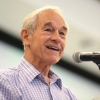
Ron Paul Says U.S. Debt Surge, Higher Yields and Inflation Pressures Signal Deeper Fiscal Strain
Dr. Ron Paul
It took about 200 years for U.S. government debt to reach $1 trillion. By contrast, less than half a year was enough to add another $1 trillion and push the total to $40 trillion last week. According to the Peterson Foundation, U.S. government debt is on track to reach $50 trillion within the next six years.
Despite promising to reduce government spending in all three of his presidential campaigns, President Trump, with the support of congressional Republicans and Democrats, has continued to increase the national debt.
Concerns that nearly all politicians in Washington, DC support additional debt spending, along with worries about the effects of the ongoing Iran war, pushed long-term Treasury bond interest rates, or yields, higher. They reached their highest level since June 2007, a little more than a year before the start of the Great Recession.
After the increase in yields, the Treasury Department announced on Wednesday that it would begin purchasing at least twice the amount of long-term bonds it had previously planned to buy, reducing the supply of long-term bonds in an effort to lower yields. The Treasury’s intervention initially pushed yields down. However, the following day Treasury yields rose again.
The Treasury and the Federal Reserve are likely to remain under pressure to keep interest rates low. Even a small increase in rates can significantly raise the amount the United States must pay on its debt, which makes borrowing costs a growing part of the fiscal picture as debt levels continue to climb.
By keeping interest rates artificially low, the Federal Reserve and the Treasury weaken the dollar. That, together with sharply higher fuel prices as a result of the Iran war, is why wages are not keeping pace with the rising cost of living. Even many Americans whose paychecks are increasing are still falling behind.
The erosion of the dollar’s value helps explain why 29 percent of Americans have used buy now, pay later loans over the past year to cover expenses such as rent and groceries. Another effect of the dollar’s decline is that, according to a survey by digital finance company Achieve, 53 percent of Americans are carrying credit card balances for necessary expenses.
British historian Niall Ferguson has argued that empires are at risk when governments spend more on servicing debt than on so-called national security. It appears the Trump administration is responding to that argument with the worst possible solution. It is proposing a major increase in already bloated military spending, ensuring that “national security” spending can stay ahead of annual interest payments on the national debt.
Instead of spending more on the military-industrial complex and foreign intervention, the U.S. government should focus on reducing the spending that continues to drive debt higher.
America’s welfare-warfare state appears to be in its final days. The economic crisis that leads to the end of the current system will likely involve rejection of the dollar’s reserve currency status. That would cause a collapse in the dollar’s value. In that situation, Americans would have an opportunity to replace the authoritarianism of both the left and right wings of the ruling uniparty with volunteerism in economic life, personal life, and dealings with other countries.
About the author
Dr. Ron Paul
Dr. Ron Paul is an American author, activist, physician, and retired politician. A self-described constitutionalist, Paul is a critic of the federal government’s fiscal policies, especially the existence of the Federal Reserve and tax policy, as well as the military-industrial complex, the war on drugs, and the war on terror. He has also been a vocal critic of mass surveillance policies such as the USA PATRIOT Act and NSA surveillance programs.
Follow Ron Paul on X. Visit the Ron Paul Institute for Peace and Prosperity.
Copyright © The Ron Paul Institute. Permission to reprint in whole or in part is gladly granted, provided full credit and a live link are given.

