Ron Paul Says Education Is Key to Preserving a Free Society
Key Takeaways
- •A Morning Consult and Cato Institute survey of 2,253 Americans found that 55% want firm constitutional limits on government power and 58% do not trust any political party with too much power.
- •The survey also found that 40% of respondents would approve of a president they supported stretching the Constitution to reach their goals.
- •Among Gen Z respondents, 53% viewed socialism favorably, while 45% viewed capitalism favorably, and 51% said they would be more likely to vote for a democratic socialist.
- •Paul said inadequate civics and economics education is contributing to weaker support for constitutional government and misunderstandings about markets and state control.
- •Paul pointed readers to his homeschooling curriculum, which he said includes history, literature, mathematics, sciences, essay writing, and public speaking, with an emphasis on liberty and critical thinking.
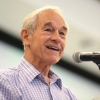
Ron Paul Says Education Is Key to Preserving a Free Society
Dr. Ron Paul
A survey of 2,253 Americans conducted by Morning Consult and the Cato Institute offers both encouraging and troubling findings about the future. On the positive side, 55 percent of respondents said the Constitution should place firm limits on government power, and 58 percent said no political party should be trusted with too much power. Those views suggest that many Americans still recognize the value of restraints on political authority, even as the public debate often centers on how much power government should exercise.
At the same time, the survey found that four in 10 Americans would approve of a president they voted for “stretching” the Constitution to achieve their goals. That result, Paul wrote, is not surprising, since people often change their views on presidential power once their preferred candidate reaches the Oval Office.
Paul described another result as especially worrying: 53 percent of Gen Z respondents, defined as those born between 1997 and 2012, said they had a favorable view of socialism, while 45 percent said the same of capitalism. In addition, 51 percent of Gen Z said they would be more likely to vote for a candidate who identifies as a “democratic socialist.”
Paul argued that this support for democratic socialism among younger Americans points toward a broader move away from constitutional government. He said younger voters often respond to problems created by government intervention in the economy by calling for still more government. That, he added, makes the content of civics and economics education more consequential, since the way students learn to think about power, markets, and rights can shape how they interpret current political debates.
He also said that students who are not taught the history of America’s founding, including the importance of limiting government to a few clearly defined functions and dividing power among three branches of government and between the federal government and the states, are less likely to support constitutional government. In the same way, he said, young people who are not taught that prosperity comes from free markets, private property, and sound money are more likely to accept the socialist claim that prosperity requires surrendering liberty to politicians.
Paul said the lack of basic economics education helps explain why many people confuse the current economic system with a free market and blame capitalism for problems caused by government. He also said this lack of education allows President Trump to denounce socialism while taking at least partial control of private companies, which he described as a policy taken from the socialist handbook.
One reason for the decline in knowledge about American history, sound economics, and the principles of the American republic, Paul wrote, is the neglect of history and civics education. He said the federal government insists that government schools focus on preparing children for mandated reading tests and emphasize science and technology education. He added that while teaching reading, math, and science is important, that does not justify neglecting history and economics, which he presented as essential for understanding both the Constitution and the difference between free markets and state control.
Paul said parents who want a well-rounded education for their children, including a focus on the history and ideas of liberty, may want to explore his homeschooling curriculum. He said the curriculum offers students a solid education in history, literature, mathematics, and the sciences, while also giving them opportunities to create their own websites and internet-based businesses. Starting in fourth grade, he said, students are required to write at least one essay a week and also take a public speaking course.
He said the curriculum emphasizes the history, philosophy, and economics of liberty, but never replaces education with indoctrination. The goal, he said, is to produce students with strong critical-thinking skills. For more information, he directed readers to www.RonPaulCurriculum.com.
About the author
Dr. Ron Paul
Dr. Ron Paul is an American author, activist, physician, and retired politician. A self-described constitutionalist, Paul is a critic of the federal government's fiscal policies, especially the existence of the Federal Reserve and tax policy, as well as the military–industrial complex, the war on drugs, and the war on terror. He has also been a vocal critic of mass surveillance policies such as the USA PATRIOT Act and the NSA surveillance programs.
Follow Ron Paul on X.
Visit the Ron Paul Institute for Peace and Prosperity.
Copyright © The Ron Paul Institute. Permission to reprint in whole or in part is gladly granted, provided full credit and a live link are given.
Please donate to the Ron Paul Institute.

