City of London Corporation's 1973 Rolls-Royce Phantom VI Limousine Converted to Electric Power
Key Takeaways
- •The City of London Corporation's 1973 Rolls-Royce Phantom VI limousine has been converted to electric power as part of its plan to reach net zero by 2027.
- •Oxfordshire-based Electrogenic carried out the conversion without cutting, drilling, or welding any bodywork, meaning the process is theoretically reversible.
- •The electrified limousine uses a 120kW motor and 62kWh battery, delivering a real-world range of 100–120 miles and support for 100kW DC fast charging.
- •A 'Ceremonial' driving mode reduces torque and relaxes throttle response to ease low-speed driving during civic processions.
- •Only 374 Phantom VI models were built, and the car debuted at the Salon Prive concours at Blenheim Palace before resuming official duties around London.
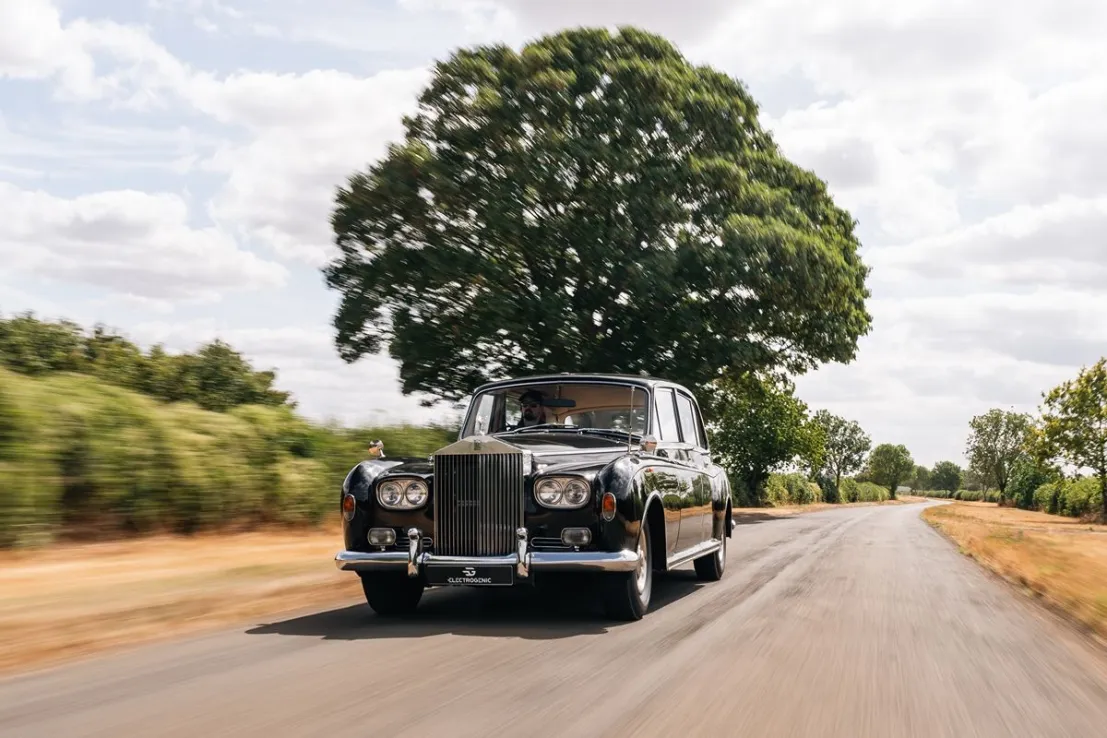
The City of London Corporation's official limousine, a 1973 Rolls-Royce Phantom VI, has been converted into an electric vehicle. The battery-powered limousine was commissioned by Alderwoman Dame Susan Langley DBE, the 697th Lord Mayor of the City of London, and forms part of a plan to make the Corporation 'net zero' by 2027.
Oxfordshire-based Electrogenic was handed the task of re-engineering the Rolls-Royce, having established a leading reputation for its bespoke EV conversions. The company is part of a growing UK specialist industry that converts classic cars to electric power, an approach increasingly used to keep historic vehicles usable in urban environments as emission restrictions tighten in cities such as London. Following its debut at this week's Salon Prive concours at Blenheim Palace, the Rolls-Royce will continue to carry out official duties around London.
A historic EV conversion
Only 374 examples of the Phantom VI were built, making these cars a rare but significant part of Rolls-Royce's history. The Phantom VI remained in production, in various forms, from 1968 until the early 1990s and was a favoured choice for ceremonial and state transport.
No part of the Phantom VI's bodywork was cut, drilled or welded during the Electrogenic conversion. In theory, this means the entire process could be reversed and the Rolls-Royce returned to its original condition. This reversibility is a hallmark of high-end EV conversions, where preserving originality protects both the vehicle's heritage value and its collectability.
Power comes from a 120kW electric motor, driven by a 62kWh battery pack mounted where the Phantom's V8 engine once lived. A single-speed direct-drive transmission sends 229lb ft of torque to the rear wheels.
Engage Ceremonial mode
The Phantom VI can cover a real-world range of between 100 and 120 miles, which should be more than sufficient for travelling around the Square Mile and beyond. Should further range be needed in future, the generous proportions of the Rolls-Royce mean battery capacity can be doubled. The Phantom VI is compatible with DC fast-charging devices of up to 100kW.
A simple column-mounted gear lever replaces the original item for the automatic transmission, and Electrogenic has added efficient heating for the rear cabin.
Most importantly, a 'Ceremonial' driving mode reduces motor torque and relaxes throttle response, making the Rolls-Royce easier to drive at low speeds for civic processions.
Combining tradition and technology
Steve Drummond, CEO of Electrogenic, commented: "We were honoured to be asked to electrify this significant motor car, and to play a part in the City of London Corporation's journey to net zero.
"When it was launched in the late 1960s, the Rolls-Royce Phantom VI was the most refined and dignified limousine on the road. Now, thanks to electrification, its core character has been enhanced further. It is whisper quiet, effortless to drive with swift performance, and has zero tailpipe emissions."
Lady Mayor of the City of London, Dame Susan Langley, added: "We were delighted to welcome the vehicle back following its transformation, marking an important step in modernising the mayoral ceremonial fleet while preserving the heritage and character of these iconic vehicles.
"The project demonstrated how historic assets can be responsibly adapted for the future, combining traditional craftsmanship with modern electric technology."
John Redfern writes for Motoring Research
