Robert Reich Warns Trump Is 'Losing It' as Trade War and Economic Uncertainty Mount
Key Takeaways
- •Robert Reich, former Labor Secretary and UC Berkeley professor, said Trump may be too mentally muddled to make international economic decisions without careful guidance.
- •Reich criticized Trump's escalating trade war with Canada, America's second-largest trading partner, calling the president an 'economic illiterate' who ignores the principle of comparative advantage.
- •Reich questioned whether Treasury Secretary Scott Bessent is providing the president with adequate economic counsel.
- •Reich warned that administration corruption and unpredictable, arbitrary policymaking are eroding trust in the American economy and could do so for decades.
- •Reich predicted voters will judge Trump on economic performance in the November midterm elections.
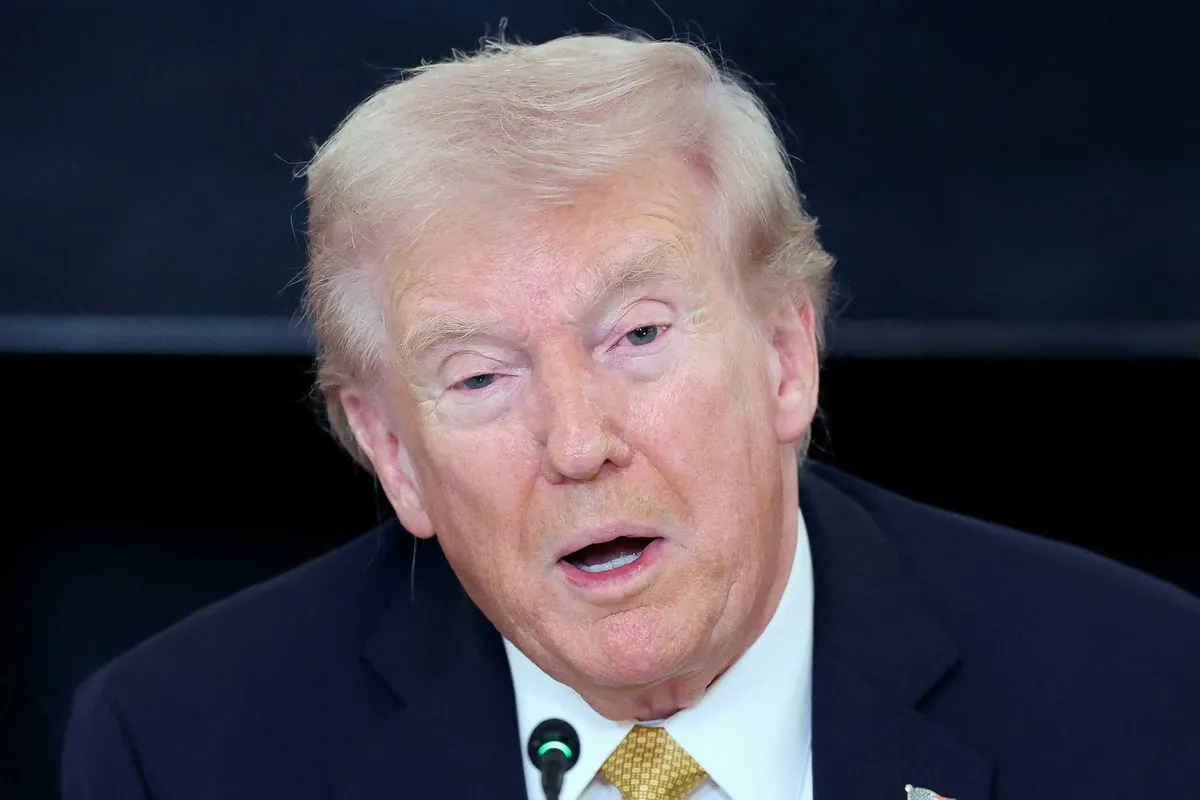
Robert Reich, professor of public policy at the University of California, Berkeley, and former U.S. Secretary of Labor under President Bill Clinton, voiced alarm Friday evening that President Donald Trump may be too mentally muddled to make international economic decisions without careful guidance.
Speaking with MS NOW anchor Jonathan Capehart, Reich said Trump's recent decisions escalating a trade war with the United States' long-time economic ally Canada—America's second-largest trading partner—suggested something was no longer functioning properly in his judgment. Reich, who has taught economics and public policy for decades and was a vocal critic of Trump's first-term tariff policies, has long argued that trade disputes with allies carry costs for American consumers and producers alike.
"He doesn't understand [trade] at all," Reich said, referring to the severe backlash the U.S. is facing as a result of Trump's tariff war. "I'm afraid he's an economic illiterate. Even somebody who has taken one week of economics, even somebody who has not taken economics, who has just simply observed the world, understands that trade is, generally speaking, a good thing. There's something called comparative advantage. We get the benefits of Canada's forests, Canada's aluminum, Canada's this, Canada's that. And they get the benefits of what we specialize in."
The concept Reich invoked, comparative advantage, dates to the early 19th-century economist David Ricardo and holds that countries benefit by specializing in what they produce most efficiently and trading for the rest—a foundational argument economists have long cited in favor of open trade among allies.
Reich said it was "really terrifying" to watch Trump issue what he called "crazy statements," citing a recent post on Truth Social in which the president pressured federal agencies to "LOWER THE [interest] RATE OR I'LL STOP TRADING WITH COUNTRIES WITH WHICH WE HAVE A DEFICIT" (Truth Social). Notably, the Federal Reserve sets interest rates independently of the White House, a separation designed to insulate monetary policy from political pressure.
"One wonders whether he is losing it or he never had it or he's going to actually make policy based upon these crazy notions, or is anybody advising him at all," Reich said. "I mean, what is Scott Bessent doing as secretary of the treasury, who's job is to at least confer with the president and give the president some economic background. It just worries me, those kinds of crazy things. And of course, what's the American public supposed to take away from this?" Bessent, a former hedge fund manager confirmed as Treasury Secretary in 2025, has at times publicly sought to reassure markets amid the administration's shifting tariff announcements.
Reich also expressed concern that corruption surrounding Trump would leave a lasting stain that erodes trust in the American economy for years, possibly decades.
"The administration is drenched in a kind of corruption in which big companies are constantly pouring money in places where Donald Trump says they should, including Trump's own family," Reich said, momentarily losing his words in frustration. "… [A]n economy depends on certain expectations being met by producers, by consumers. Everybody needs to know what the rules are, and everybody needs to know that the rules are going to be pretty stable in the future. And the real underlying problem for the American economy … is that nobody knows what's going to happen next week or next month, or what is simply the rules. It's an arbitrary system that Trump has created, and that arbitrariness is undermining the integrity of the entire economy."
He added, however, that voters will be judging Trump on the economy as the midterms approach in November. "The public is not stupid. You can't tell them that they're doing better than they think they're doing." Historically, the party holding the White House has frequently lost congressional seats in midterm elections, and economic sentiment has often played a decisive role in voter behavior.
Source: Alternet | Video via YouTube
