Tuning Out Trump Is the Most Dangerous Thing You Can Do Now, Writes Robert Reich
Key Takeaways
- •The Republican-led Senate confirmed Todd Blanche, Trump's former personal defense attorney, as U.S. Attorney General despite Reich's comparison to Nixon's attorney general John Mitchell, who was imprisoned for Watergate-related crimes.
- •A Republican-led Senate panel voted to hold Dr. Anthony Fauci in contempt of Congress after he invoked his Fifth Amendment right against self-incrimination during a three-hour hearing, citing concerns about potential perjury charges.
- •Reich characterized the Republican pursuit of the 85-year-old retired Fauci as a scapegoating effort to rally the political base and raise campaign funds ahead of the midterm elections, noting negligible public polling interest in the matter.
- •Reich stated that congressional Republicans supported administration policies he described as disastrous across foreign policy, the economy, immigration, health care, and the environment, while enacting tax cuts for the wealthy funded partly through reductions to Medicare, Medicaid, and food stamps.
- •Reich reported that the majority of his readers are coping with the current political climate through cultivating gratitude and increasing activism rather than disengaging, including supporting candidates, protesting, and boycotting companies perceived as enabling the administration.
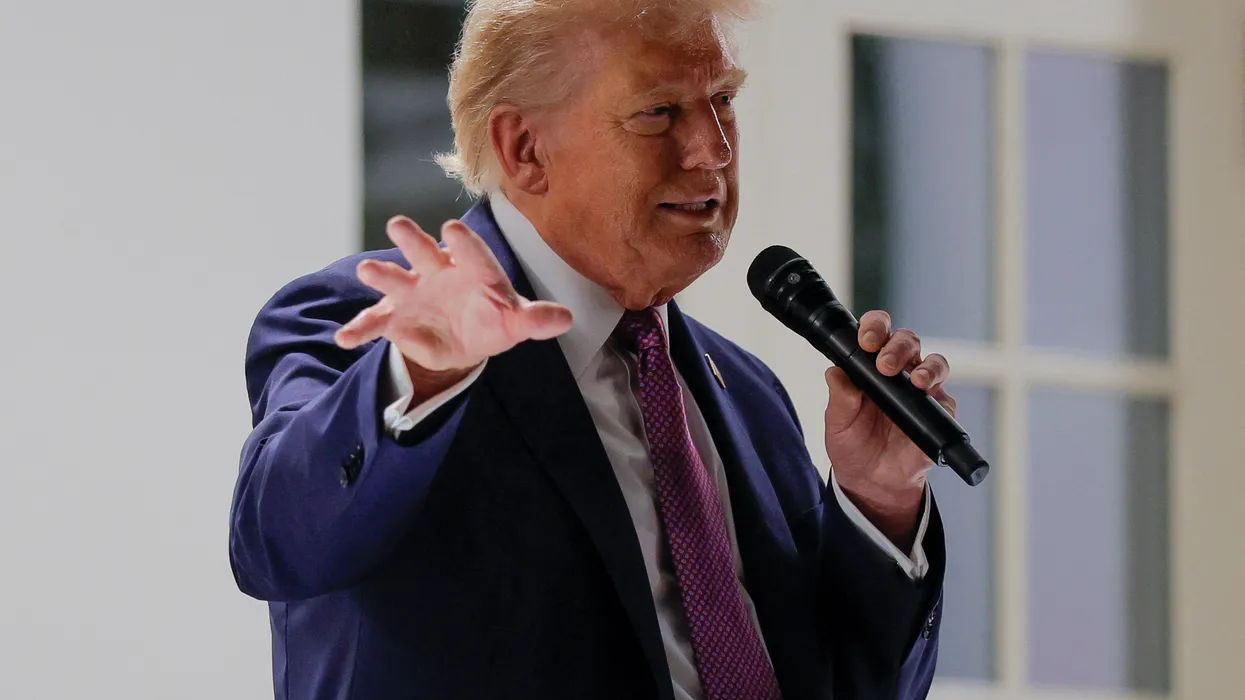
The Republican-led Senate has confirmed acting Attorney General Todd Blanche as the next U.S. attorney general. Blanche, who previously served as Trump's personal defense attorney in the New York hush-money criminal case before being elevated to senior Justice Department roles, drew a sharp parallel from Reich to Richard Nixon's attorney general John Mitchell — the first U.S. attorney general to serve a federal prison sentence, serving 19 months of a two-and-a-half-year sentence for conspiracy and obstruction of justice stemming from the Watergate scandal. Reich argues that Blanche has similarly carried out illegal presidential orders and should face imprisonment rather than promotion.
On Thursday, a Republican-led Senate panel voted to hold Dr. Anthony Fauci in contempt of Congress for his refusal to answer questions at a hearing the previous week. Fauci sat for three hours, invoking his constitutional right against self-incrimination, citing a justifiable concern that Senate Republicans might attempt to use his testimony as grounds for perjury charges. Senate Republicans may now request the Justice Department to prosecute Fauci for failure to comply with their subpoena. Historically, congressional contempt referrals face a high bar for prosecution, and the outcome depends largely on whether the Justice Department — under the same administration — chooses to act.
Reich characterizes Fauci as an American hero who provided invaluable guidance to seven presidents — from Ronald Reagan to Joe Biden — through anthrax attacks, Ebola outbreaks, SARS scares, and the COVID-19 pandemic. Fauci devised the U.S. global strategy against AIDS and received the Presidential Medal of Freedom from President George W. Bush for his work on HIV and AIDS.
Reich questions the contrasting treatment of the two figures: Senate Republicans promote Blanche while targeting Fauci.
Acknowledging that many Democrats in Congress have been insufficiently forceful in opposing what he describes as Trump's neofascism, Reich contends that congressional Republicans have gone further — becoming, in his assessment, a near-criminal enterprise actively colluding with the administration.
Reich notes that Blanche was confirmed without guarantees that Trump would not use the $8 billion fund Blanche reportedly created to reward the Capitol attackers, or leverage IRS immunity — also secured by Blanche — to shield from public disclosure the full extent of Trump's business dealings.
Regarding the Republican focus on Anthony Fauci, who is 85 years old and retired, Reich questions the political rationale. The COVID-19 pandemic occurred approximately six years ago, and public polling indicates negligible interest in pursuing Fauci. While Senator Rand Paul has maintained a personal grudge against Fauci, Reich questions why numerous Republicans and some Republican state attorneys general have joined this effort.
Reich's assessment is that Republicans lack alternative talking points ahead of the midterm elections. He describes Trump's foreign policy and the Iran war as disasters, the economy as catastrophic, the immigration enforcement dragnet as a cruel calamity, health policy as embarrassing or worse, and environmental policies as a gift to Big Oil. Congressional Republicans, he notes, have supported all of these positions.
Reich also highlights that Republicans enacted substantial tax reductions for wealthy individuals and large corporations, funded in part through cuts to Medicare, Medicaid, and food stamps.
He further describes Trump's behavior as increasingly erratic, characterizing what he calls a communist witch hunt as a bad joke. Trump's poll numbers continue to decline to record lows. References to a ballroom, reflecting pool, and crypto deals have all become, in Reich's words, Republican nightmares.
The Republican pursuit of Fauci, Reich argues, is an attempt to find a scapegoat — someone old and easily demagogued — to rally the base and raise campaign funds ahead of the fall elections.
Reich reminds readers that there are 86 days remaining until the midterm elections, when voters can remove incumbents. Midterm elections have historically served as a referendum on the sitting president's party, with the opposition party often gaining ground — a pattern Reich's call to action implicitly relies upon.
Turning to his audience, Reich reports that he recently asked readers how they are coping with the current political climate. Some responded that they are tuning out, concluding nothing can be done. Reich expresses understanding, acknowledging his own periodic exhaustion with political news.
However, the majority of respondents indicated they are coping through two approaches: cultivating gratitude for what remains positive about America and increasing their activism. Reich describes readers focusing on everyday generosity, acts of kindness, and the dedication of teachers, nurses, social workers, and community leaders. They are also protecting vulnerable community members, supporting candidates, sending postcards to potential voters, protesting administration actions, and boycotting companies perceived as enabling the administration.
Reich cites a Substack community member, Johan, who commented several weeks ago that it is normal for people to wait until they feel hopeful before taking action. In reality, Johan noted, hope emerges from action — it is what activism produces.
Reich argues that hopelessness is a trap. The sentiment that all is lost may feel like realism, but it functions as surrender. He contends that the wealthy and their Republican allies benefit from public despair, as hopelessness costs them nothing while costing the public everything.
Gratitude, Reich writes, is the most powerful and enduring sentiment — not because conditions are favorable, but because feeling gratitude directs attention toward what remains worth defending. This, in turn, fortifies hope and adds urgency to activism.
Reich concludes by urging readers to remain grateful for the kindness, generosity, and freedom experienced daily, despite his characterization of those currently controlling the government. This gratitude, he writes, provides hope for a better future and strengthens the commitment to replace current officeholders with what he describes as good, honest, and capable people.
Robert Reich is a professor of public policy at the University of California, Berkeley, and served as U.S. Secretary of Labor under President Bill Clinton from 1993 to 1997. His writings are available at

