Robert Reich: The Real Reason Trump Won Again — and Why His Power Is Waning
Key Takeaways
- •Robert Reich sharply contrasted an admired, now-deceased American public figure with President Trump, calling Trump divisive, cruel, and self-centered.
- •Trump posted an AI-generated illustration on Truth Social showing himself walking with the late figure and claimed on Glenn Beck's radio show that she 'really liked' him.
- •Reich argues that since the late 1970s, about $80 trillion has been transferred from the bottom 90% of Americans to the wealthiest 1%, undermining the economy's basic bargain.
- •He says Trump channeled public frustration into scapegoating of undocumented workers, minorities, the 'deep state,' Democrats, and Canada while serving wealthy interests.
- •Reich believes Trump's power is waning and views the election in just over nine weeks as an opportunity to constrain him and rebuild the nation's ideals.
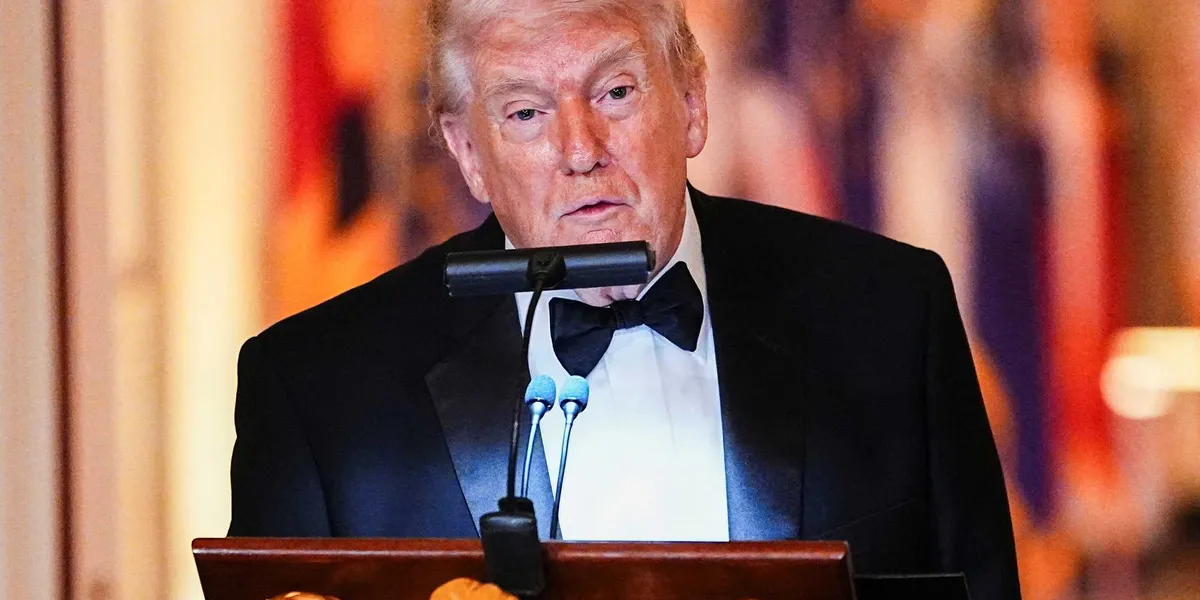
Even at 80 years old, she was still bringing Americans together. At 80, he continues to tear us apart.
She always stood for the underdog; he stands for the overlord. She was among the most generous people in American public life; he is the most self-centered. Hers was a voice of clarity, courage, and hope — his, a voice of cruelty, corruption, and incompetence.
If the human species were lined up from most admirable to least, she would be among the first, he among the last. Sadly, she is no longer with us. Sadly, he is.
This week, he took to Truth Social to share an AI-generated illustration of himself walking arm in arm with her around the White House. "I knew her a little bit," he boasted on Glenn Beck's radio show. "She really liked me, I will tell you!" — at which Beck laughed out loud.
Most of the people I meet around this country are more like her than him. Americans are kind, friendly, empathic, and optimistic. We want to protect the vulnerable and comfort the afflicted. We have given refuge to those fleeing violence and persecution. We have aspired to equal opportunity for the disadvantaged and help for the destitute. We have given louder voices to those who would otherwise not be heard, and we have been a beacon of hope in the world.
These ideals are embedded in Lincoln's Gettysburg Address, Emma Lazarus's poem affixed to the Statue of Liberty, FDR's second inaugural address, and Martin Luther King Jr.'s "I Have a Dream" speech at the 1963 March on Washington.
Of course, we have not lived up to them. There has always been a dark side to America — a part of our soul that exemplifies him rather than her. We have been intolerant and bigoted. We have supported dictators. Earlier in our history, we enslaved people and engaged in genocide.
But most of us are not proud of that dark side. We have been proudest of our ideals.
So why did we elect him president again? Everyone has a view: Joe Biden should have exited the stage sooner, Democrats should have held a mini-primary, Kamala Harris was not the best candidate, Trump cheated, and so on.
The deeper reason, I believe, began several decades ago, when those who had accumulated a great deal of power and wealth set out to change America. They destroyed the basic bargain at the heart of our economy — that if you worked hard and played by the rules, you would do well and your children would do even better. Since the late 1970s, some $80 trillion has been siphoned from the bottom 90 percent of Americans to the richest 1 percent.
Yet they got us to blame each other for our struggles rather than look upward to see where all the power and wealth had gone.
Trump gave voice to that scapegoating — blaming undocumented workers, the "deep state," transgender people, Latinos, Black people, "communists," Muslims, and Democrats. Now even Canada! All along, he has been the mainstay of big money, the tribune of the wealthy and powerful.
But his power is now waning. Americans are seeing where he and the dark side have led us — into another unending war, into higher prices and lower wages, into cruel and brutal mass deportations. We are finally looking upward and realizing where the power and wealth have gone.
An election is just over nine weeks away. It offers a chance to correct some of this — not merely to constrain him, but to begin the long and difficult process of rebuilding the nation toward the ideals we are most proud of, and which she exemplified.
Robert Reich is a professor of public policy at Berkeley and former secretary of labor. His writings can be found at
