Ripple CEO Garlinghouse Says CLARITY Act Could Open XRP’s Next Phase
Key Takeaways
- •Brad Garlinghouse said the CLARITY Act could be the last major regulatory hurdle for XRP's broader institutional adoption.
- •Stuart Alderoty said the bill would strengthen AML and KYC requirements and improve tools for regulators and law enforcement.
- •The article says clearer rules could help financial institutions build blockchain-based products with greater confidence.
- •Ripple has positioned the XRP Ledger for uses including cross-border payments, tokenized asset settlement, stablecoin transactions, and enterprise blockchain infrastructure.
- •Supporters believe XRP has traded at a regulatory discount, and they say the legislation could shift focus toward the token's utility and network growth.
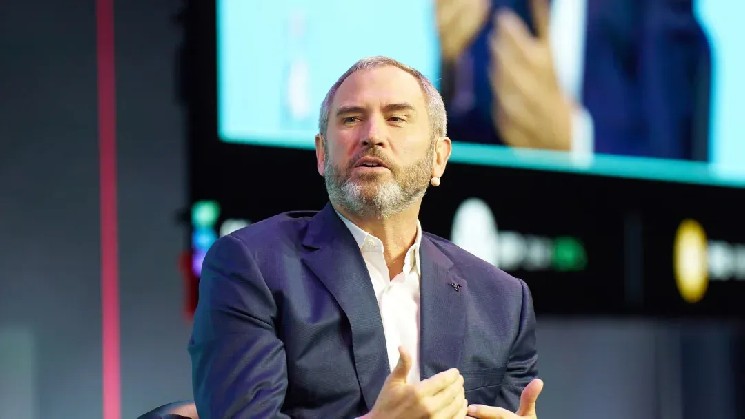
Ripple CEO Garlinghouse Says CLARITY Act Could Open XRP’s Next Phase
Garlinghouse Says the CLARITY Act Could Be the Last Major Regulatory Hurdle for $XRP
Ripple CEO Brad Garlinghouse said the CLARITY Act could be the final major regulatory barrier preventing $XRP from reaching broader institutional adoption.
In response to a post on X, formerly Twitter, by Ripple Chief Legal Officer Stuart Alderoty, Garlinghouse endorsed the push for the legislation, writing: “My thoughts exactly… Perfect can't be the enemy of good. Let's get this done.”
Alderoty described the CLARITY Act as a consumer protection framework rather than simply a crypto industry bill. He said the measure would strengthen anti-money laundering (AML) and know-your-customer (KYC) requirements, give regulators and law enforcement better tools, and reduce the risks created by regulatory uncertainty.
For the $XRP Army, Garlinghouse’s remarks underscore a long-running concern: unclear U.S. crypto rules have been one of the biggest barriers to wider institutional participation in digital assets. That regulatory backdrop also helps explain why legislation like the CLARITY Act is being watched closely by firms that need clearer compliance standards before expanding into blockchain-based products.
Regulatory Clarity Could Support Broader XRP Adoption
For years, banks, asset managers, and other financial institutions have treated crypto cautiously because of uncertainty around compliance obligations, asset classifications, and legal exposure. A finalized CLARITY Act could provide a framework that allows companies to build and deploy blockchain-based financial products with greater confidence.
That clarity could benefit $XRP and the $XRP Ledger, which Ripple has positioned as infrastructure for global payments, tokenized assets, stablecoin settlement, and institutional finance.
Potential areas of use include:
- Cross-border payments and liquidity solutions
- Tokenized asset settlement
- Stablecoin transactions
- Enterprise blockchain infrastructure
XRP supporters argue that clearer rules could accelerate innovation by giving institutions the confidence to participate at scale, while also making it easier for the market to focus on the network’s practical use cases rather than regulatory uncertainty.
CLARITY Act Could Be a Major Catalyst for Crypto
The possible impact of the legislation extends beyond compliance. Grayscale has compared regulatory progress in crypto to earlier market milestones, saying clearer rules could act as a catalyst similar to the effect of spot ETF approvals on institutional adoption.
For $XRP, regulatory certainty could encourage more financial firms to explore XRP-based products and services without the uncertainty that has surrounded the asset for years.
XRP Supporters Argue the Token Has Traded at a Regulatory Discount
Many $XRP investors believe the asset has traded at a regulatory discount because of prolonged uncertainty in the U.S. market. Although Ripple has secured major legal victories in its dispute with the SEC, supporters say comprehensive legislation is still needed to fully remove doubts about $XRP’s status.
If the CLARITY Act becomes law, attention could shift away from regulatory concerns and toward XRP’s real-world utility, network growth, and role in the future of digital finance.
The legislation would not guarantee price gains, but it could remove one of the biggest obstacles to broader adoption.
For Ripple and $XRP holders, the CLARITY Act would represent more than a regulatory change. It could mark a turning point in which institutional adoption, blockchain utility, and real-world applications become the main drivers of the ecosystem.

