Former Counterterrorism Official Richard Clarke Rips FAA Press Conference as 'Perhaps the Worst' He Has Ever Seen
Key Takeaways
- •Richard Clarke, a former counterterrorism official who served under Presidents Reagan, George H.W. Bush, and Obama, judged Transportation Secretary Sean Duffy's Friday night briefing to be among the poorest crisis communications efforts he had witnessed in his career.
- •Duffy attributed the FAA ground stop to a router overload during a routine telecommunications upgrade, but Homeland Security Secretary Markwayne Mullin's remarks appeared to conflict with that account.
- •Clarke contended that ruling out a cyberattack was premature because no forensic or root-cause analysis had yet been completed at the time of the briefing.
- •The multi-hour nationwide ground stop stranded hundreds of thousands of travelers, prompting Clarke to propose an independent investigative body for cyber incidents modeled on the National Transportation Safety Board.
- •Public concern about a possible cyberattack was heightened by a recent Microsoft system shutdown that left millions of users, including government workers, without access to email.
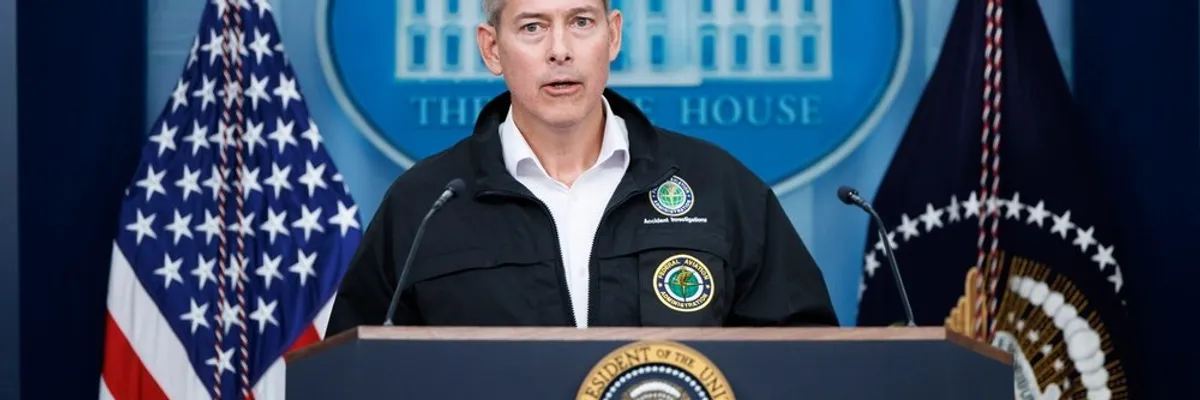
Richard Clarke, the former counterterrorism official who served multiple presidential administrations, has sharply criticized President Donald Trump's administration over its response to the Federal Aviation Administration's multi-hour nationwide ground stop, calling Transportation Secretary Sean Duffy's Friday night news conference "perhaps the worst" crisis communications performance he has witnessed in his career.
Clarke, who served under Presidents Ronald Reagan, George H.W. Bush, and Barack Obama, delivered the assessment during an appearance on CNN's "Smerconish," where he told anchor Michael Smerconish that the White House briefing had left Americans with more questions than answers. The stakes of that messaging were considerable: a nationwide ground stop is among the most sweeping actions the FAA can take, halting flights across the country, and the credibility of the official explanation became central to how the disruption was judged.
"I think we need a much more complete explanation," Clarke said.
Duffy claimed that the FAA halt was caused by a router overload triggered during a routine telecommunications upgrade. However, remarks by Homeland Security Secretary Markwayne Mullin appeared to contradict that account, and Clarke said it was premature for officials to rule out a cyberattack before a forensic investigation had been completed.
"First of all, you should never rule out cyber until you've done a forensic analysis or root cause analysis, and they haven't had time to do that," Clarke said. "So saying we don't know what it is, but it wasn't cyber, or we think it was this, but it wasn't cyber. It's too early to say that. The American people need an explanation."
"And saying simply that, it got overloaded for no particular reason, on a Friday afternoon when there was nothing special happening — maybe that's true," he added. "But we need trust in the system."
Clarke went further, saying Duffy and Mullin appeared ill-prepared and questioning their leadership during the incident.
"That press conference yesterday with Duffy and Mullin did not inspire confidence," he said. "It was perhaps the worst crisis communications press conference I've ever seen — and that includes a lot of county sheriffs that have been given press conferences on active shooter situations."
Given the scale of the disruption, which left hundreds of thousands of travelers stranded, Clarke argued that the public deserved a more credible response and called for an independent investigative body modeled on the National Transportation Safety Board. The NTSB is an independent federal agency that investigates transportation accidents and issues safety recommendations, and Clarke's proposal would extend that expert-led model to cyber incidents — a capability he said the country does not have today.
"We need a very robust cyber version of the NTSB, the National Transportation Safety Board," Clarke said. "Experts, not politicians, that go into these crises, try to figure out what happened, and tell us in a voice that we can trust. We don't have that today. We need a voice that we can trust. We need experts looking at this thing. And yeah, sure, coincidences happen, but so does cyber attacks."
Clarke said Americans have reason for concern. Many fear the FAA halt was the result of a cyberattack, and the outage came on the heels of the Microsoft system shutdown that left millions of users — including government workers — without access to email.
The questions he raised remain open, and they frame what to watch as the response unfolds: whether the forensic or root-cause analysis he described is completed and what it finds, whether Duffy's router explanation is reconciled with Mullin's differing remarks, and whether any independent, expert-led cyber investigative body moves beyond a proposal. Until such findings emerge, Clarke's argument stands: the public has been given an explanation, but not yet the one he said it deserves — one delivered by experts, in a voice it can trust.

