Red State Governor Rips 'Wrong Headed' Trump Decision as Backlash Grows Over Beef Imports
Key Takeaways
- •Both Gov. Larry Rhoden and challenger Dan Ahlers criticized President Trump's plan to pause tariffs on imported beef during a debate at the South Dakota State Fair.
- •Rhoden, despite being endorsed by Trump, called the president's beef decision wrongheaded and described him as impulsive.
- •Ahlers argued South Dakota must advocate more strongly for farmers and ranchers by working with its congressional delegation to pressure Trump.
- •The candidates disagreed on economic development spending, Medicaid expansion, and restoring a standalone Department of Agriculture.
- •Rhoden and Ahlers will face each other in the Nov. 3 general election.
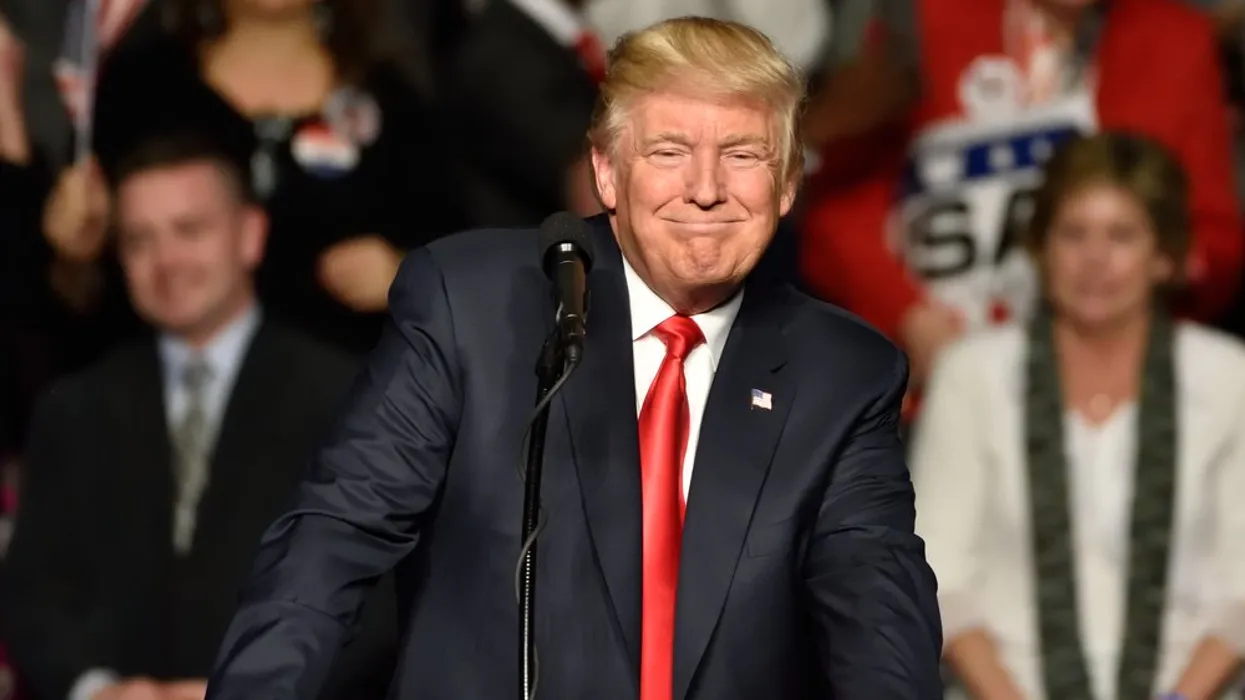
HURON, S.D. — Republican Gov. Larry Rhoden and Democratic challenger Dan Ahlers both criticized President Donald Trump on Saturday during a debate at the South Dakota State Fair, with Rhoden saying he agrees with Trump on other issues but could not support the president's decision to import more foreign beef.
“I thought he was wrongheaded in his logic, and the things that came out of that administration trying to defend it, I think, were weak,” Rhoden said of the move.
Trump endorsed Rhoden last month, making the governor's public break with the president over beef policy notable in a state where agriculture is the largest industry and cattle ranching is central to the economy.
The governor said he plans to press U.S. Secretary of Agriculture Brooke Rollins to create an advisory committee so Trump has better information “before he makes decisions like that and then gets in front of a microphone.”
“He's kind of an impulsive guy,” Rhoden added.
Trump announced last month that he would pause tariffs on imported beef, saying it would bring prices down for consumers and allow U.S. ranchers to build up their herds from historically low levels. The backlash from U.S. cattle ranchers was swift, as producer groups argued the move undercuts domestic ranchers who have held back slaughter to rebuild herds amid years of drought and tightening supplies.
Ahlers said the announcement was not the first time the Trump administration suggested importing more foreign beef, and that the state has to be “a stronger advocate for our farmers and ranchers.”
He said that means working with South Dakota's congressional delegation to apply more pressure on Trump.
The two candidates disagreed on several other issues during their first debate, hosted on the fair's Freedom Stage by the South Dakota Farmers Union. Each won their party's nomination earlier this year.
Economic Development Spending
Ahlers criticized the governor's economic development office, saying it has favored recruiting out-of-state companies over funding homegrown ventures.
He pointed to a Wakonda hemp producer that built a hemp-based concrete plant in another state after failing to secure incentives to build it in South Dakota.
“Those are companies that are in our hometowns, that make our hometowns better, that pay better, and have people that invest right back here in South Dakota,” Ahlers said.
Rhoden said roughly 85 percent of the office's economic development dollars stay in South Dakota.
He noted the department supported the three largest economic development projects in state history during the past several years: the Smithfield pork plant relocation from downtown Sioux Falls, a new food production facility breaking ground in the city, and a new soybean crushing plant in Mitchell.
“We do a lot to promote ag,” Rhoden said.
Medicaid Expansion
Ahlers warned that rolling back Medicaid eligibility would threaten the financial viability of rural hospitals, maternity units and emergency rooms. He noted a majority of Medicaid recipients are children.
“After voters approved Medicaid expansion, Republican lawmakers are trying to undo the people's will,” Ahlers said. South Dakota voters approved the expansion by ballot measure in 2022.
About 31,000 South Dakotans are enrolled through the expansion, out of a total of roughly 143,000 enrolled in Medicaid statewide.
Rhoden said the ballot measure would only remove the requirement to continue expansion if federal funding drops below 90 percent.
“When we have $40 trillion in debt, you can bet the feds are going to be kicking that down to the states,” Rhoden said.
Separating Agriculture and Environment
Ahlers said he would create a standalone Department of Agriculture, restoring a structure dismantled by former Gov. Kristi Noem, who merged the agriculture and environment departments in 2021.
“It is important that each has their own voice and a seat at the table,” Ahlers said.
Rhoden defended the merger, saying criticisms that it favored agriculture at the expense of environmental protection were unfair.
The two will face each other in the Nov. 3 general election. How the beef-import dispute plays with ranchers and farm-state voters in the meantime is likely to remain a point of pressure on both candidates.
Source: Alternet
Related: South Dakota Searchlight coverage

