Africa's AI Sovereignty: HCLSoftware's Cabouret and Zindi's Lee on Reclaiming the Continent's Digital Future
Key Takeaways
- •US laws including the PATRIOT Act, FISA Section 702, and the CLOUD Act permit secret collection of data even when it resides outside the United States, which HCLSoftware's Charles Cabouret calls a critical threat to global autonomy.
- •HCLSoftware promotes data sovereignty through localized deployment of open-source models, contractual jurisdictional isolation, and certified independence from external telemetry or backdoor access.
- •Zindi, founded in 2018 by Celina Lee, is Africa's largest AI developer network with over 120,000 practitioners, and its internal data shows Kenyan users competing in four or more challenges have an 80 per cent employment rate.
- •Nigeria is Zindi's largest market with nearly 20,000 developers on the platform.
- •Nigeria's Ministry of Communications, Innovation, and Digital Economy launched N-ATLAS V1, the country's first open-source, multilingual, multimodal large language model, supported by the 3 Million Technical Talent programme.
Every time an African enterprise or government ministry offloads its operational data to public artificial intelligence models, it quietly surrenders a fraction of its national sovereignty while struggling to build a robust pipeline of talent capable of designing indigenous solutions.
This tension defined the conversations at this year's GITEX Nigeria. Beyond the standard corporate talking points about AI unlocking economic value, a profound geopolitical anxiety is taking root. If data is the new oil, Africa is currently exporting crude only to buy back the refined product at a premium.
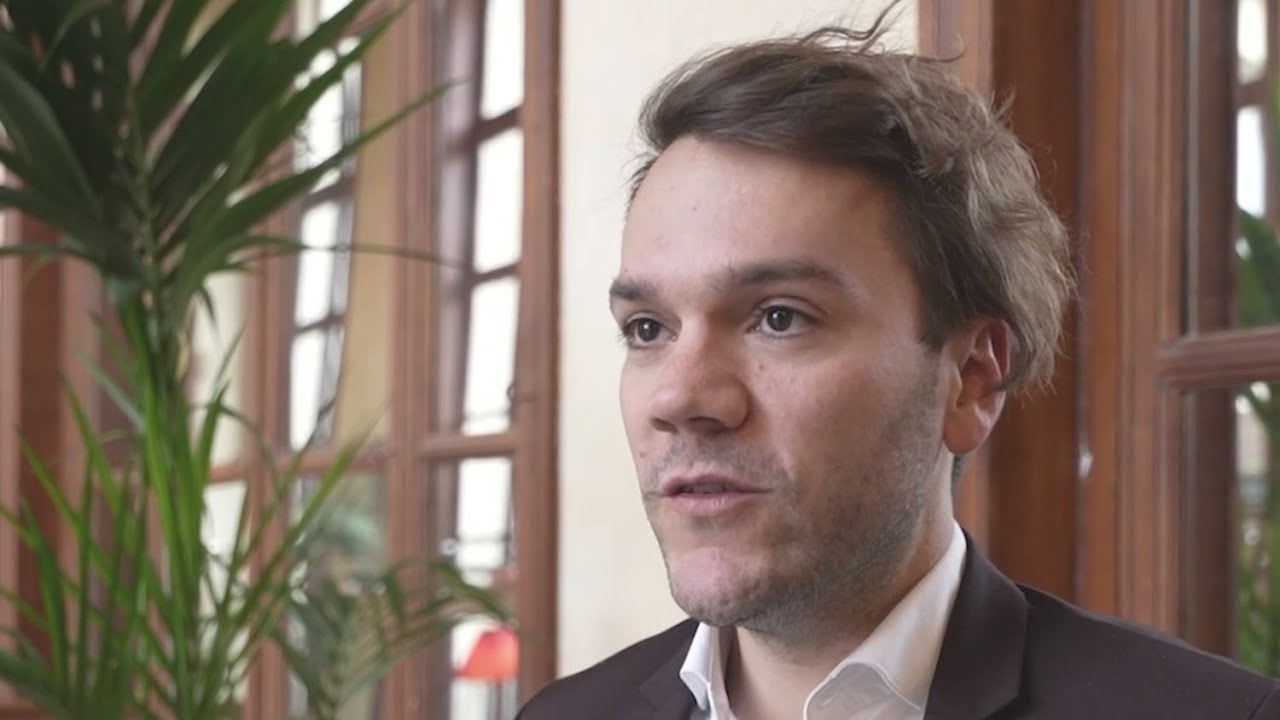
To understand how the continent can reclaim its agency, two global leaders were interviewed. Both sat on a panel during the session and are actively shaping the region's infrastructure and talent pipelines: Charles Cabouret, Associate Vice President at HCLSoftware, and Celina Lee, CEO and Co-founder of Zindi.
The Threat of Extraterritorial Data Collection
Cabouret views the unprecedented harvesting of data as a critical threat to global autonomy. He notes that the vast majority of AI interactions are processed under a web of extraterritorial United States legislation.
"There are three main laws: the PATRIOT Act, FISA Section 702, and the CLOUD Act," Cabouret explains. "These three laws permit the US to secretly collect data, even if that data resides elsewhere. Where AI changes the game is that it directly digests massive volumes of information. It creates a terrible problem."
Unlike traditional search engines, users freely share their most vulnerable truths with AI systems. This creates a profound security vulnerability when that information is routed to global hyperscalers without transparent oversight or local compliance checks.
The concern is not unique to Africa. Data sovereignty has become a global policy flashpoint, with jurisdictions such as the European Union enacting comprehensive data protection regimes and the African Union's Malabo Convention on Cyber Security and Personal Data Protection — in force since 2023 — providing a continental framework. Nigeria has also moved to strengthen its own regime with the Nigeria Data Protection Act of 2023, which governs the processing of personal data by both domestic and foreign organisations operating in the country. Enforcement of these frameworks, however, remains uneven across the continent.
The solution lies in deliberate architectural independence. True data sovereignty requires organisations to deploy local large language models on-premises or within regional, sovereign clouds rather than relying exclusively on tools built for Silicon Valley. Cabouret pointed out that millions of open-source models are currently available, allowing nations to build and customise their own systems.
HCLSoftware actively deploys a framework that provides clients with a completely sovereign architectural framework. Cabouret outlines a strategy rooted in uncoupling dependency:
- Localised Deployment: Running open-source models within domestic borders or local telecommunications data centres instead of relying on foreign public clouds.
- Jurisdictional Isolation: Ensuring enterprise contracts explicitly block the reach of foreign data collection laws.
- Certified Independence: Utilising independent security standards to guarantee zero external telemetry or backdoor access.
Cabouret encapsulates this philosophy with a striking metaphor borrowed from an HCL executive. "We need to give customers the red button. If you are unhappy with your vendor, you should have the power to press that stop button and walk away without losing your data or infrastructure. You need real independence."
For African governments and critical sectors like banking and defence, adopting independent security standards and ensuring software reversibility is no longer optional; it is a matter of national security. Absolute hardware self-sufficiency remains difficult due to global supply chains, but software and data sovereignty provide nations with essential leverage.
Building the Talent Pipeline
Securing the infrastructure is only half the battle. A sovereign AI ecosystem cannot exist without the human capital to build, maintain, and innovate upon it. It is also a question of economics: analysts, including the United Nations Economic Commission for Africa, have projected that AI could deliver a significant share of global economic gains to Africa by 2030 if the continent builds the skills base to capture it.
Celina Lee identifies a parallel issue: African AI talent has historically operated in isolated silos, lacking structured pathways to commercialise their skills. In 2018, she launched Zindi to bridge the gap between brilliant, isolated developers across the continent and global organisations in need of data science solutions. Today, Zindi stands as the largest network of AI developers in Africa, with over 120,000 practitioners.
"We saw so many young people who were super ambitious and wanted to get into data science, but they did not have access to build their skills or get jobs," Lee states. "On the other hand, governments and companies wanted to use AI but did not know how to start."
Zindi operates as a highly competitive marketplace. Organisations post real-world data challenges, and developers compete to build the most accurate machine learning models. The system functions as a verifiable portfolio: even developers who do not secure the top cash prizes walk away with a proven track record. According to Lee, internal data shows that in Kenya, 18 per cent of the platform's 12,000 users have secured jobs in the industry. For those who actively compete in four or more challenges, that employment rate reportedly rises to 80 per cent.
The skills deficit in Africa is often less about a lack of raw potential and more about restricted access to verifiable experience. Zindi competitions allow developers to build live, skills-based portfolios, offering tangible proof of their competencies to prospective employers.
Nigeria as a Focal Point
Nigeria remains a critical focal point for this talent evolution. With nearly 20,000 developers on the platform, the country is Zindi's largest individual market. Lee highlighted a recent meeting in Lagos with Maryam, an engineer and mother who used Zindi to upskill and successfully re-enter the data science workforce after a career break. Stories like hers illustrate the tangible socioeconomic impact of making AI education and opportunity widely available. Lee also noted that the community fosters cross-border mentorship, citing an instance where a developer in Jamaica mentored a peer in Kenya after connecting through the platform.
The push for indigenous capability is gaining measurable traction in Nigeria. The Federal Government has actively accelerated its AI ambitions, launching initiatives aimed at domesticating the technology. The Ministry of Communications, Innovation, and Digital Economy recently spearheaded the launch of N-ATLAS V1, the country's first open-source, multilingual, and multimodal large language model. Designed to process low-resource Nigerian languages, N-ATLAS is a direct response to the language bias inherent in Western models. The ministry had earlier in 2024 released a National Artificial Intelligence Strategy, positioning the country's recent initiatives within a broader stated policy direction.
The model is supported by the 3 Million Technical Talent (3MTT) programme, an ambitious government mandate to train a massive workforce in advanced tech skills. Lee sees immense potential in aligning Zindi's global reach with these local initiatives.
"The large language models you see out there are trained on American English. Do they really work in the African context?" Lee asks. "Zindi has African roots with global reach. Our responsibility is to ensure the talent here is ready to compete on a global level."
The convergence of these two imperatives — data sovereignty and talent development — will define the next decade of African technology. If the continent continues to offshore its data and rely on imported algorithms, it risks permanent digital subjugation. But by investing in sovereign infrastructure and cultivating the engineers required to run it, Africa can transition from being a passive consumer of artificial intelligence to a commanding architect of its own digital future.
