Republicans Face 'Soul-Searching' as Trump's Lame-Duck Era Approaches
Key Takeaways
- •The 22nd Amendment, ratified in 1951, constitutionally bars President Trump from seeking a third term, requiring the GOP to find a new standard-bearer after over a decade of his leadership.
- •GOP strategists expect the party's post-Trump direction debate to accelerate after the November midterm elections, with the outcome of defending House and Senate majorities shaping Trump-aligned influence into 2028.
- •Strategist Vin Weber said the coming debate will focus on which Trump policies endure, citing tariffs as a key example that conflicts with the party's traditional anti-tariff stance.
- •Arizona State professor Steven S. Smith said the transition timeline is compressed, with presidential candidates likely announcing by July 2027, and that Vice President JD Vance is not seen as the clear heir apparent.
- •Sen. Ted Cruz framed the moment as a fundamental debate over the party's economic identity between small-government free-market conservatism and big-government positions.
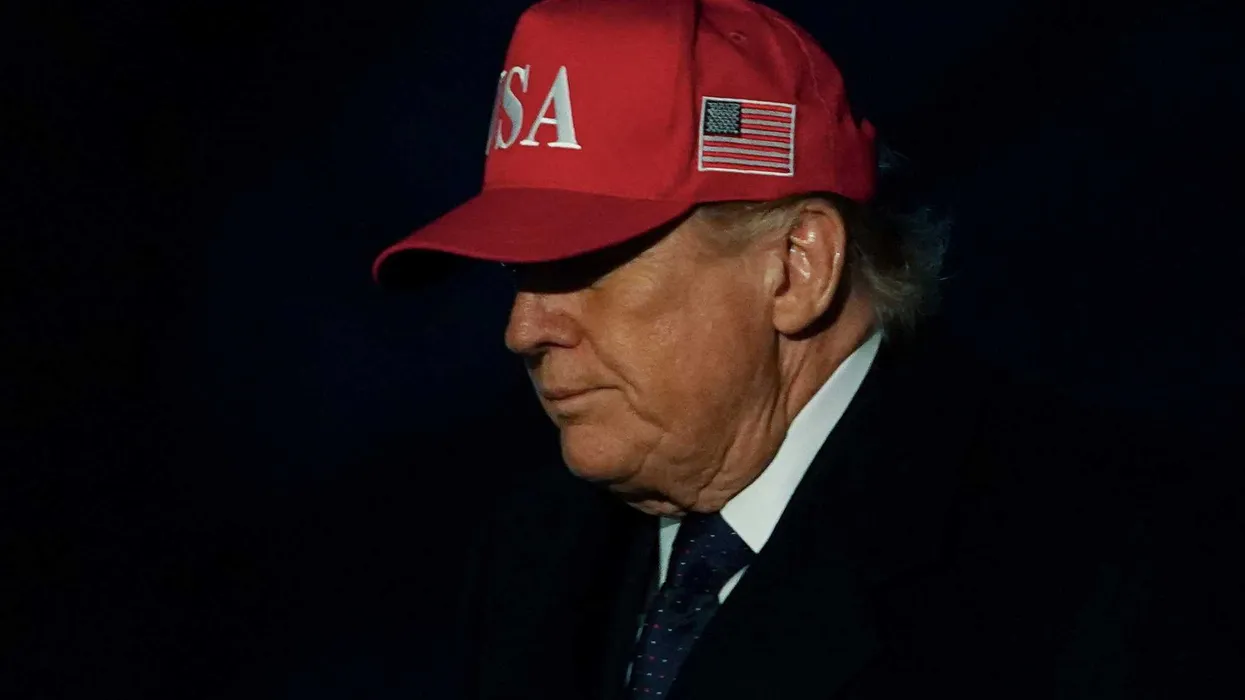
A growing number of Republicans are acknowledging that the party needs to undergo "soul searching" as it determines its future after more than a decade under President Donald Trump's control, according to a report from The Hill.
Despite Trump's trolling suggestions to the contrary, he is constitutionally barred from seeking a third term in the White House under the 22nd Amendment, which has limited presidents to two elected terms since its ratification in 1951. That leaves the GOP grappling with the need for a new party standard-bearer after Trump dominated the political landscape for more than 10 years across three presidential races. As The Hill reported on Monday morning, this reality is becoming increasingly pressing for lawmakers as Trump's definitive "lame duck" era draws near.
"Republicans say their party will need to do a lot of soul searching to find its direction before President Trump leaves office in 2029, something that is coming into sharper focus with the approaching midterm election and the realization that Trump will soon become a lame duck," the outlet explained. "GOP strategists and political experts say the discussion about what comes next will begin to ramp up considerably after the November election. It's a discussion likely to be impacted by how effective the GOP is this fall in defending its House and Senate majorities."
The moment facing Republicans is not without precedent: parties have historically struggled to redefine themselves after long-dominant leaders depart, and the outcome of the midterms will shape how much influence Trump and his allies retain over the transition. A strong performance defending the House and Senate majorities could strengthen the party's Trump-aligned wing heading into the 2028 presidential cycle, while losses would likely intensify the internal argument over direction.
Vin Weber, a GOP strategist and former member of the House GOP leadership, told The Hill that the coming debate will focus heavily on which elements of Trump's agenda endure, pointing to tariffs as a particularly important example.
"There will be a serious debate about the policy, about what the direction of the party is," Weber said. "The traditional position of the Republican Party is anti-tariff. Tariffs are anti-trade, tariffs are taxes. The Republican Party that I grew up in was never the party of tariffs. The Democrats were the party of tariffs."
A senior GOP aide, speaking anonymously, suggested the party does not yet know what it wants from its post-Trump leadership.
"Anybody that says there's going to be a conversation is right. Donald Trump is Donald Trump. There will never be another president like him," the aide explained. "I don't think the party knows what it wants yet. It's really hard for a lot of people to think about that. Donald Trump has been the leader of the Republican Party for a decade and that's a long time in politics."
Steven S. Smith, a political science professor at Arizona State University, told The Hill that the timeline for the party's transition will be compressed. "There's going to be a period of experimentation that's going to start in the new year and really get quite intense for a year because it could very well be by July of 2027 we already have candidates announcing for the presidency. Even July will be seen as late," Smith said. "I don't think anyone assumes [Vice President JD] Vance is the heir apparent."
Texas Sen. Ted Cruz, in a recent interview with MS NOW, framed the moment as a fundamental debate over the party's identity. "There's going to be a full discussion about who we are and what we believe," Cruz said. "Going forward, we're in the midst of a debate about who our party is and what we believe and I think economically we've got to debate, 'Are we a small-government, free-market conservative party, are we a big-government nanny-state party?'"
