Symone Sanders-Townsend Calls Republicans' Refusal to Debate Midterm Rivals 'Cowardly'
Key Takeaways
- •Multiple Republican candidates, including Texas Gov. Greg Abbott, Senate candidate Ken Paxton, Florida Sen. Ashley Moody, and Mississippi Sen. Cindy Hyde-Smith, have declined or dismissed debates against their Democratic opponents ahead of the midterms.
- •Abbott, who has debated throughout his political career, opted out as polls showed his opponent Gina Hinojosa gaining, prompting her to hold an event outside the governor's mansion.
- •Sanders-Townsend drew a parallel to the 2014 midterms, when Democrats were repeatedly pressed on the Affordable Care Act, arguing Republicans now face similar accountability questions over Trump's tariff policies and the conflict with Iran.
- •She characterized the refusals as 'cowardly,' contending that debates would force Republicans to explain or defend their failure to challenge the president's agenda.
- •It remains uncertain whether any of the skipped debates will ultimately take place before Election Day.
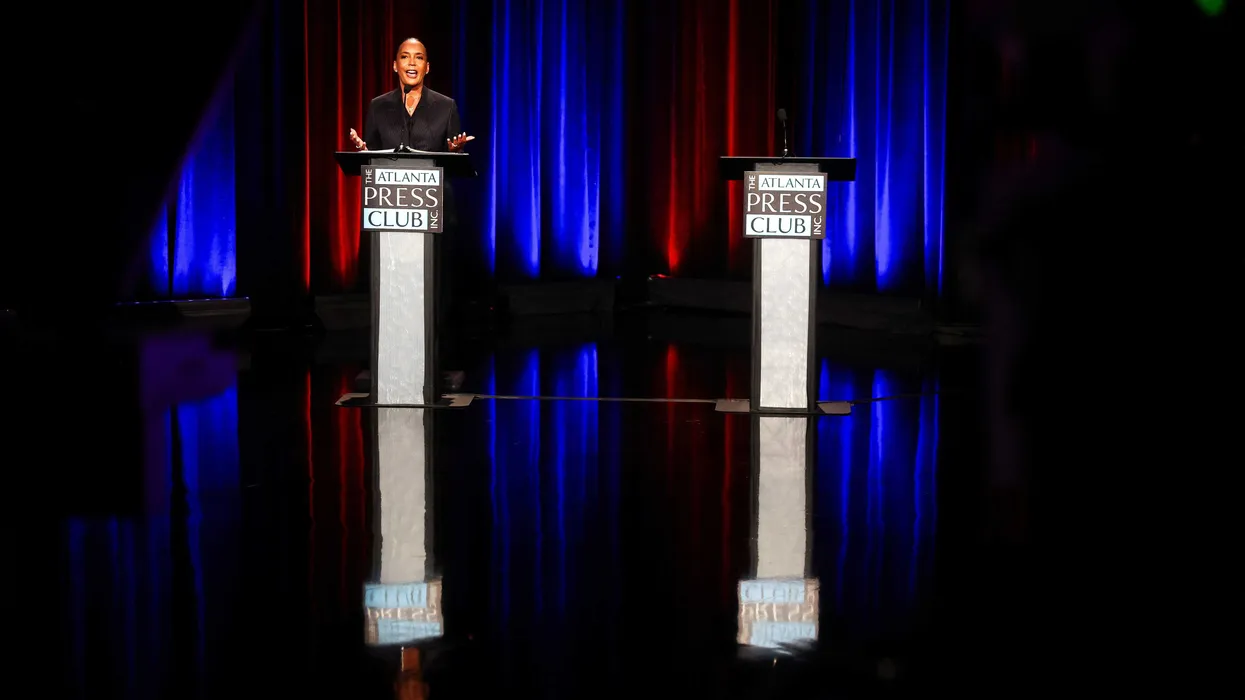
A growing number of Republican candidates are declining to debate their opponents ahead of the midterm elections, and according to one veteran of campaign communications, there is a "cowardly" truth they are hiding from.
Symone Sanders-Townsend, a host and contributor at MS NOW who previously worked as a political strategist and national press secretary for Bernie Sanders' 2016 presidential campaign, and later as a White House spokesperson and senior advisor for former Vice President Kamala Harris, detailed the trend in a piece published Sunday morning for MS NOW, cataloging Republicans bowing out of planned debates against their Democratic opponents. Midterm elections, held halfway through a president's term, decide congressional seats and governorships across the country.
In Texas, Gov. Greg Abbott has taken part in election debates throughout his time in politics. But with polls showing his current opponent, Gina Hinojosa, gaining on him, he has suddenly "decided a debate is unnecessary," Sanders-Townsend wrote — a shift that prompted Hinojosa to hold an event outside the governor's mansion. Elsewhere in the state, GOP Senate candidate Ken Paxton has declined to debate his increasingly popular opponent, James Talarico.
"In Florida, Republican Sen. Ashley Moody has declined to debate Angie Nixon," Sanders-Townsend wrote. "In Mississippi, Republican Sen. Cindy Hyde-Smith said there's 'no point' in debating Democratic nominee Scott Colom. Why are so many Republicans making the same decision in the same election cycle?... I have some thoughts."
Sanders-Townsend drew on her own experience in the 2014 midterms, the final midterm cycle of Barack Obama's presidency, when she served as "deputy communications director for the Democratic nominee for governor in Nebraska" — a cycle she recalled as anything but "pleasant" for Democratic candidates. Republicans had successfully turned President Barack Obama's Affordable Care Act into a heated political issue, making it "difficult to keep the conversation focused on the issues we wanted to discuss" as exchanges were repeatedly pulled toward holding Democrats accountable for the law.
The tables have now turned, she argued, with Republicans facing demands to answer for their posture toward President Donald Trump and his agenda. "That is the political environment I recognize today, except Republicans are now being asked to defend the president's agenda," Sanders-Townsend wrote. "Donald Trump unilaterally imposed tariffs, raising costs for American businesses and consumers. Then came his war of choice in Iran. Gas and diesel prices climbed, raising costs for households and businesses. And Americans are still waiting for a clear explanation of how this war will end. Where were Republicans in Congress?"
She added: "A debate means explaining those choices — or why you didn't challenge them — while someone a few feet away questions your answer. I can understand why a campaign might not want that. But refusing to face questions is cowardly... A politician who treats difficult questions as optional is telling us how they understand the power they hold. Perhaps the most revealing thing about these Republicans isn't what they might say on a debate stage. It's what they believe they no longer have to explain." Whether any of the skipped debates ultimately take place before Election Day remains to be seen.

